

The first six lessons, roughly.
- 01
Box step with rise and fall
- 02
Frame and close-hold posture
- 03
Lead and follow at slow tempos
- 04
Natural and reverse turns
- 05
Underarm turns and changes
- 06
Floor navigation around other couples
Where you'll actually dance.
- Wedding receptions
- Ballroom dance socials
About Waltz
The Waltz is the oldest of the standard ballroom dances. It started in the courts of Vienna in the late 1700s and was scandalous at the time, because partners danced in a close hold instead of standing apart and touching only hands like in earlier court dances. By the mid-1800s it had spread across Europe and into the United States, picking up two distinct branches: the fast Viennese Waltz that stayed closer to its origins, and a slower American Waltz that became the standard for weddings and ballroom socials. When we talk about “Waltz” without a qualifier, we usually mean the American slow version.
The defining feature is the 3/4 time. Every measure has three beats, where Salsa, Foxtrot, and Tango all run in 4/4. That single difference changes everything about how the dance moves. You step on one (down), step on two (up), step on three (up again). The rise and fall that happens across those three counts is what gives the Waltz its famous gliding quality. A good Waltz looks like the dancers are floating, even though they’re really just shifting weight with controlled knee and ankle action.
What it feels like to dance
Waltz is calm. The tempo is slow (around 90 BPM, though Viennese pushes 180), the music is often classical or romantic, and the close-hold frame keeps you and your partner connected through the entire dance. Once the basic box step is settled, learning Waltz is mostly about refining the rise and fall, lengthening your step into the floor, and learning to navigate around other couples without crashing.
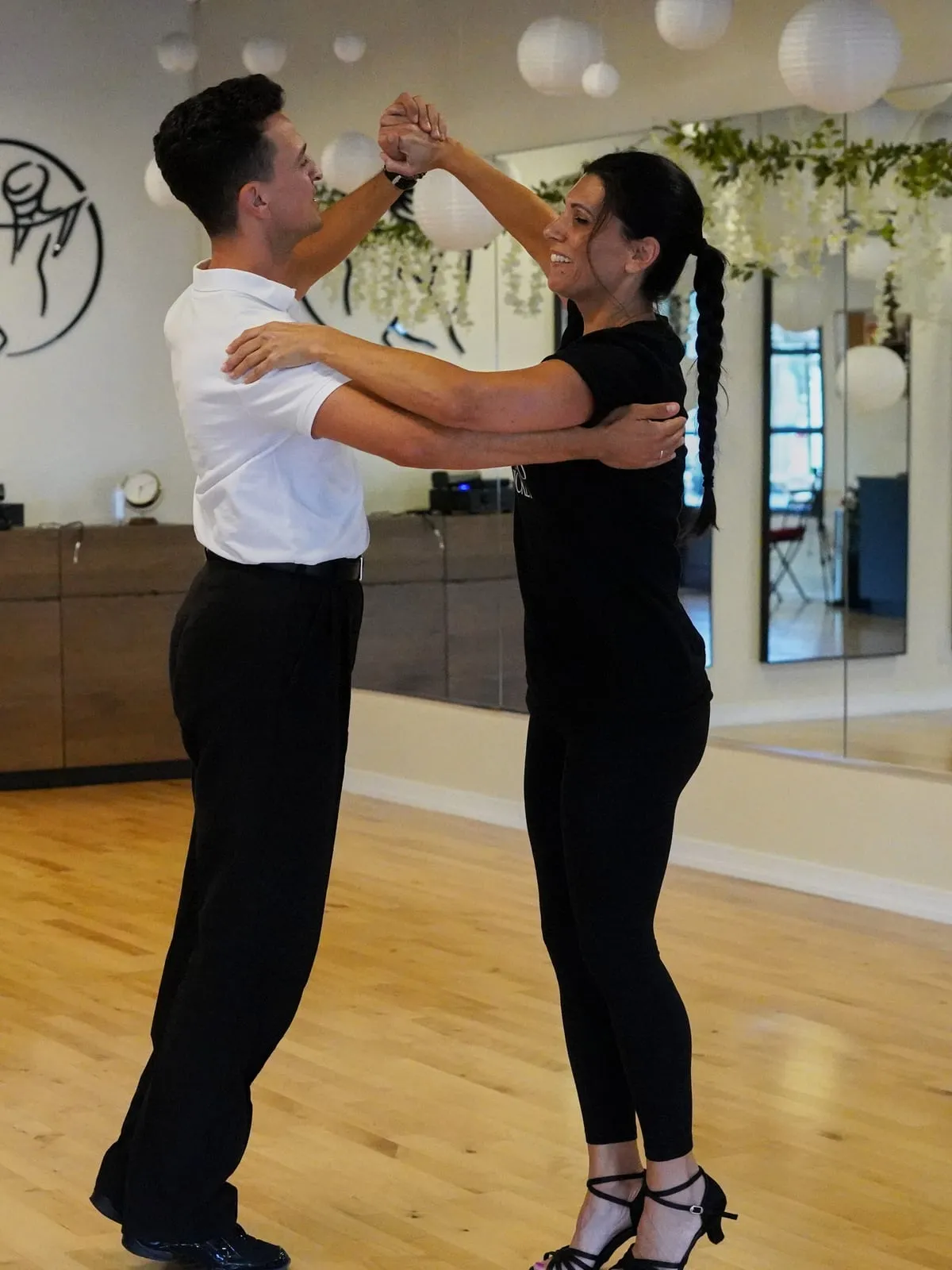
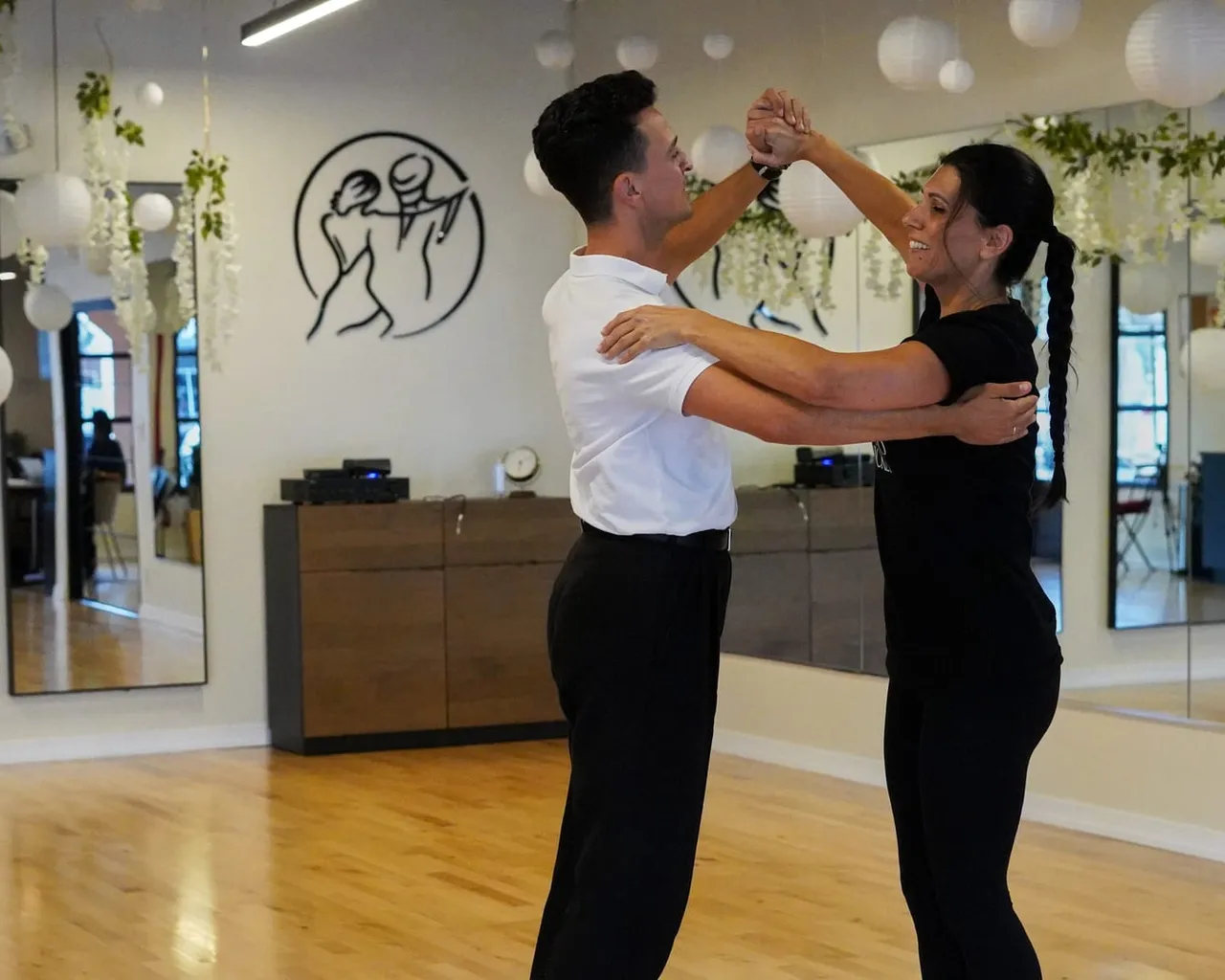
The frame is everything. Your right hand on your partner’s back, your left hand holding theirs out to the side, your elbows lifted, your spine long. When the frame is right, leading and following becomes intuitive. When the frame is collapsed or pushy, every move turns into a fight. We spend a good portion of early Waltz lessons just on posture, because nothing else works without it.
Who it suits best
Waltz is the most-requested dance at our studio, and almost all of the requests come from wedding couples. If you’re choosing a song that’s slow, romantic, in 3/4 time (which is more common than people realize once they start counting), Waltz will fit. Songs like “Thinking Out Loud” by Ed Sheeran, “A Thousand Years” by Christina Perri, and most of the Disney ballad catalog are Waltz tempo.
For couples who want a ballroom dance that they can use beyond the wedding, Waltz is the practical choice. It works at almost any formal event that plays a slow song. It looks elegant even when it’s basic. And once you have the frame and rise-and-fall, the same technique transfers directly to Viennese Waltz and Foxtrot, so your second and third ballroom dances come faster.
For anyone older starting to dance, Waltz is the most forgiving of the standard ballroom dances. The tempo is slow enough that you have time to think. The frame protects you from getting lost. The progress feels steady. We’ve taught Waltz to people who haven’t done any partner dancing since their wedding decades earlier, and it comes back.
Music & where to dance it
For Waltz music, the classical canon is full of options. The Strauss family wrote dozens of Viennese-tempo waltzes (“Blue Danube,” “Tales from the Vienna Woods”). For slower American Waltz, modern pop ballads in 3/4 are everywhere once you know to listen for them. “Kiss From a Rose” by Seal, anything by John Mayer in 3/4, and most Disney ballads from the last twenty years all work.
Waltz shows up at every wedding reception we’ve ever been a part of, at ballroom socials across South Florida, and at the slow-song portions of formal events. Once you can dance a clean Waltz, you’ll find places to use it constantly.
The most timeless ballroom dance — elegant, smooth, and the foundation of partner dancing for generations.
The first six lessons, roughly.
- 01
Box step with rise and fall
- 02
Frame and close-hold posture
- 03
Lead and follow at slow tempos
- 04
Natural and reverse turns
- 05
Underarm turns and changes
- 06
Floor navigation around other couples
Where you'll actually dance.
- Wedding receptions
- Ballroom dance socials
About Waltz
The Waltz is the oldest of the standard ballroom dances. It started in the courts of Vienna in the late 1700s and was scandalous at the time, because partners danced in a close hold instead of standing apart and touching only hands like in earlier court dances. By the mid-1800s it had spread across Europe and into the United States, picking up two distinct branches: the fast Viennese Waltz that stayed closer to its origins, and a slower American Waltz that became the standard for weddings and ballroom socials. When we talk about “Waltz” without a qualifier, we usually mean the American slow version.
The defining feature is the 3/4 time. Every measure has three beats, where Salsa, Foxtrot, and Tango all run in 4/4. That single difference changes everything about how the dance moves. You step on one (down), step on two (up), step on three (up again). The rise and fall that happens across those three counts is what gives the Waltz its famous gliding quality. A good Waltz looks like the dancers are floating, even though they’re really just shifting weight with controlled knee and ankle action.
What it feels like to dance
Waltz is calm. The tempo is slow (around 90 BPM, though Viennese pushes 180), the music is often classical or romantic, and the close-hold frame keeps you and your partner connected through the entire dance. Once the basic box step is settled, learning Waltz is mostly about refining the rise and fall, lengthening your step into the floor, and learning to navigate around other couples without crashing.
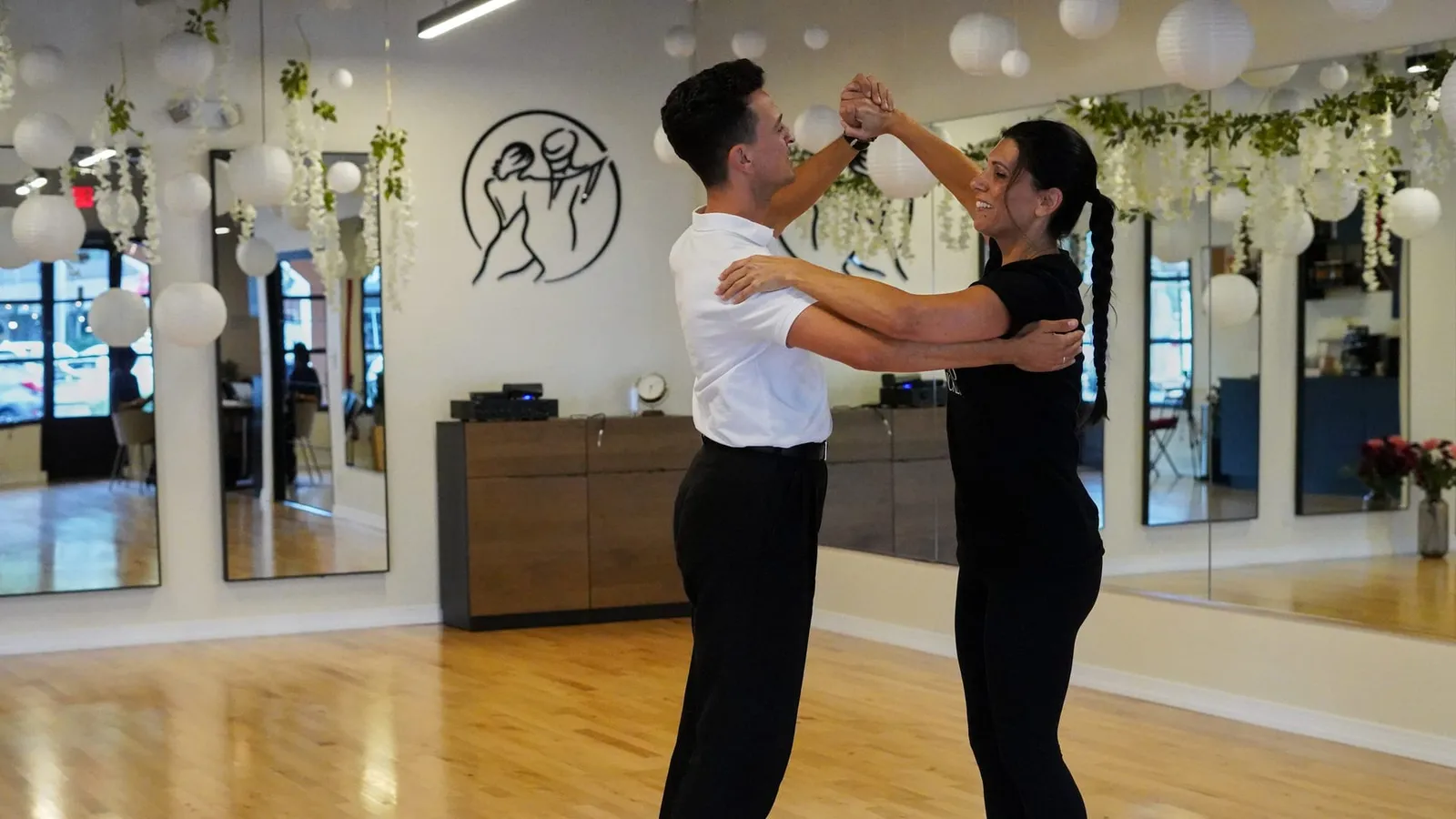
The frame is everything. Your right hand on your partner’s back, your left hand holding theirs out to the side, your elbows lifted, your spine long. When the frame is right, leading and following becomes intuitive. When the frame is collapsed or pushy, every move turns into a fight. We spend a good portion of early Waltz lessons just on posture, because nothing else works without it.
Who it suits best
Waltz is the most-requested dance at our studio, and almost all of the requests come from wedding couples. If you’re choosing a song that’s slow, romantic, in 3/4 time (which is more common than people realize once they start counting), Waltz will fit. Songs like “Thinking Out Loud” by Ed Sheeran, “A Thousand Years” by Christina Perri, and most of the Disney ballad catalog are Waltz tempo.
For couples who want a ballroom dance that they can use beyond the wedding, Waltz is the practical choice. It works at almost any formal event that plays a slow song. It looks elegant even when it’s basic. And once you have the frame and rise-and-fall, the same technique transfers directly to Viennese Waltz and Foxtrot, so your second and third ballroom dances come faster.
For anyone older starting to dance, Waltz is the most forgiving of the standard ballroom dances. The tempo is slow enough that you have time to think. The frame protects you from getting lost. The progress feels steady. We’ve taught Waltz to people who haven’t done any partner dancing since their wedding decades earlier, and it comes back.
Music & where to dance it
For Waltz music, the classical canon is full of options. The Strauss family wrote dozens of Viennese-tempo waltzes (“Blue Danube,” “Tales from the Vienna Woods”). For slower American Waltz, modern pop ballads in 3/4 are everywhere once you know to listen for them. “Kiss From a Rose” by Seal, anything by John Mayer in 3/4, and most Disney ballads from the last twenty years all work.
Waltz shows up at every wedding reception we’ve ever been a part of, at ballroom socials across South Florida, and at the slow-song portions of formal events. Once you can dance a clean Waltz, you’ll find places to use it constantly.
Waltz questions,
answered before you book.
Is waltz hard to learn for a complete beginner?
How long does it take to learn waltz for a wedding first dance?
What's the difference between waltz and Viennese waltz?
Should I learn waltz or foxtrot first?
Can I learn to waltz without a partner?
Is the waltz a good choice for a wedding or anniversary?
Forty-five quiet minutes, just Waltz and the music.
Thank you!
We’ve got your message and we’ll be in touch shortly —
usually within a few hours.