
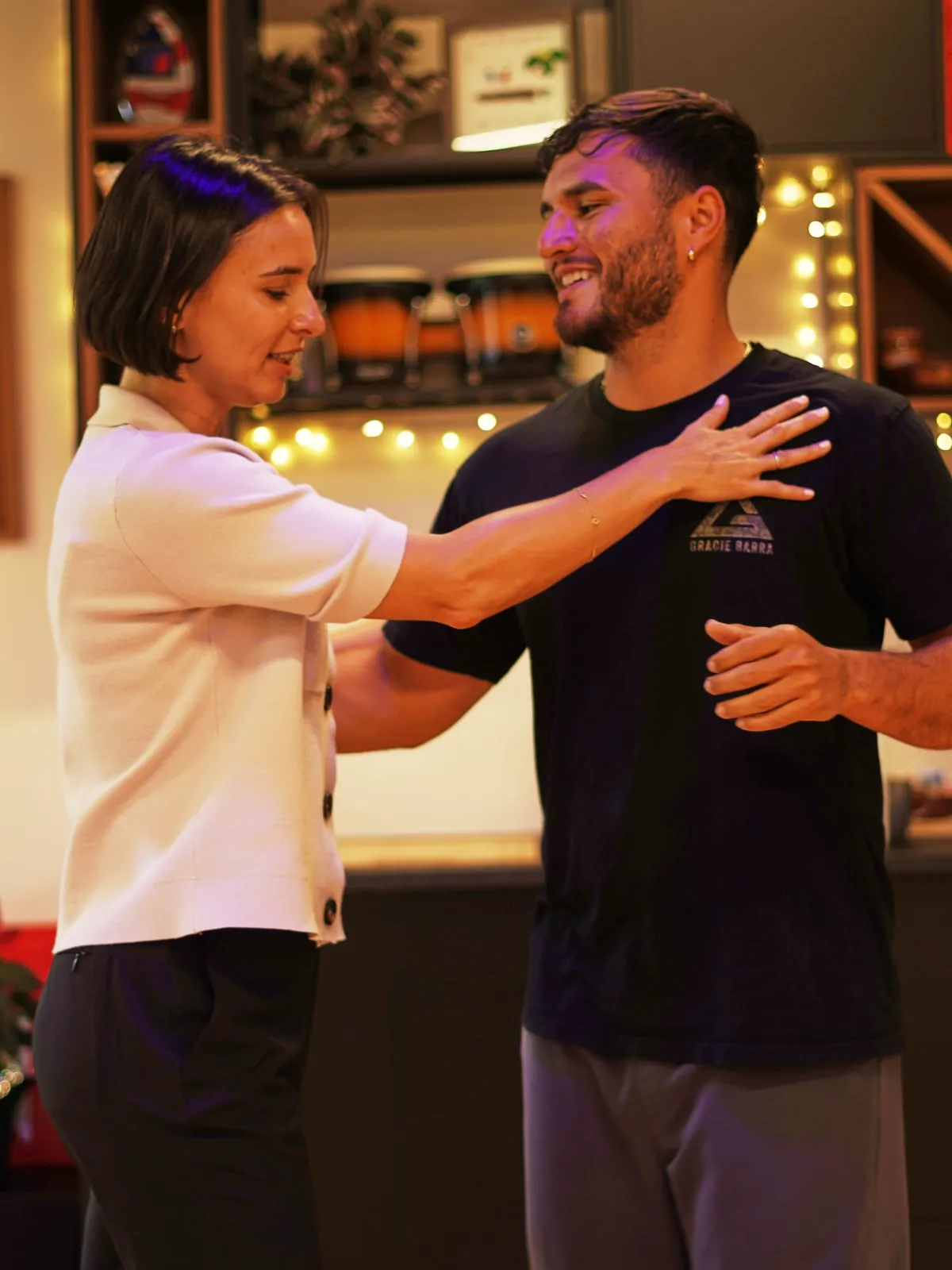

The first six lessons, roughly.
- 01
Basic step and body movement
- 02
Lead and follow fundamentals
- 03
Your first turn
- 04
Cross-body lead
- 05
Musicality and timing
- 06
Signature Salsa turn patterns
Where you'll actually dance.
- Ball & Chain (Little Havana)
About Salsa
Salsa came out of New York in the 1960s. The roots are older, in Cuban son and mambo, and in the clave rhythm that holds the music together. When Cuban musicians ended up in the same East Harlem neighborhoods as Puerto Rican families, the sound sped up, got more urban, and became its own thing.
What keeps people dancing Salsa for years is that it is improvised. There is nothing to memorize. A lead suggests a turn, the follow takes it or doesn’t, and the music handles the rest. Once you know the basic step and maybe four or five turn patterns, you can walk into a Salsa night in almost any city and dance with people you have never met. That portability is part of why people get hooked.
In South Florida this matters more than it does in most places. Miami has a real Salsa scene with live bands, dedicated nights, and dancers who go out specifically to dance, not to be seen. Learning Salsa here gives you a way into that world.
What it feels like to dance
Salsa is quick. The music runs around 180 BPM, which sounds intimidating until you realize your feet only move on three of the four beats. The upper body stays calm. You connect with your partner through a frame in your hands and arms, present but never gripping. A lot of beginners try to lead with their shoulders. Don’t.
Most people also assume Salsa is about hip movement. It mostly isn’t. The hips move because you are transferring weight cleanly from one foot to the other. Get the weight shift right and the hips do their own thing. The first time you finish a clean cross-body lead with someone you just met, you understand why people keep coming back to this dance for years on end.
Who it suits best
For singles, Salsa is one of the most social partner dances in any city with a Latin scene. You go to one decent Salsa night and you dance with fifteen different people. The etiquette is clear once a regular walks you through it, the more experienced dancers are usually kind to newer ones, and skill level matters less than whether you actually ask.
For couples, it is a shared thing with real energy behind it. Date nights pick up a soundtrack. After about six months of consistent lessons, you can show up at a wedding, a cruise, or a Latin bar on a random Tuesday and actually dance instead of standing on the side.
Salsa also works if the only dancing you have ever done is shifting your weight at a school dance. The basic step is three weight changes across four counts. We have most people doing it inside the first lesson. Progress from there is steady — slow enough that nothing feels rushed, fast enough that you notice yourself improving from one week to the next.
Music & where to dance it
For the classic New York sound, start with Marc Anthony, Héctor Lavoe, and Celia Cruz. For the Cuban end, Oscar D’León and Rubén Blades. Gilberto Santa Rosa is a good gateway into more modern Salsa. Spotify and Apple Music both keep Salsa playlists that get refreshed.
Locally, Ball & Chain in Little Havana runs live bands most nights. Once the basics click, you will start noticing Salsa nights at smaller restaurants and bars across Fort Lauderdale and Miami too.
Learn the dance of Cuba and New York streets — taught privately, at the pace that is right for you.
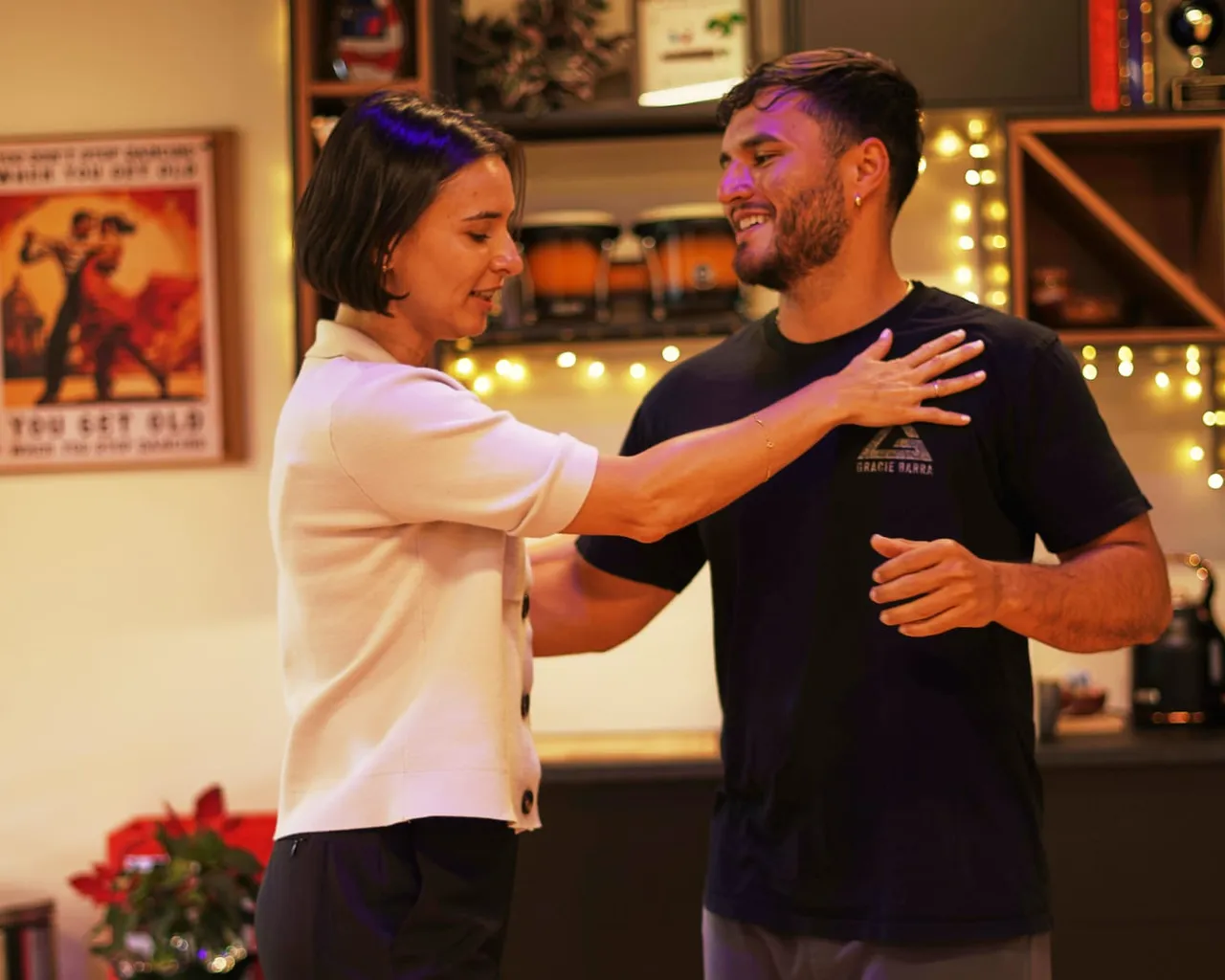
The first six lessons, roughly.
- 01
Basic step and body movement
- 02
Lead and follow fundamentals
- 03
Your first turn
- 04
Cross-body lead
- 05
Musicality and timing
- 06
Signature Salsa turn patterns
Where you'll actually dance.
- Ball & Chain (Little Havana)
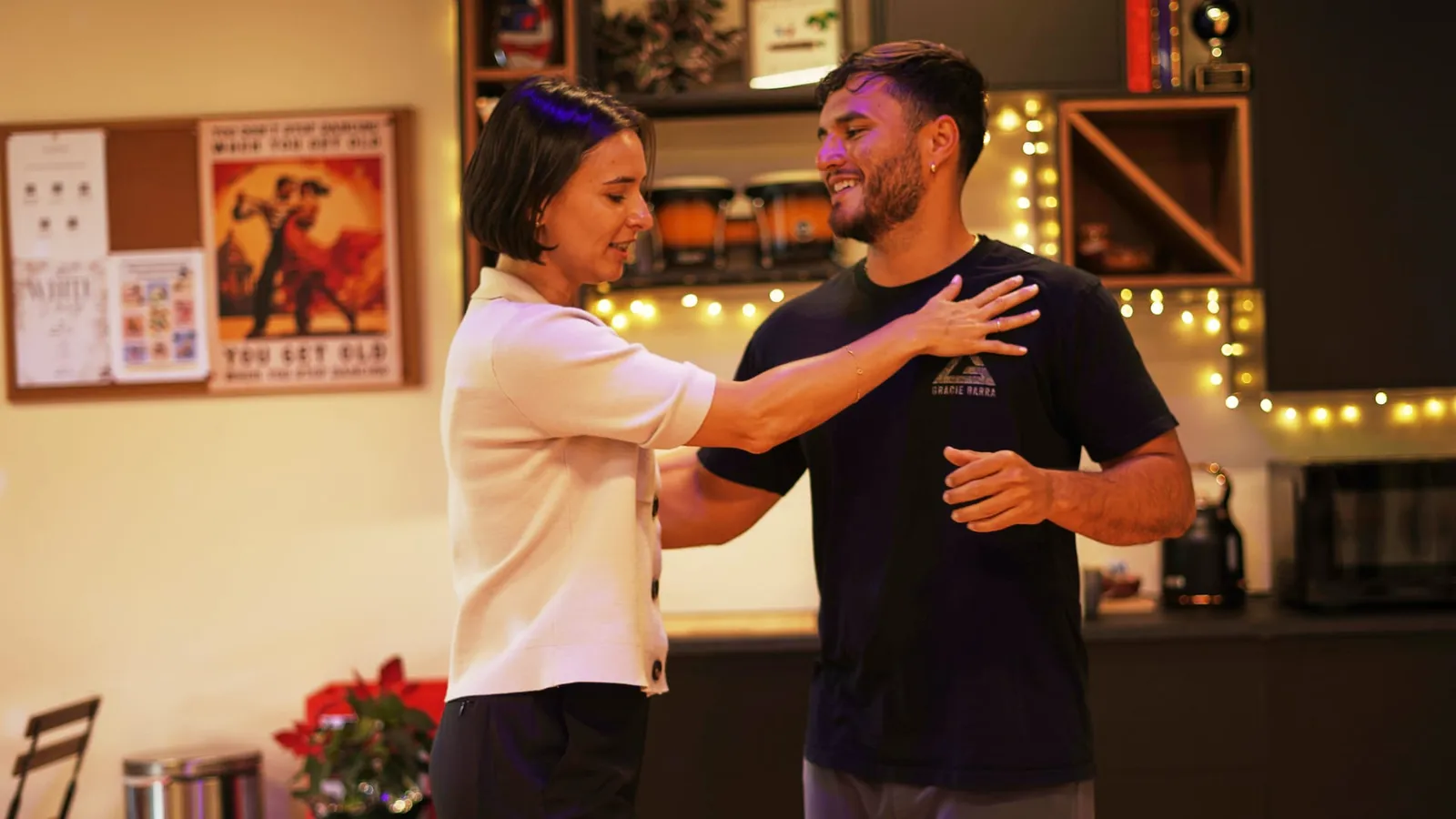
About Salsa
Salsa came out of New York in the 1960s. The roots are older, in Cuban son and mambo, and in the clave rhythm that holds the music together. When Cuban musicians ended up in the same East Harlem neighborhoods as Puerto Rican families, the sound sped up, got more urban, and became its own thing.
What keeps people dancing Salsa for years is that it is improvised. There is nothing to memorize. A lead suggests a turn, the follow takes it or doesn’t, and the music handles the rest. Once you know the basic step and maybe four or five turn patterns, you can walk into a Salsa night in almost any city and dance with people you have never met. That portability is part of why people get hooked.
In South Florida this matters more than it does in most places. Miami has a real Salsa scene with live bands, dedicated nights, and dancers who go out specifically to dance, not to be seen. Learning Salsa here gives you a way into that world.
What it feels like to dance
Salsa is quick. The music runs around 180 BPM, which sounds intimidating until you realize your feet only move on three of the four beats. The upper body stays calm. You connect with your partner through a frame in your hands and arms, present but never gripping. A lot of beginners try to lead with their shoulders. Don’t.
Most people also assume Salsa is about hip movement. It mostly isn’t. The hips move because you are transferring weight cleanly from one foot to the other. Get the weight shift right and the hips do their own thing. The first time you finish a clean cross-body lead with someone you just met, you understand why people keep coming back to this dance for years on end.
Who it suits best
For singles, Salsa is one of the most social partner dances in any city with a Latin scene. You go to one decent Salsa night and you dance with fifteen different people. The etiquette is clear once a regular walks you through it, the more experienced dancers are usually kind to newer ones, and skill level matters less than whether you actually ask.
For couples, it is a shared thing with real energy behind it. Date nights pick up a soundtrack. After about six months of consistent lessons, you can show up at a wedding, a cruise, or a Latin bar on a random Tuesday and actually dance instead of standing on the side.
Salsa also works if the only dancing you have ever done is shifting your weight at a school dance. The basic step is three weight changes across four counts. We have most people doing it inside the first lesson. Progress from there is steady — slow enough that nothing feels rushed, fast enough that you notice yourself improving from one week to the next.
Music & where to dance it
For the classic New York sound, start with Marc Anthony, Héctor Lavoe, and Celia Cruz. For the Cuban end, Oscar D’León and Rubén Blades. Gilberto Santa Rosa is a good gateway into more modern Salsa. Spotify and Apple Music both keep Salsa playlists that get refreshed.
Locally, Ball & Chain in Little Havana runs live bands most nights. Once the basics click, you will start noticing Salsa nights at smaller restaurants and bars across Fort Lauderdale and Miami too.
Salsa questions,
answered before you book.
Is salsa hard to learn for a complete beginner?
How long does it take to learn salsa well enough to go social dancing?
Do I need hips or rhythm to dance salsa?
Should I learn salsa or bachata first?
Do I need a partner to learn salsa?
What's the difference between salsa On1 and On2, and which should a beginner learn?
Forty-five quiet minutes, just Salsa and the music.
Thank you!
We’ve got your message and we’ll be in touch shortly —
usually within a few hours.