
The first six lessons, roughly.
- 01
Walking with intention (the foundation of every Tango move)
- 02
Embrace and connection in close hold
- 03
Ochos, giros, and basic turns
- 04
Musicality across Tango, Milonga, and Vals rhythms
- 05
Floor navigation at a milonga (the social etiquette)
- 06
Improvisation — reading and responding in real time
Variants you might explore, one at a time.
- Tango
The core dance. 4/4 time, walking and improvised figures, danced to traditional orchestras like D'Arienzo, Pugliese, and Di Sarli.
- Milonga
Faster and more playful. Same fundamentals as Tango but with a steady, syncopated beat that asks for more rhythmic footwork.
- Tango Vals
Tango in 3/4 time — danced to waltz-like rhythms but with Tango's improvised vocabulary. Smoother, more lyrical, often a favorite of social dancers.
Where you'll actually dance.
- El Tucan Tango (Miami)
- Tango Lovers (various Miami milongas)
About Argentine Tango
Argentine Tango grew up in the working-class neighborhoods of Buenos Aires in the late 1800s. Immigrants from Italy, Spain, Africa, and indigenous Argentina mixed their music in the brothels and bars of the port district. By the early 1900s it had made its way to Paris, gone respectable, and come back to Argentina as a national symbol. Then it nearly died in the 1950s under political repression, and got resurrected in the 1980s by a generation that wanted it back.
What separates Argentine Tango from every other partner dance is that it is genuinely improvised. There is no count. There is no choreography. The leader decides what to do based on the music, the floor, the partner, and the space. The follower reads the lead through the embrace and responds. Two people who have never met can dance for three minutes and have a real conversation in movement. That is the thing people fall in love with.
In Florida, Argentine Tango has a smaller but devoted scene compared to Salsa or Bachata. The events are called milongas. Most of them happen in Miami or Coral Gables, and people travel for them.
What it feels like to dance
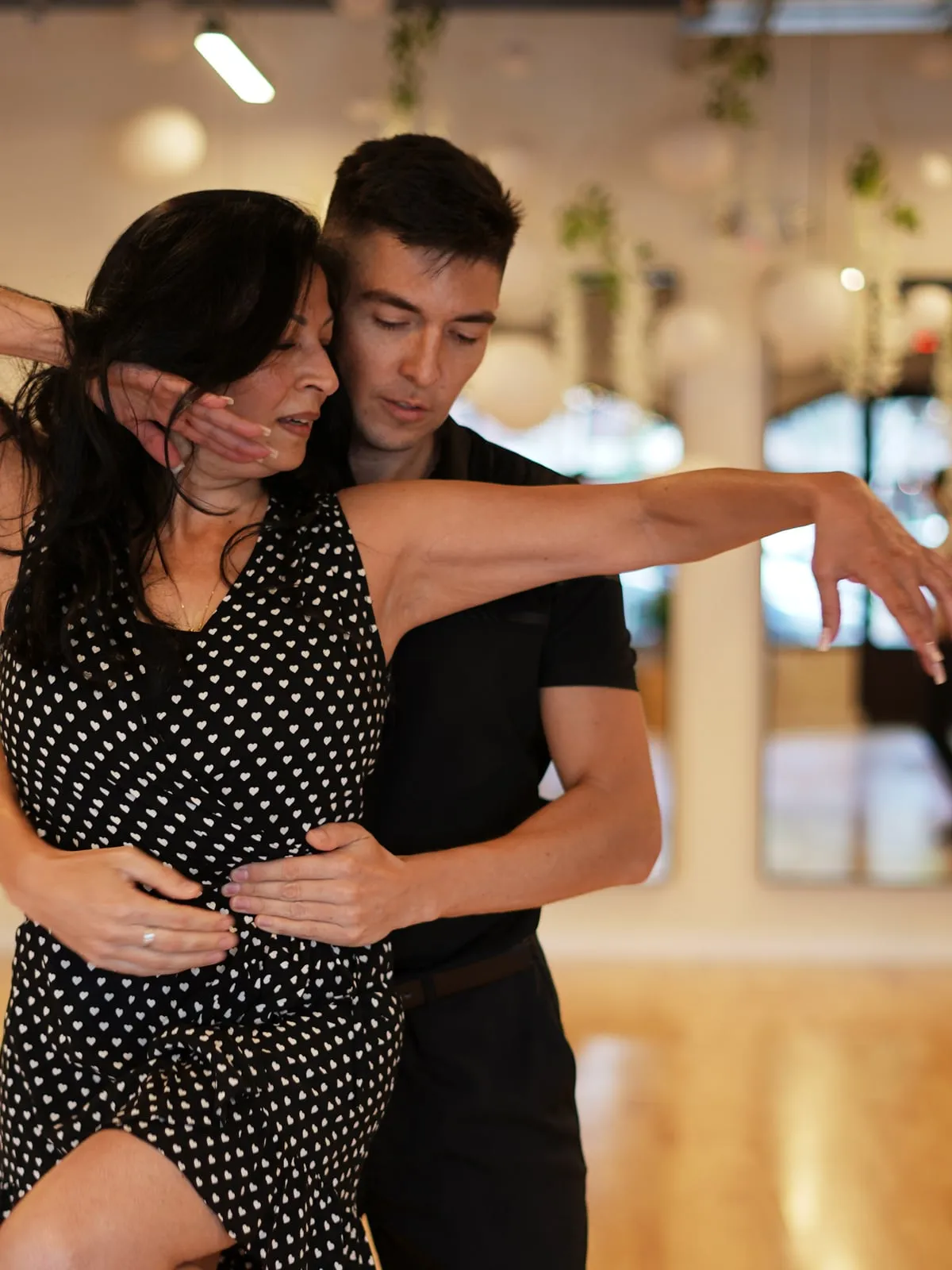
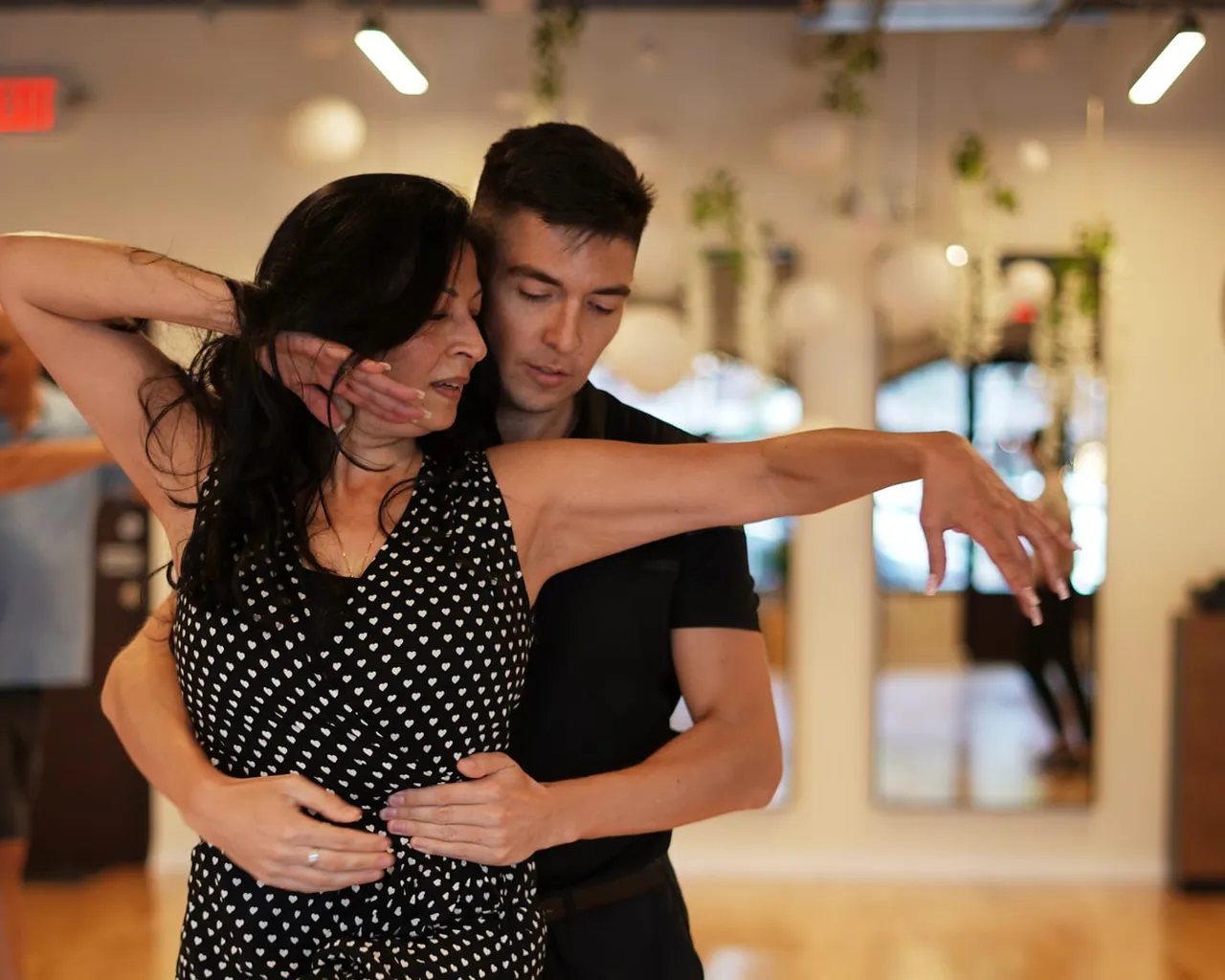
Tango is slow and deliberate. The connection is much closer than in Salsa — usually a full chest-to-chest embrace, where you and your partner share a single axis. You are not moving your hips. You are not adding flourishes. You are walking, beautifully, with someone whose movement you have to feel through their torso.
The first lessons are almost entirely about walking. That sounds underwhelming until you try it. Walking with the right posture, the right intention, the right contact, and the right musical phrasing turns out to be much harder and much more interesting than most people expect. Once the walk is solid, everything else — the ochos, the turns, the pauses, the embellishments — gets added gradually.
Who it suits best
Argentine Tango asks more patience than Salsa or Bachata. The basics take longer to feel natural. But the people who stick with it tend to dance it for the rest of their lives. The depth keeps pulling them back.
For couples, Tango is unusually intimate. The close embrace and the trust required make it a real partnership, not just a shared activity. Couples who learn Tango together often say it changed how they communicate outside the dance too.
For singles, the Tango community is welcoming but quieter than the Salsa world. You don’t dance with everyone — you usually exchange a brief eye-contact invitation across the room first, then dance a set of three or four songs together. The pace of the social scene is different. So is the music, the clothing, the etiquette. People who connect with it tend to connect deeply.
People who already love jazz, classical, or any music with emotional depth tend to take to Tango quickly. The music asks something of you. So does the dance.
Music & where to dance it
Carlos Gardel is the classic vocal Tango voice — start there. For instrumental, the Golden Age orchestras (1935-1955) are still what most milongas play: Juan D’Arienzo for rhythm, Aníbal Troilo for melody, Osvaldo Pugliese for drama, Carlos Di Sarli for elegance. For something more modern and experimental, Astor Piazzolla bent the form into concert music and is worth listening to even if you never dance to him.
In South Florida, the milonga scene is centered in Miami and Coral Gables. El Tucan hosts Tango events on certain weeknights. Tango Lovers and other organizers run rotating milongas at various venues. Once you have a few months of lessons, attending a milonga as a visitor — even just to watch — teaches you more than weeks of class material.
The social dance of Buenos Aires — improvised, intimate, and unlike any other partner dance in the world.
The first six lessons, roughly.
- 01
Walking with intention (the foundation of every Tango move)
- 02
Embrace and connection in close hold
- 03
Ochos, giros, and basic turns
- 04
Musicality across Tango, Milonga, and Vals rhythms
- 05
Floor navigation at a milonga (the social etiquette)
- 06
Improvisation — reading and responding in real time
Variants you might explore, one at a time.
- Tango
The core dance. 4/4 time, walking and improvised figures, danced to traditional orchestras like D'Arienzo, Pugliese, and Di Sarli.
- Milonga
Faster and more playful. Same fundamentals as Tango but with a steady, syncopated beat that asks for more rhythmic footwork.
- Tango Vals
Tango in 3/4 time — danced to waltz-like rhythms but with Tango's improvised vocabulary. Smoother, more lyrical, often a favorite of social dancers.
Where you'll actually dance.
- El Tucan Tango (Miami)
- Tango Lovers (various Miami milongas)
About Argentine Tango
Argentine Tango grew up in the working-class neighborhoods of Buenos Aires in the late 1800s. Immigrants from Italy, Spain, Africa, and indigenous Argentina mixed their music in the brothels and bars of the port district. By the early 1900s it had made its way to Paris, gone respectable, and come back to Argentina as a national symbol. Then it nearly died in the 1950s under political repression, and got resurrected in the 1980s by a generation that wanted it back.
What separates Argentine Tango from every other partner dance is that it is genuinely improvised. There is no count. There is no choreography. The leader decides what to do based on the music, the floor, the partner, and the space. The follower reads the lead through the embrace and responds. Two people who have never met can dance for three minutes and have a real conversation in movement. That is the thing people fall in love with.
In Florida, Argentine Tango has a smaller but devoted scene compared to Salsa or Bachata. The events are called milongas. Most of them happen in Miami or Coral Gables, and people travel for them.
What it feels like to dance
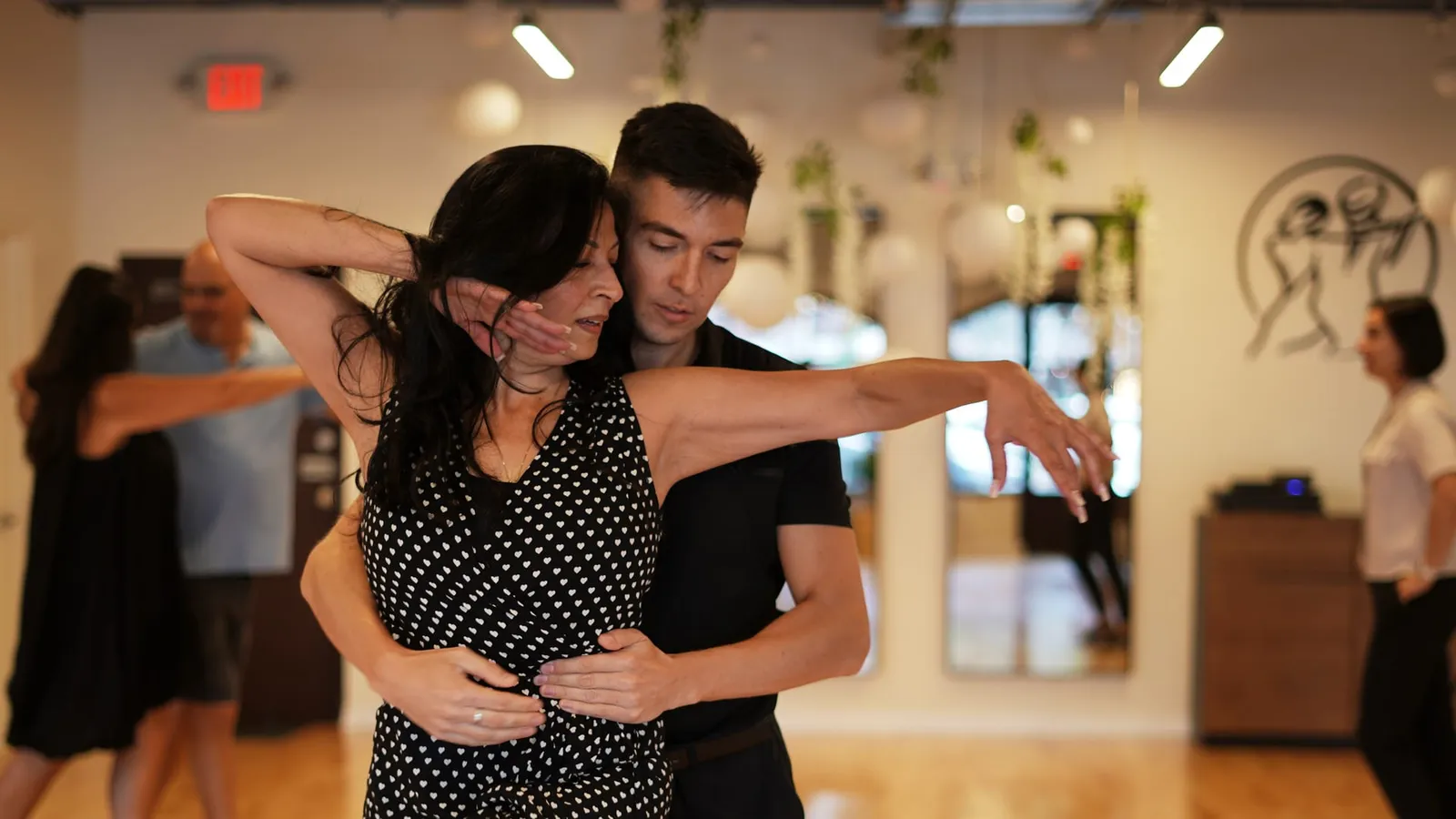
Tango is slow and deliberate. The connection is much closer than in Salsa — usually a full chest-to-chest embrace, where you and your partner share a single axis. You are not moving your hips. You are not adding flourishes. You are walking, beautifully, with someone whose movement you have to feel through their torso.
The first lessons are almost entirely about walking. That sounds underwhelming until you try it. Walking with the right posture, the right intention, the right contact, and the right musical phrasing turns out to be much harder and much more interesting than most people expect. Once the walk is solid, everything else — the ochos, the turns, the pauses, the embellishments — gets added gradually.
Who it suits best
Argentine Tango asks more patience than Salsa or Bachata. The basics take longer to feel natural. But the people who stick with it tend to dance it for the rest of their lives. The depth keeps pulling them back.
For couples, Tango is unusually intimate. The close embrace and the trust required make it a real partnership, not just a shared activity. Couples who learn Tango together often say it changed how they communicate outside the dance too.
For singles, the Tango community is welcoming but quieter than the Salsa world. You don’t dance with everyone — you usually exchange a brief eye-contact invitation across the room first, then dance a set of three or four songs together. The pace of the social scene is different. So is the music, the clothing, the etiquette. People who connect with it tend to connect deeply.
People who already love jazz, classical, or any music with emotional depth tend to take to Tango quickly. The music asks something of you. So does the dance.
Music & where to dance it
Carlos Gardel is the classic vocal Tango voice — start there. For instrumental, the Golden Age orchestras (1935-1955) are still what most milongas play: Juan D’Arienzo for rhythm, Aníbal Troilo for melody, Osvaldo Pugliese for drama, Carlos Di Sarli for elegance. For something more modern and experimental, Astor Piazzolla bent the form into concert music and is worth listening to even if you never dance to him.
In South Florida, the milonga scene is centered in Miami and Coral Gables. El Tucan hosts Tango events on certain weeknights. Tango Lovers and other organizers run rotating milongas at various venues. Once you have a few months of lessons, attending a milonga as a visitor — even just to watch — teaches you more than weeks of class material.
Argentine Tango questions,
answered before you book.
Is Argentine Tango hard to learn for a beginner?
Why do the first Argentine Tango lessons spend so much time just on walking?
What's the difference between Argentine Tango and ballroom tango?
Can I learn Argentine Tango without a partner?
How long does it take to learn Argentine Tango well enough to attend a milonga?
Is Argentine Tango a good dance for couples to learn together?
Forty-five quiet minutes, just Argentine Tango and the music.
Thank you!
We’ve got your message and we’ll be in touch shortly —
usually within a few hours.