

The first six lessons, roughly.
- 01
Basic forward and backward Foxtrot
- 02
Frame and slow-quick-quick rhythm
- 03
Promenade and outside partner
- 04
Natural and reverse turns
- 05
Musicality with jazz tempos
- 06
Floor craft and partner navigation
Where you'll actually dance.
- Wedding receptions
- Ballroom socials with live big band
About Foxtrot
Foxtrot came out of New York around 1914, named (probably) after the vaudeville performer Harry Fox who used a similar step in his act. By the 1920s it had become the most popular partner dance in the United States, partly because it fit so naturally with the jazz music that was reshaping American culture at the time. It’s stayed in heavy rotation ever since, even as Salsa and Bachata have taken over Latin dance floors. Foxtrot is what most ballroom dancers consider the most versatile of the standard dances.
The footwork pattern is slow-quick-quick, which sounds simple and is, but the timing and footwork get sophisticated as you progress. Where Waltz lives in 3/4 time and emphasizes rise and fall, Foxtrot lives in 4/4 and emphasizes long, smooth, gliding steps. The character is what people describe as “smooth ballroom.” You see Foxtrot when older movies show couples dancing in evening clothes at a hotel ballroom. The dance hasn’t changed much since then.
What it feels like to dance
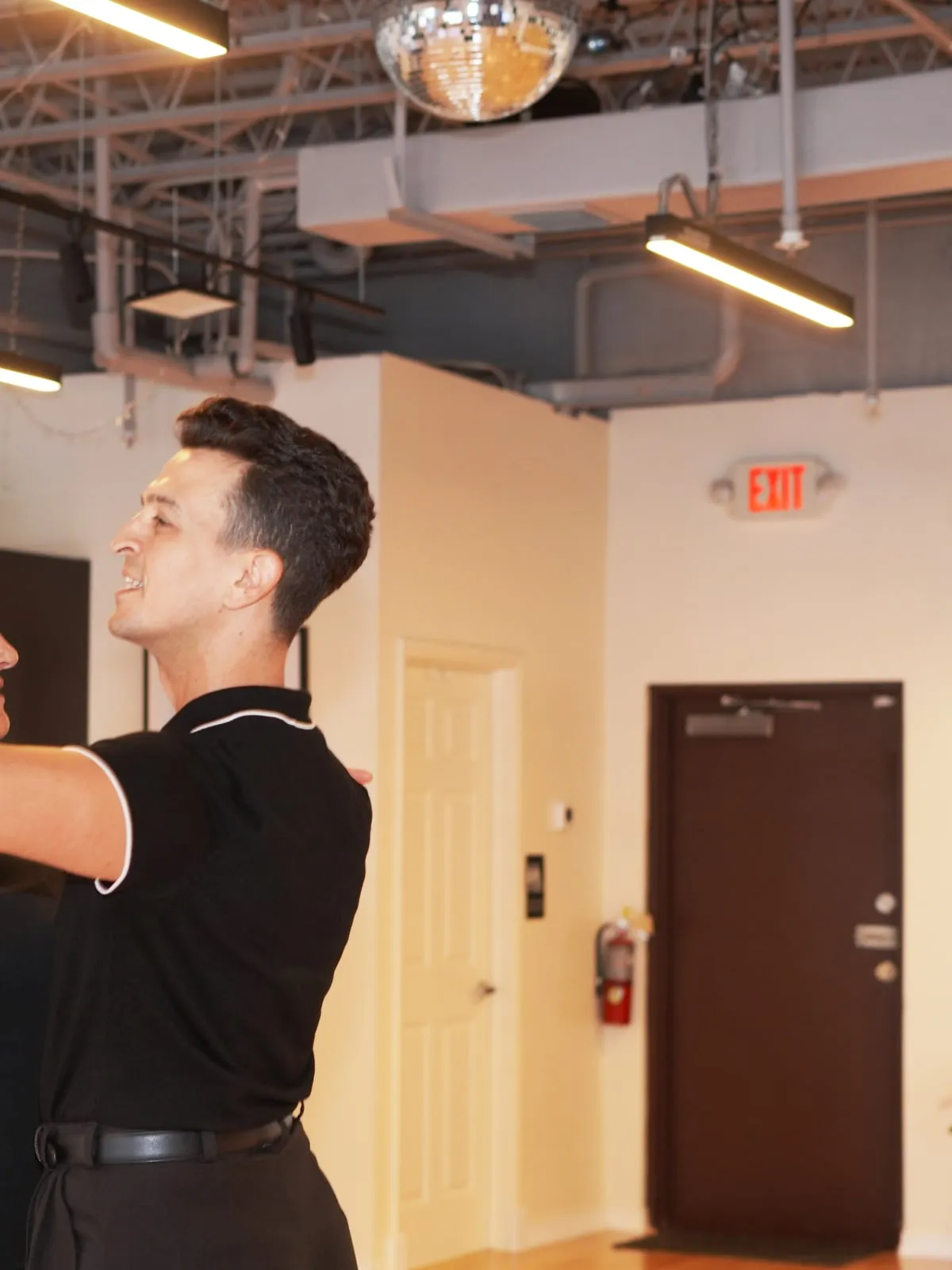
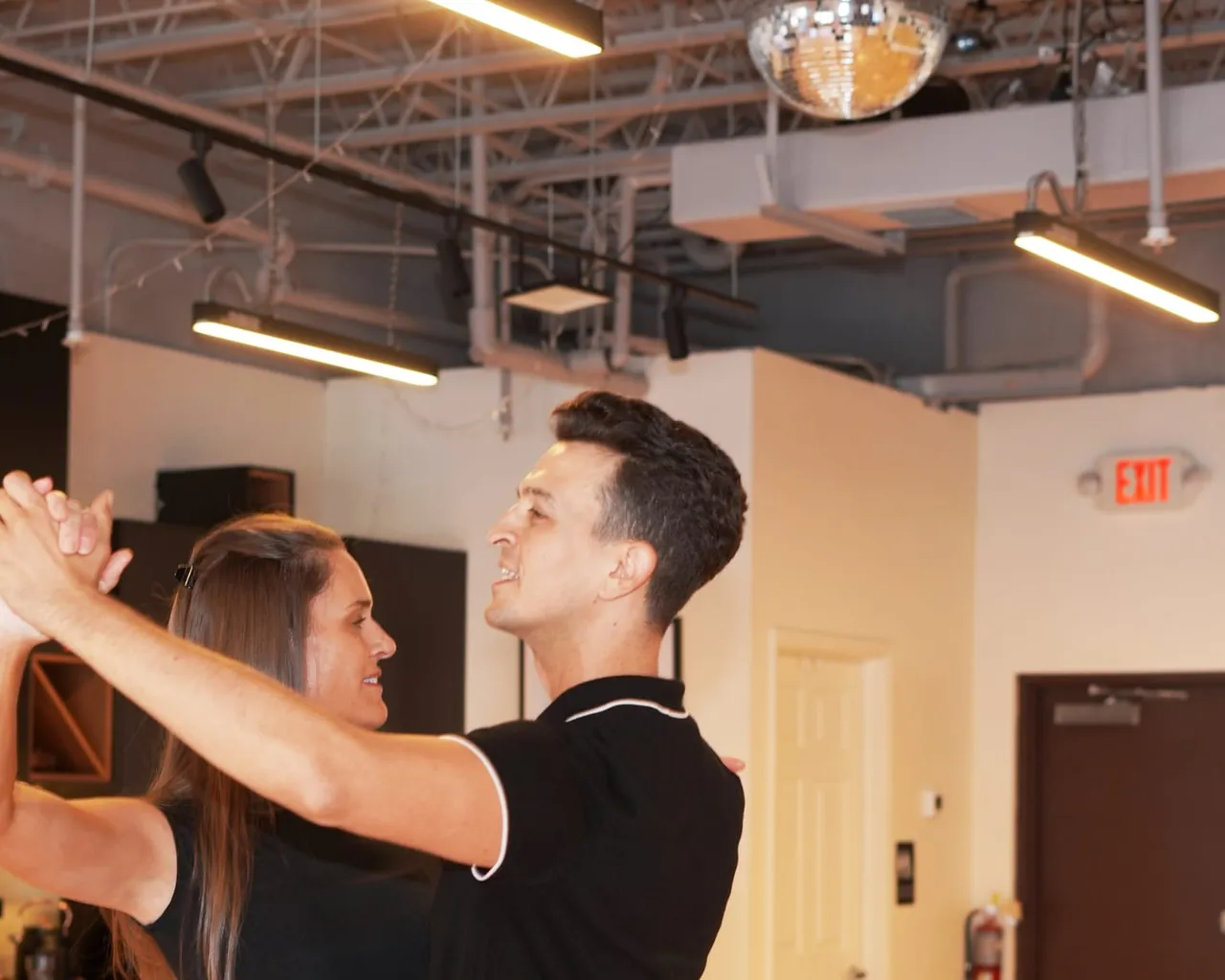
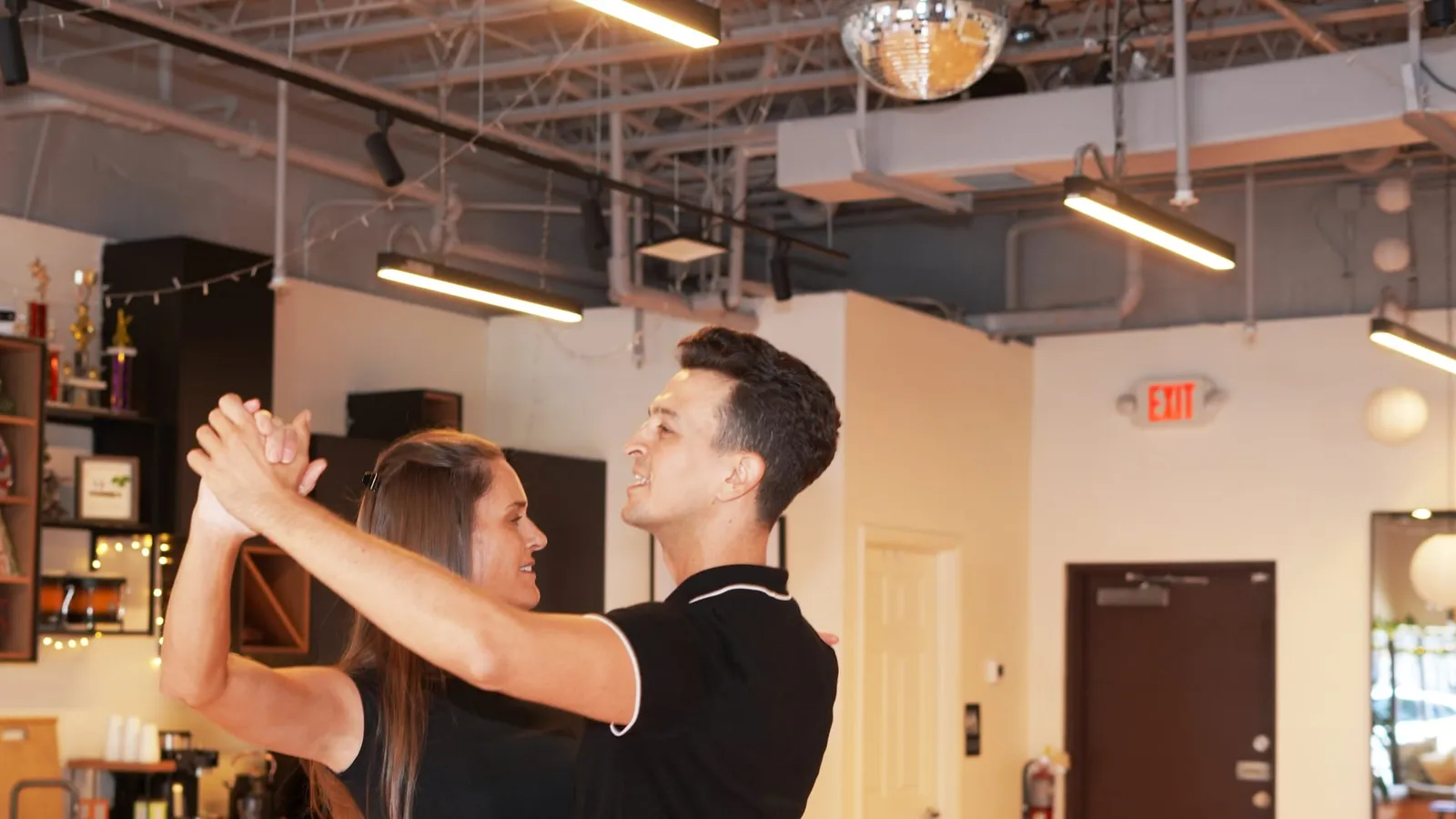
Foxtrot at its best looks effortless. The footwork is in slow-quick-quick, and the steps are long. Each slow step travels noticeably across the floor, the quick steps fill in between, and the partnership glides as a unit. Beginners often struggle at first because the natural instinct is to take small careful steps, and Foxtrot punishes that — small steps make the dance choppy. The trick is learning to commit to longer steps while keeping your weight settled.
The frame is essentially the same as Waltz, so anyone who has danced Waltz already has most of what they need for Foxtrot mechanically. The differences are in the rhythm and step length. Foxtrot doesn’t rise and fall the way Waltz does. The body stays level, and the smoothness comes from how the feet swing and pass.
Who it suits best
For couples planning a wedding with a song that has any jazz feel, big-band feel, or smooth-American-pop feel, Foxtrot is usually the right answer. The Frank Sinatra catalog is essentially a Foxtrot songbook. Michael Bublé, Tony Bennett, Norah Jones, Diana Krall — all of them sit comfortably in Foxtrot tempo. If your first dance is one of those, we can build a routine that handles the song from beginning to end.
For couples who already dance Waltz, Foxtrot is the natural second standard dance. The frame and the navigation skills transfer directly. You’ll learn slow-quick-quick in your first lesson and be working on the smoother passing steps within two or three sessions.
For anyone who wants a partner dance that adapts to almost any context — work events, parties, weddings, cruises, the occasional restaurant with a jazz trio — Foxtrot is the most generally useful. You will use it more often than any other standard ballroom dance you learn.
Music & where to dance it
The Foxtrot catalog is enormous because almost any smooth song in 4/4 at the right tempo qualifies. Frank Sinatra (“Fly Me to the Moon,” “The Way You Look Tonight”), Tony Bennett’s work, Michael Bublé covers, Diana Krall, Norah Jones, Stevie Wonder’s slower work. The jazz standards across the 20th century are mostly Foxtrot tempo.
Foxtrot shows up at every formal event in South Florida that plays slow standards. Ballroom socials run dedicated Foxtrot rotations. Wedding receptions where a band plays jazz drift naturally into Foxtrot territory. Country club events, fundraisers, anniversary parties — anywhere the music isn’t strictly Latin or strictly pop, Foxtrot will fit. It’s the partner dance with the widest practical range.
The smoothest of the ballroom dances. Foxtrot fits any jazz, big band, or modern slow standard like a tailored suit.
The first six lessons, roughly.
- 01
Basic forward and backward Foxtrot
- 02
Frame and slow-quick-quick rhythm
- 03
Promenade and outside partner
- 04
Natural and reverse turns
- 05
Musicality with jazz tempos
- 06
Floor craft and partner navigation
Where you'll actually dance.
- Wedding receptions
- Ballroom socials with live big band
About Foxtrot
Foxtrot came out of New York around 1914, named (probably) after the vaudeville performer Harry Fox who used a similar step in his act. By the 1920s it had become the most popular partner dance in the United States, partly because it fit so naturally with the jazz music that was reshaping American culture at the time. It’s stayed in heavy rotation ever since, even as Salsa and Bachata have taken over Latin dance floors. Foxtrot is what most ballroom dancers consider the most versatile of the standard dances.
The footwork pattern is slow-quick-quick, which sounds simple and is, but the timing and footwork get sophisticated as you progress. Where Waltz lives in 3/4 time and emphasizes rise and fall, Foxtrot lives in 4/4 and emphasizes long, smooth, gliding steps. The character is what people describe as “smooth ballroom.” You see Foxtrot when older movies show couples dancing in evening clothes at a hotel ballroom. The dance hasn’t changed much since then.
What it feels like to dance
Foxtrot at its best looks effortless. The footwork is in slow-quick-quick, and the steps are long. Each slow step travels noticeably across the floor, the quick steps fill in between, and the partnership glides as a unit. Beginners often struggle at first because the natural instinct is to take small careful steps, and Foxtrot punishes that — small steps make the dance choppy. The trick is learning to commit to longer steps while keeping your weight settled.
The frame is essentially the same as Waltz, so anyone who has danced Waltz already has most of what they need for Foxtrot mechanically. The differences are in the rhythm and step length. Foxtrot doesn’t rise and fall the way Waltz does. The body stays level, and the smoothness comes from how the feet swing and pass.
Who it suits best
For couples planning a wedding with a song that has any jazz feel, big-band feel, or smooth-American-pop feel, Foxtrot is usually the right answer. The Frank Sinatra catalog is essentially a Foxtrot songbook. Michael Bublé, Tony Bennett, Norah Jones, Diana Krall — all of them sit comfortably in Foxtrot tempo. If your first dance is one of those, we can build a routine that handles the song from beginning to end.
For couples who already dance Waltz, Foxtrot is the natural second standard dance. The frame and the navigation skills transfer directly. You’ll learn slow-quick-quick in your first lesson and be working on the smoother passing steps within two or three sessions.
For anyone who wants a partner dance that adapts to almost any context — work events, parties, weddings, cruises, the occasional restaurant with a jazz trio — Foxtrot is the most generally useful. You will use it more often than any other standard ballroom dance you learn.
Music & where to dance it
The Foxtrot catalog is enormous because almost any smooth song in 4/4 at the right tempo qualifies. Frank Sinatra (“Fly Me to the Moon,” “The Way You Look Tonight”), Tony Bennett’s work, Michael Bublé covers, Diana Krall, Norah Jones, Stevie Wonder’s slower work. The jazz standards across the 20th century are mostly Foxtrot tempo.
Foxtrot shows up at every formal event in South Florida that plays slow standards. Ballroom socials run dedicated Foxtrot rotations. Wedding receptions where a band plays jazz drift naturally into Foxtrot territory. Country club events, fundraisers, anniversary parties — anywhere the music isn’t strictly Latin or strictly pop, Foxtrot will fit. It’s the partner dance with the widest practical range.
Foxtrot questions,
answered before you book.
Is foxtrot hard to learn for a beginner?
What's the difference between foxtrot and waltz?
How long does it take to learn foxtrot?
Can I learn foxtrot without a dance partner?
What songs and occasions is foxtrot good for?
I already dance waltz — is foxtrot a good next dance?
Forty-five quiet minutes, just Foxtrot and the music.
Thank you!
We’ve got your message and we’ll be in touch shortly —
usually within a few hours.