

The first six lessons, roughly.
- 01
Basic side-to-side step
- 02
Lead and follow connection in close hold
- 03
Hip movement and body roll
- 04
Your first turn
- 05
Sensual and modern Bachata variations
- 06
Musicality and song structure
Where you'll actually dance.
- Hard Rock Live (Hollywood)
- La Covacha (Doral)
About Bachata
Bachata came out of the Dominican Republic in the middle of the 20th century, originally as a working-class music played in country bars and street parties. For decades it was considered too rough for polite radio. That changed in the 1990s, when artists like Juan Luis Guerra cleaned up the sound and pushed it onto international charts. Romeo Santos and Aventura made it everywhere.
The dance itself is simpler than Salsa on paper. Four steps to the side, a small hip motion on count four. That structure is what makes Bachata so welcoming. Most people can do the basic step inside ten minutes, which means they get the satisfying part of dancing — actually moving with a partner to music they enjoy — almost immediately. The depth comes later, in body movement, connection, and the modern variations.
In Florida, Bachata has been one of the fastest-growing social dances of the last decade. You’ll find it at most Salsa nights, plus dedicated Bachata socials that have started popping up across Miami and Fort Lauderdale.
What it feels like to dance
Bachata is slower than Salsa, usually around 120-130 BPM. The music has a melancholic quality even when it’s upbeat, with the guitar carrying most of the emotion. That tone shows up in how the dance feels. It’s intimate without being intense.
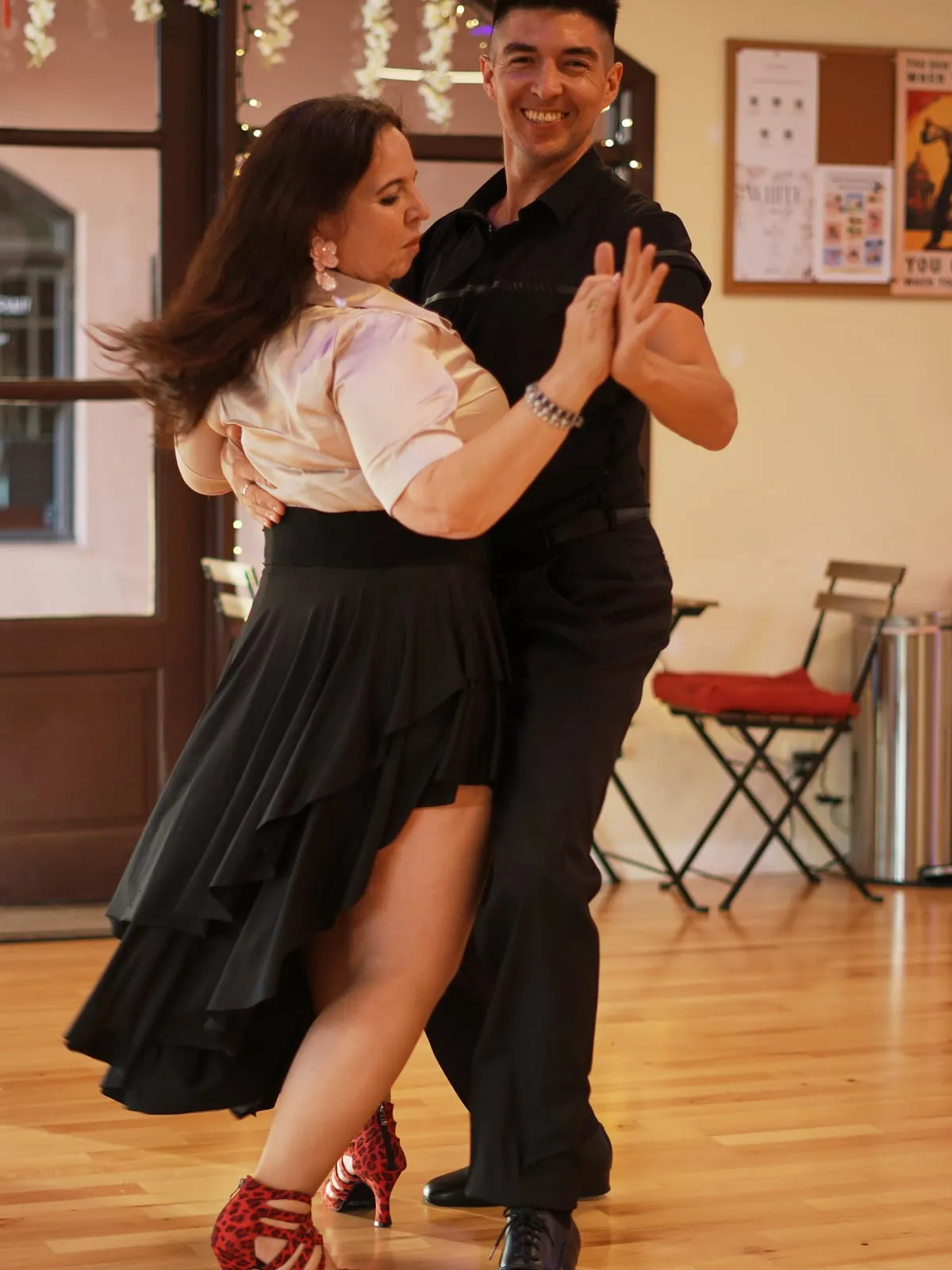
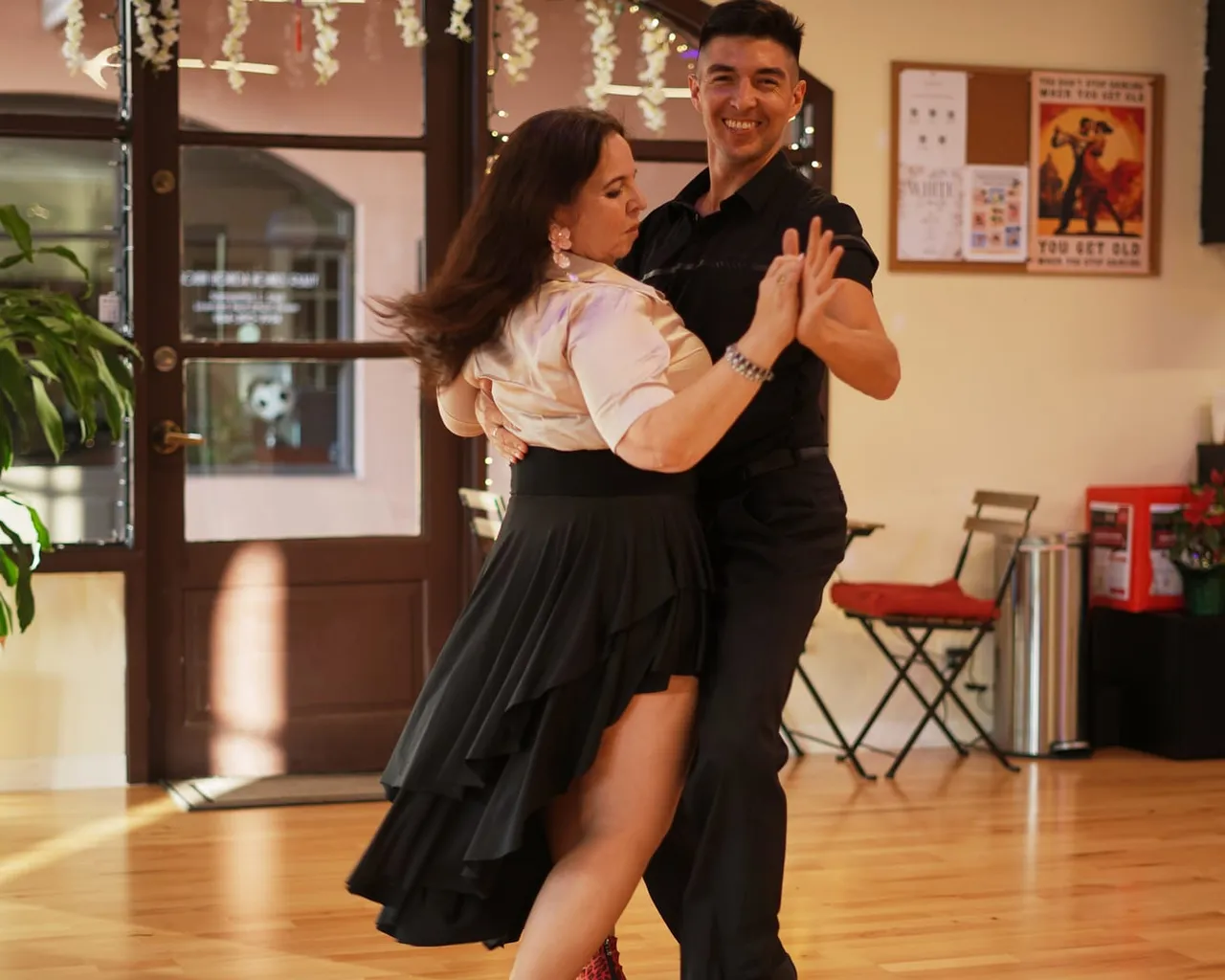
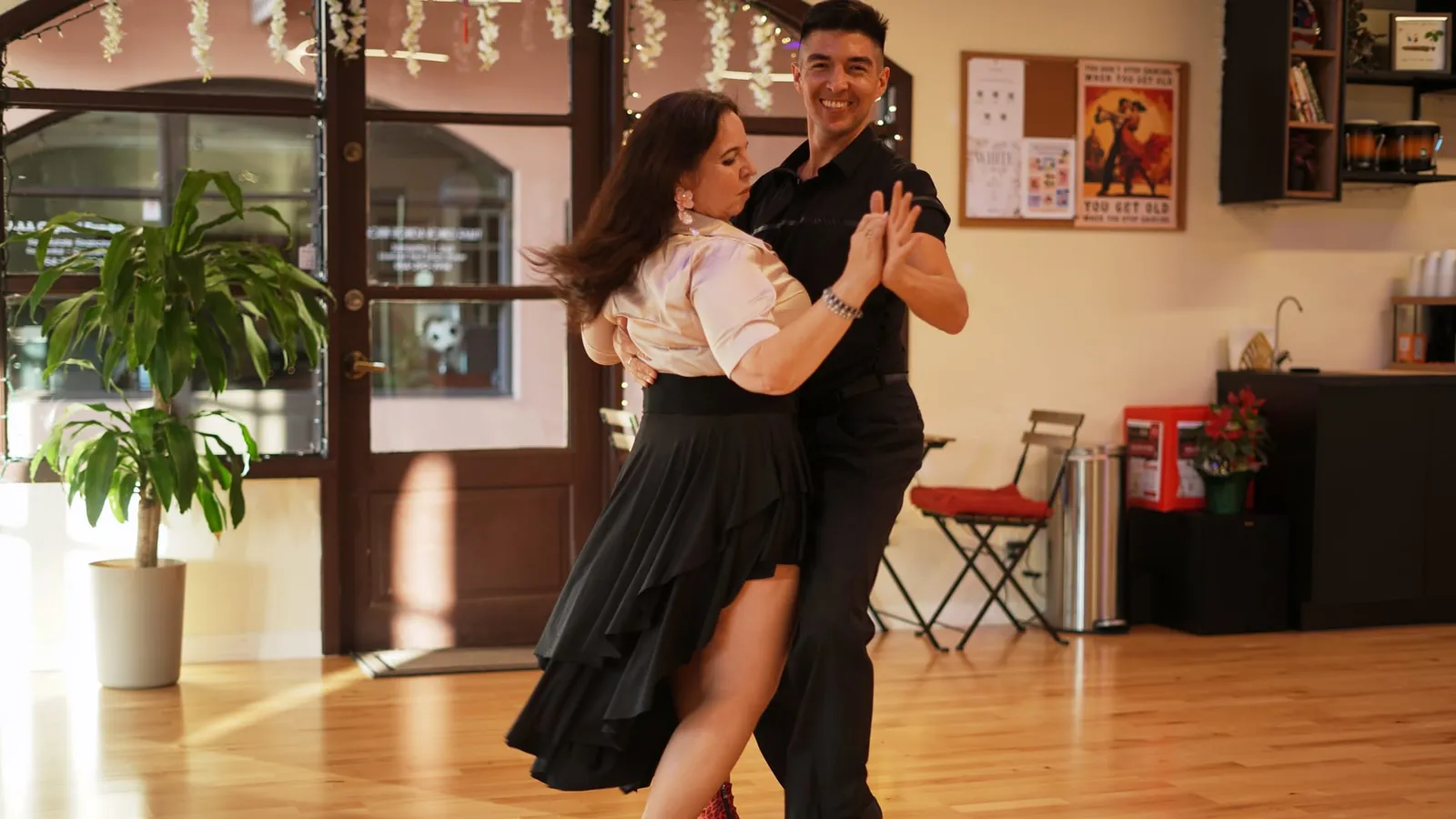
The connection tends to be closer than in Salsa. Frames are often in a closed hold, which means you and your partner are sharing weight and listening to each other through the whole body, not just the hands. The hip movement that Bachata is known for comes from a soft knee bend on every step — bend, transfer, bend, tap. People who try to manufacture the hip motion usually look stiff. People who let it happen tend to look great.
Who it suits best
For couples, Bachata is probably the easiest partner dance to pick up together. The learning curve is gentle, the music is romantic, and the basic step takes you most of the way. After three or four months of consistent lessons, most couples can dance Bachata at a wedding or on vacation and have a real time, not a stiff one.
For singles, Bachata fits the same social-dance world as Salsa, but it asks less of you upfront. The simpler step means you can show up to a Bachata night with maybe two months of lessons and actually enjoy yourself instead of counting in your head the whole time.
People often try Bachata after struggling with the faster footwork of Salsa. That’s a sensible move. Bachata gives you the partnership and the music while taking the speed pressure off.
Wedding couples sometimes pick Bachata for their first dance, especially when the song they want is in 4/4 and on the slower side. The dance flexes well — you can keep it almost entirely traditional and gentle, or work in a sensual moment or two for the chorus. It photographs and films beautifully because the movements are unhurried.
Music & where to dance it
Start with Romeo Santos and Aventura for the modern, urban Bachata sound. Prince Royce for poppier crossovers. Juan Luis Guerra for the classic, more melodic side. Then look for “Bachata Sensual” playlists if you want to hear the slower, more emotional versions that pair with the sensual Bachata style.
Locally, most Salsa nights in Miami and Fort Lauderdale alternate Bachata sets in the rotation. Hard Rock Live in Hollywood books larger Bachata acts when they tour. La Covacha in Doral runs Bachata through the night on Friday and Saturday. Dedicated Bachata socials show up at smaller studios and restaurants on weeknights — once you start dancing, you’ll hear about them.
The romantic Latin dance from the Dominican Republic — slow enough to learn quickly, expressive enough to dance for years.
The first six lessons, roughly.
- 01
Basic side-to-side step
- 02
Lead and follow connection in close hold
- 03
Hip movement and body roll
- 04
Your first turn
- 05
Sensual and modern Bachata variations
- 06
Musicality and song structure
Where you'll actually dance.
- Hard Rock Live (Hollywood)
- La Covacha (Doral)
About Bachata
Bachata came out of the Dominican Republic in the middle of the 20th century, originally as a working-class music played in country bars and street parties. For decades it was considered too rough for polite radio. That changed in the 1990s, when artists like Juan Luis Guerra cleaned up the sound and pushed it onto international charts. Romeo Santos and Aventura made it everywhere.
The dance itself is simpler than Salsa on paper. Four steps to the side, a small hip motion on count four. That structure is what makes Bachata so welcoming. Most people can do the basic step inside ten minutes, which means they get the satisfying part of dancing — actually moving with a partner to music they enjoy — almost immediately. The depth comes later, in body movement, connection, and the modern variations.
In Florida, Bachata has been one of the fastest-growing social dances of the last decade. You’ll find it at most Salsa nights, plus dedicated Bachata socials that have started popping up across Miami and Fort Lauderdale.
What it feels like to dance
Bachata is slower than Salsa, usually around 120-130 BPM. The music has a melancholic quality even when it’s upbeat, with the guitar carrying most of the emotion. That tone shows up in how the dance feels. It’s intimate without being intense.
The connection tends to be closer than in Salsa. Frames are often in a closed hold, which means you and your partner are sharing weight and listening to each other through the whole body, not just the hands. The hip movement that Bachata is known for comes from a soft knee bend on every step — bend, transfer, bend, tap. People who try to manufacture the hip motion usually look stiff. People who let it happen tend to look great.
Who it suits best
For couples, Bachata is probably the easiest partner dance to pick up together. The learning curve is gentle, the music is romantic, and the basic step takes you most of the way. After three or four months of consistent lessons, most couples can dance Bachata at a wedding or on vacation and have a real time, not a stiff one.
For singles, Bachata fits the same social-dance world as Salsa, but it asks less of you upfront. The simpler step means you can show up to a Bachata night with maybe two months of lessons and actually enjoy yourself instead of counting in your head the whole time.
People often try Bachata after struggling with the faster footwork of Salsa. That’s a sensible move. Bachata gives you the partnership and the music while taking the speed pressure off.
Wedding couples sometimes pick Bachata for their first dance, especially when the song they want is in 4/4 and on the slower side. The dance flexes well — you can keep it almost entirely traditional and gentle, or work in a sensual moment or two for the chorus. It photographs and films beautifully because the movements are unhurried.
Music & where to dance it
Start with Romeo Santos and Aventura for the modern, urban Bachata sound. Prince Royce for poppier crossovers. Juan Luis Guerra for the classic, more melodic side. Then look for “Bachata Sensual” playlists if you want to hear the slower, more emotional versions that pair with the sensual Bachata style.
Locally, most Salsa nights in Miami and Fort Lauderdale alternate Bachata sets in the rotation. Hard Rock Live in Hollywood books larger Bachata acts when they tour. La Covacha in Doral runs Bachata through the night on Friday and Saturday. Dedicated Bachata socials show up at smaller studios and restaurants on weeknights — once you start dancing, you’ll hear about them.
Bachata questions,
answered before you book.
How hard is bachata to learn for a complete beginner?
Salsa vs bachata — which one should I learn first?
What's the difference between traditional and sensual bachata, and which do you teach?
Do I need a partner to start bachata?
How long will it take to learn bachata for our wedding first dance?
Where can I actually dance bachata around Fort Lauderdale once I've learned?
Forty-five quiet minutes, just Bachata and the music.
Thank you!
We’ve got your message and we’ll be in touch shortly —
usually within a few hours.