

The first six lessons, roughly.
- 01
Staccato walks and close hold
- 02
Tango promenade and corte
- 03
Sharp turns and head snaps
- 04
Musicality with dramatic phrasing
- 05
Difference between ballroom and Argentine Tango
- 06
Stage presence and posture
Where you'll actually dance.
- Ballroom competitions
- Ballroom showcases
About Tango
There are two dances called Tango, and we teach both. Argentine Tango is the original. It started in the working-class neighborhoods of Buenos Aires in the 1880s, and it stayed improvised and close-hold. Ballroom Tango is what came back to Europe a generation later, after Tango fever swept Paris in the 1910s. By the time it had been tidied up and added to the international competitive syllabus in the 1930s, it was a different dance with the same name. So when a student says “Tango lessons,” we always ask which one.
This page is about the ballroom version. It runs in 2/4 time at about 130 BPM. The music is dramatic. Full string sections, sharp accents, theatrical phrasing. The dance follows the music exactly. Most ballroom dances move continuously. Tango is built on stops. Walk, walk, stop. Walk, walk, head snap. The staccato is what makes it recognizable from across a room.
What it feels like to dance
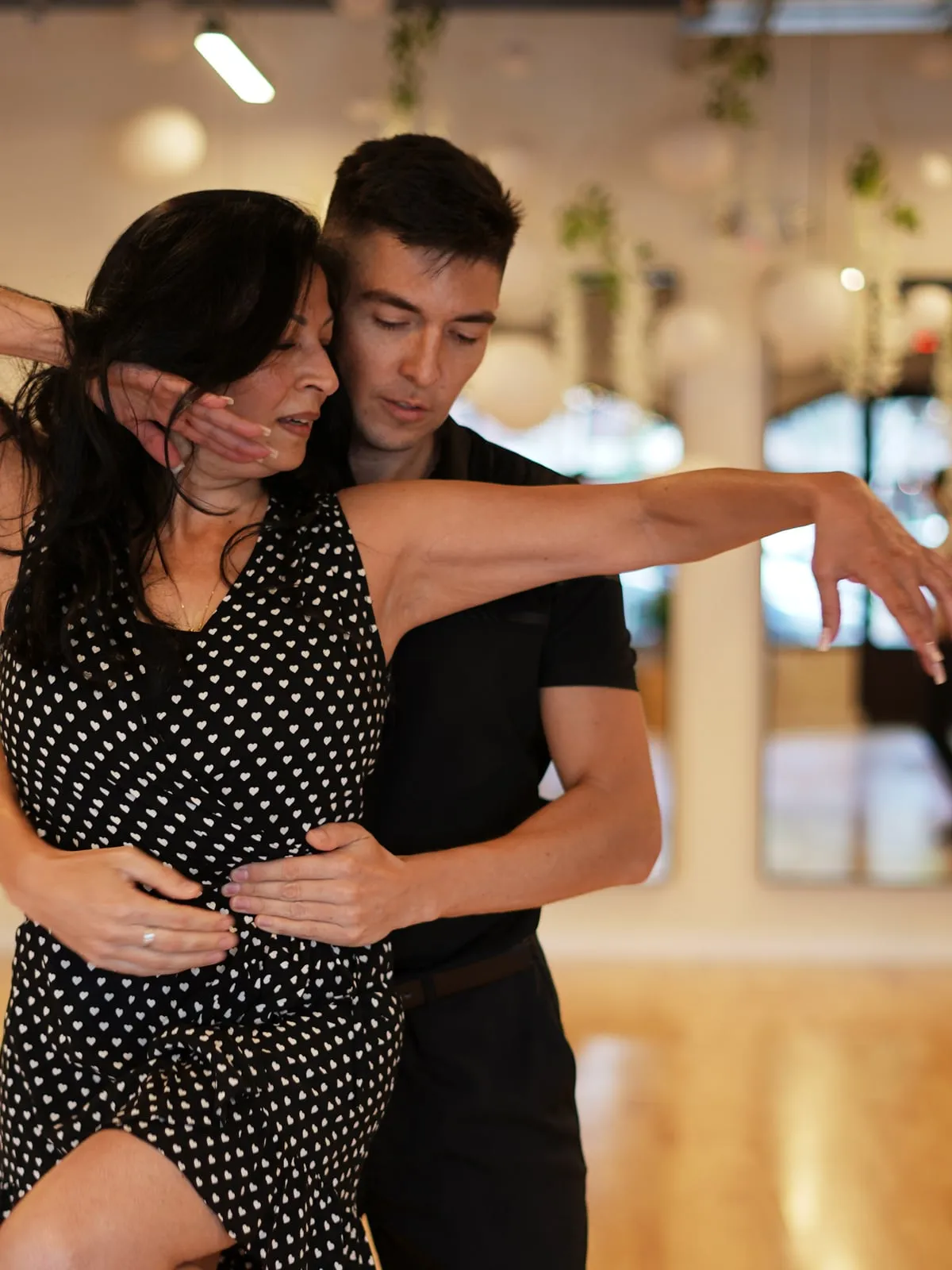
Tango is sharp. The hold is tighter than in other ballroom dances. The leader’s right hand drops a little lower on the follower’s back, the bodies stay closer, and the whole connection feels more contained than in Waltz. Knees stay slightly bent, weight stays forward, and every step has a sense of pressure into the floor.
The signature moves are all built for the look. The corte (a sudden dip backward), the promenade walks with the bodies in a V shape, the head snaps that hit on musical accents. None of these happen in Waltz or Foxtrot. Tango is meant to look intense from the audience seats, and the technique is designed to deliver that look.
Who it suits best
Ballroom Tango is intermediate. We do not usually start beginners with it because the close hold and the staccato timing take a few months to feel natural. Most students come to it after Waltz or Foxtrot is reliable and they want a dramatic third dance.
For wedding couples whose first-dance song is dramatic tango music (“Por una Cabeza” from Scent of a Woman, or any of the tango pieces from Moulin Rouge), ballroom Tango is the natural fit. For couples who already dance Argentine Tango, the ballroom version is the showcase-friendly cousin: bigger movements, more theatrical, easier for an audience to follow at a wedding or party.
Music & where to dance it
“La Cumparsita” and “Por una Cabeza” are the two songs every ballroom Tango dancer can dance to in their sleep. Beyond those, full-orchestra tango arrangements work well — Piazzolla’s more accessible recordings, the Tango selections on most ballroom playlists, and anything by Carlos Gardel at the right tempo.
Locally, ballroom Tango shows up at ballroom socials, showcases, and competitions around South Florida. It does not show up at Argentine Tango milongas — that is a different scene with different etiquette. If you are learning ballroom Tango, plan to dance it in studios and at choreographed events rather than on open social floors.
The dramatic, staccato ballroom version of Tango — sharper and more theatrical than its Argentine cousin.
The first six lessons, roughly.
- 01
Staccato walks and close hold
- 02
Tango promenade and corte
- 03
Sharp turns and head snaps
- 04
Musicality with dramatic phrasing
- 05
Difference between ballroom and Argentine Tango
- 06
Stage presence and posture
Where you'll actually dance.
- Ballroom competitions
- Ballroom showcases
About Tango
There are two dances called Tango, and we teach both. Argentine Tango is the original. It started in the working-class neighborhoods of Buenos Aires in the 1880s, and it stayed improvised and close-hold. Ballroom Tango is what came back to Europe a generation later, after Tango fever swept Paris in the 1910s. By the time it had been tidied up and added to the international competitive syllabus in the 1930s, it was a different dance with the same name. So when a student says “Tango lessons,” we always ask which one.
This page is about the ballroom version. It runs in 2/4 time at about 130 BPM. The music is dramatic. Full string sections, sharp accents, theatrical phrasing. The dance follows the music exactly. Most ballroom dances move continuously. Tango is built on stops. Walk, walk, stop. Walk, walk, head snap. The staccato is what makes it recognizable from across a room.
What it feels like to dance
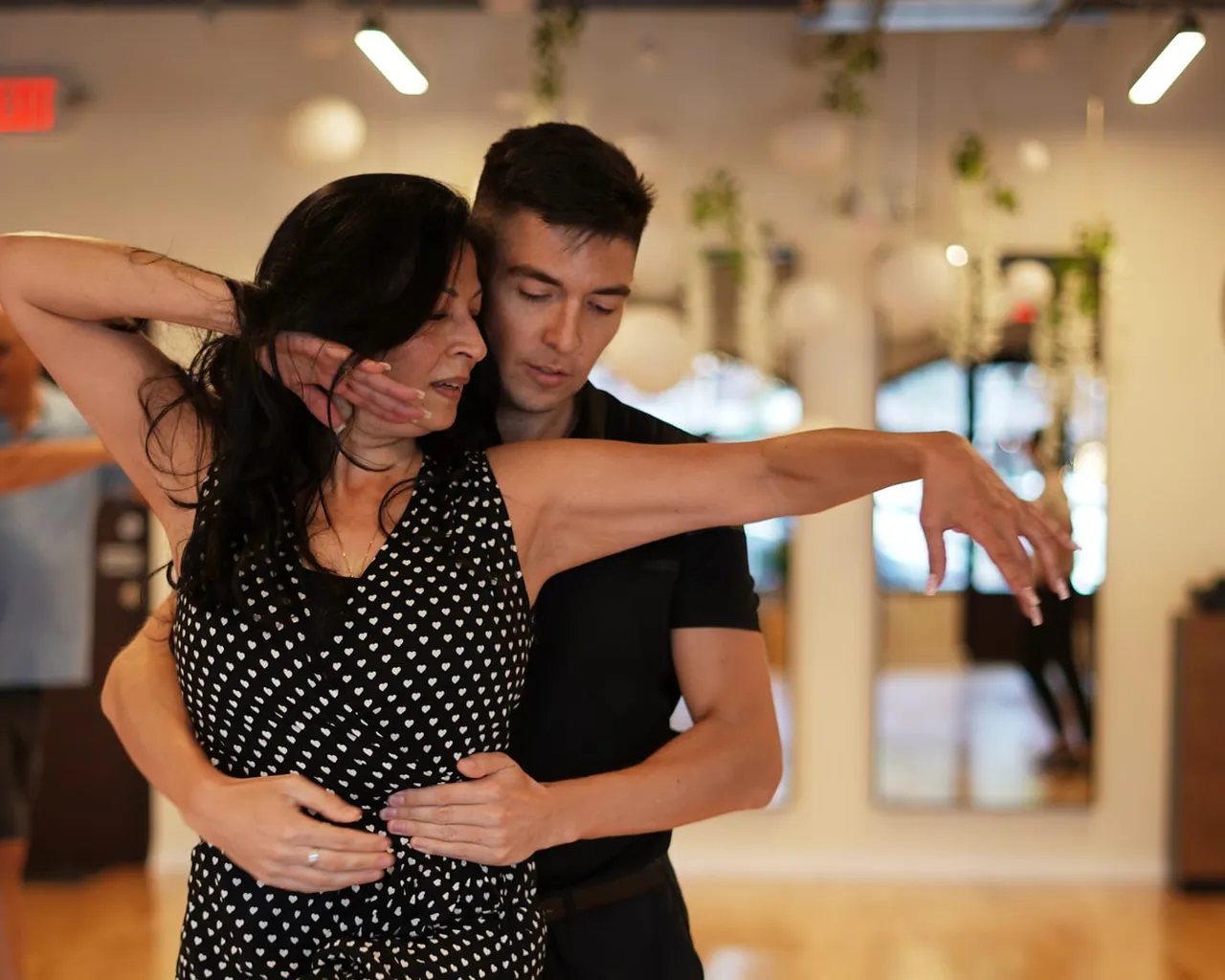
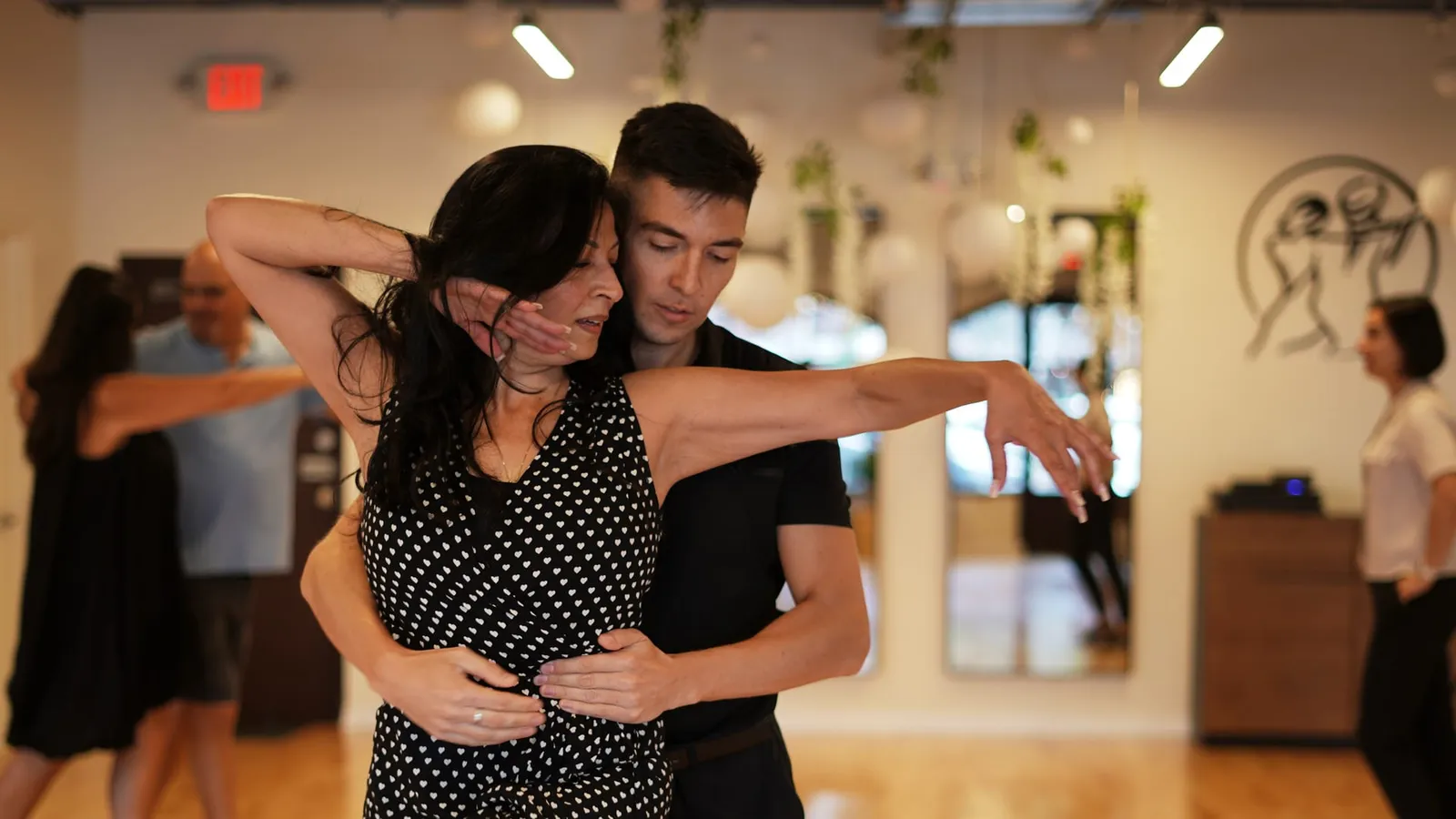
Tango is sharp. The hold is tighter than in other ballroom dances. The leader’s right hand drops a little lower on the follower’s back, the bodies stay closer, and the whole connection feels more contained than in Waltz. Knees stay slightly bent, weight stays forward, and every step has a sense of pressure into the floor.
The signature moves are all built for the look. The corte (a sudden dip backward), the promenade walks with the bodies in a V shape, the head snaps that hit on musical accents. None of these happen in Waltz or Foxtrot. Tango is meant to look intense from the audience seats, and the technique is designed to deliver that look.
Who it suits best
Ballroom Tango is intermediate. We do not usually start beginners with it because the close hold and the staccato timing take a few months to feel natural. Most students come to it after Waltz or Foxtrot is reliable and they want a dramatic third dance.
For wedding couples whose first-dance song is dramatic tango music (“Por una Cabeza” from Scent of a Woman, or any of the tango pieces from Moulin Rouge), ballroom Tango is the natural fit. For couples who already dance Argentine Tango, the ballroom version is the showcase-friendly cousin: bigger movements, more theatrical, easier for an audience to follow at a wedding or party.
Music & where to dance it
“La Cumparsita” and “Por una Cabeza” are the two songs every ballroom Tango dancer can dance to in their sleep. Beyond those, full-orchestra tango arrangements work well — Piazzolla’s more accessible recordings, the Tango selections on most ballroom playlists, and anything by Carlos Gardel at the right tempo.
Locally, ballroom Tango shows up at ballroom socials, showcases, and competitions around South Florida. It does not show up at Argentine Tango milongas — that is a different scene with different etiquette. If you are learning ballroom Tango, plan to dance it in studios and at choreographed events rather than on open social floors.
Tango questions,
answered before you book.
What's the difference between ballroom Tango and Argentine Tango?
How hard is ballroom Tango to learn for a beginner?
What makes ballroom Tango look so dramatic and intense?
How long does it take to learn a Tango routine for a wedding first dance?
Can I learn ballroom Tango without a partner?
Where would I actually dance ballroom Tango around South Florida?
Forty-five quiet minutes, just Tango and the music.
Thank you!
We’ve got your message and we’ll be in touch shortly —
usually within a few hours.