

The first six lessons, roughly.
- 01
Box step and basic Rumba walk
- 02
Cuban motion and hip movement
- 03
Lead and follow in close hold
- 04
Underarm turns and crossover breaks
- 05
Musicality and emotional phrasing
- 06
Foundation for other Latin dances
Where you'll actually dance.
- Local ballroom dance socials
- Wedding receptions across South Florida
About Rumba
The Rumba you’ll dance in a ballroom is a different beast from the Afro-Cuban folk Rumba it descends from. The original Cuban Rumba was a percussion-and-vocals street dance from the 1800s with three substyles (Yambú, Guaguancó, Columbia) that you won’t see in a studio. What we teach is the ballroom Rumba, standardized in Europe and the US in the mid-20th century. It kept the Cuban hip motion and the slow tempo but built a clean partner-dance framework around it.
The result is the slowest of the five competitive Latin dances. Where Salsa runs at 180 BPM and Cha Cha at 120, ballroom Rumba lives around 100 BPM. That slowness is what makes Rumba so widely loved at weddings, anniversaries, and ballroom socials. It pairs naturally with slow ballads, which means almost any romantic song in 4/4 time can become a Rumba.
What it feels like to dance
Rumba is about Cuban motion. Every step transfers weight deliberately from one foot to the other, with the standing leg straightening as you settle into it. The hip drops because of the leg straightening, not because anyone is trying to swing them. When that’s working, the dance feels effortless. When it’s not, it feels like swaying.
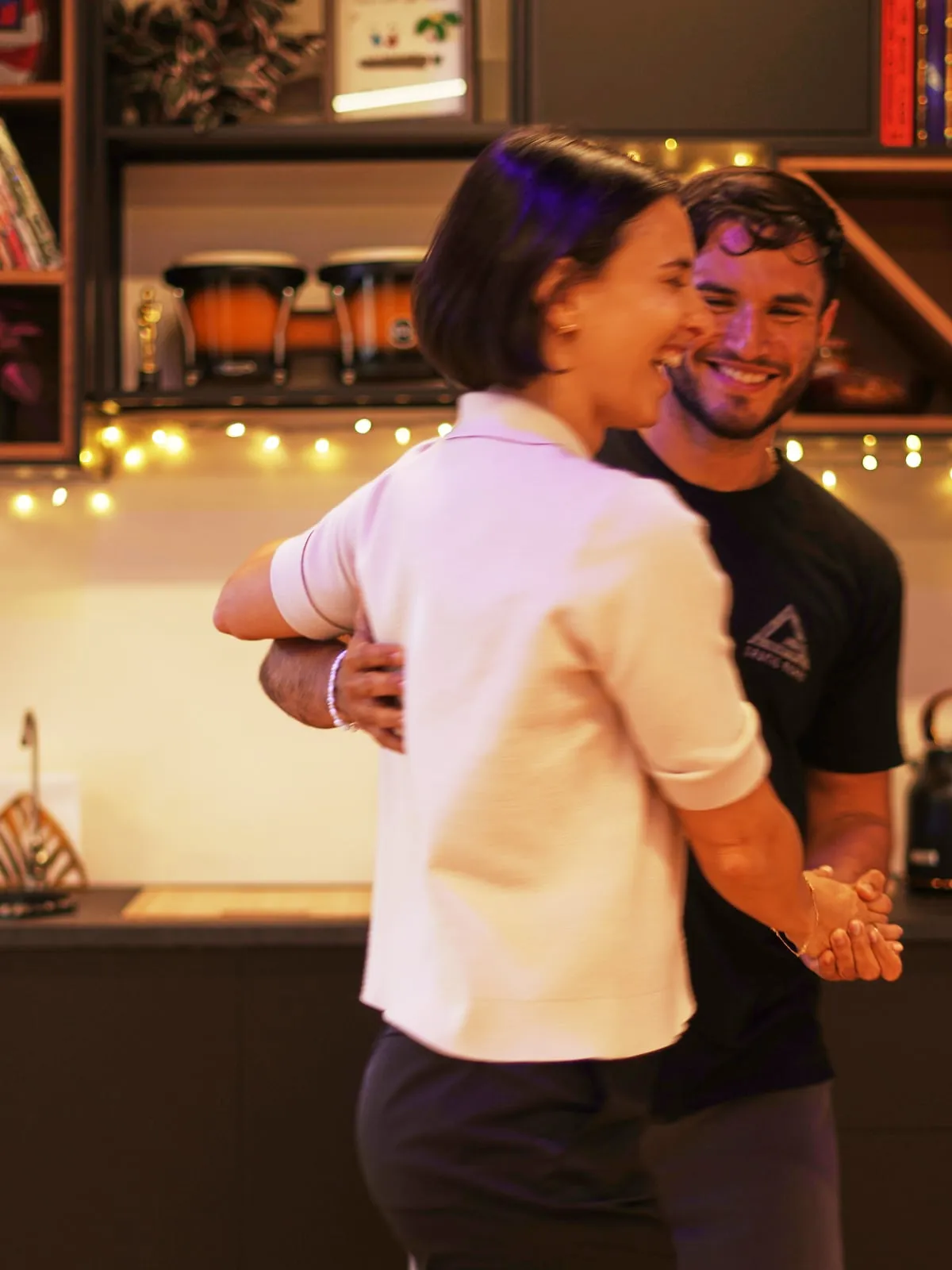
The connection between partners is typically in a closed or semi-open hold, hands light but always present. Rumba has more eye contact than Salsa and less than Tango. Because the tempo is slow, you have time to actually look at the person you’re dancing with — which sounds simple but turns out to be the part most students remember. Other partner dances move too fast for genuine eye contact during the basic step.
Who it suits best
Rumba is the ballroom dance we recommend most often to wedding couples whose first-dance song doesn’t have a clear waltz or swing rhythm. If the song is in 4/4 and on the slower side (most modern ballads, most Spanish-language ballads, most slow rock songs), Rumba will fit. We can build a routine in three or four lessons that handles the song from start to finish.
For couples who already dance Salsa or Bachata, Rumba is the slower cousin that opens up emotional material the faster dances can’t reach. You’ll dance Rumba differently with your partner than you’ll dance Salsa with a stranger at a club.
For anyone over fifty starting to dance for the first time, Rumba is the gentlest entry into Latin dancing. The basic step is simple. The tempo is forgiving. The connection feels intimate without being intense. We’ve taught Rumba to retired couples who decided this was the year, and to people preparing for a 25th anniversary party. It works for both.
Music & where to dance it
For Rumba music, look first to slow Latin ballads. Luis Miguel’s slower work is full of Rumba-tempo tracks. The Buena Vista Social Club catalog has gorgeous traditional Cuban material that works for ballroom Rumba even though it predates the formalized style. Marc Anthony’s ballads slip easily into Rumba territory. Modern songs with a slow Latin feel — Camila’s “Mientes” or Andrés Calamaro’s quieter songs — also work.
You won’t find dedicated Rumba nights in Miami the way you’ll find dedicated Salsa nights. Where Rumba shows up is at wedding receptions, ballroom socials, and the slow-song stretches at restaurants with live Latin bands. Most ballroom studios across South Florida run a Rumba rotation in their monthly social dances. Once you can dance a clean Rumba, you’ll find places to use it almost everywhere you go.
Slow, romantic, expressive. The ballroom Rumba is the dance couples love most for weddings and anniversaries.
The first six lessons, roughly.
- 01
Box step and basic Rumba walk
- 02
Cuban motion and hip movement
- 03
Lead and follow in close hold
- 04
Underarm turns and crossover breaks
- 05
Musicality and emotional phrasing
- 06
Foundation for other Latin dances
Where you'll actually dance.
- Local ballroom dance socials
- Wedding receptions across South Florida
About Rumba
The Rumba you’ll dance in a ballroom is a different beast from the Afro-Cuban folk Rumba it descends from. The original Cuban Rumba was a percussion-and-vocals street dance from the 1800s with three substyles (Yambú, Guaguancó, Columbia) that you won’t see in a studio. What we teach is the ballroom Rumba, standardized in Europe and the US in the mid-20th century. It kept the Cuban hip motion and the slow tempo but built a clean partner-dance framework around it.
The result is the slowest of the five competitive Latin dances. Where Salsa runs at 180 BPM and Cha Cha at 120, ballroom Rumba lives around 100 BPM. That slowness is what makes Rumba so widely loved at weddings, anniversaries, and ballroom socials. It pairs naturally with slow ballads, which means almost any romantic song in 4/4 time can become a Rumba.
What it feels like to dance
Rumba is about Cuban motion. Every step transfers weight deliberately from one foot to the other, with the standing leg straightening as you settle into it. The hip drops because of the leg straightening, not because anyone is trying to swing them. When that’s working, the dance feels effortless. When it’s not, it feels like swaying.
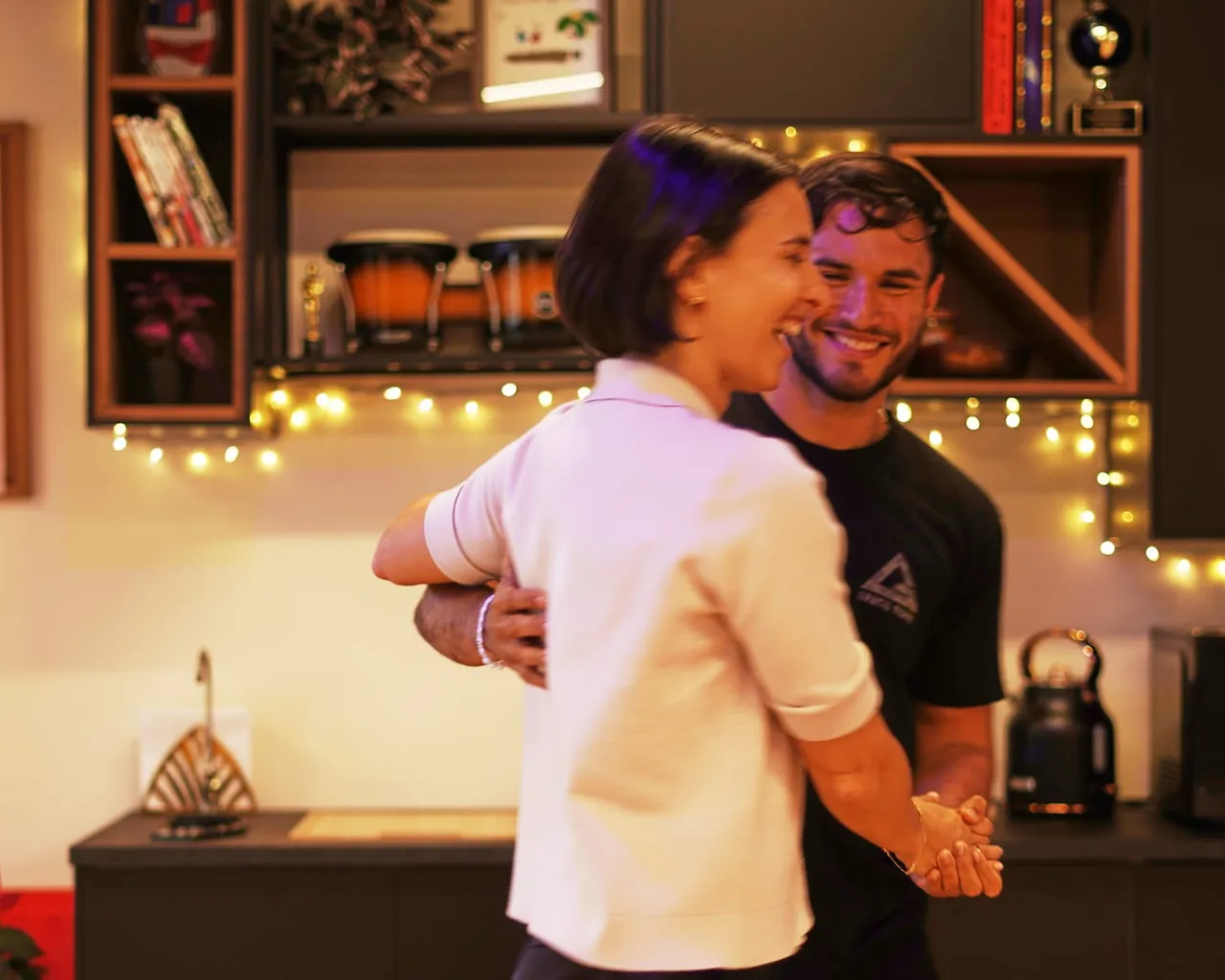
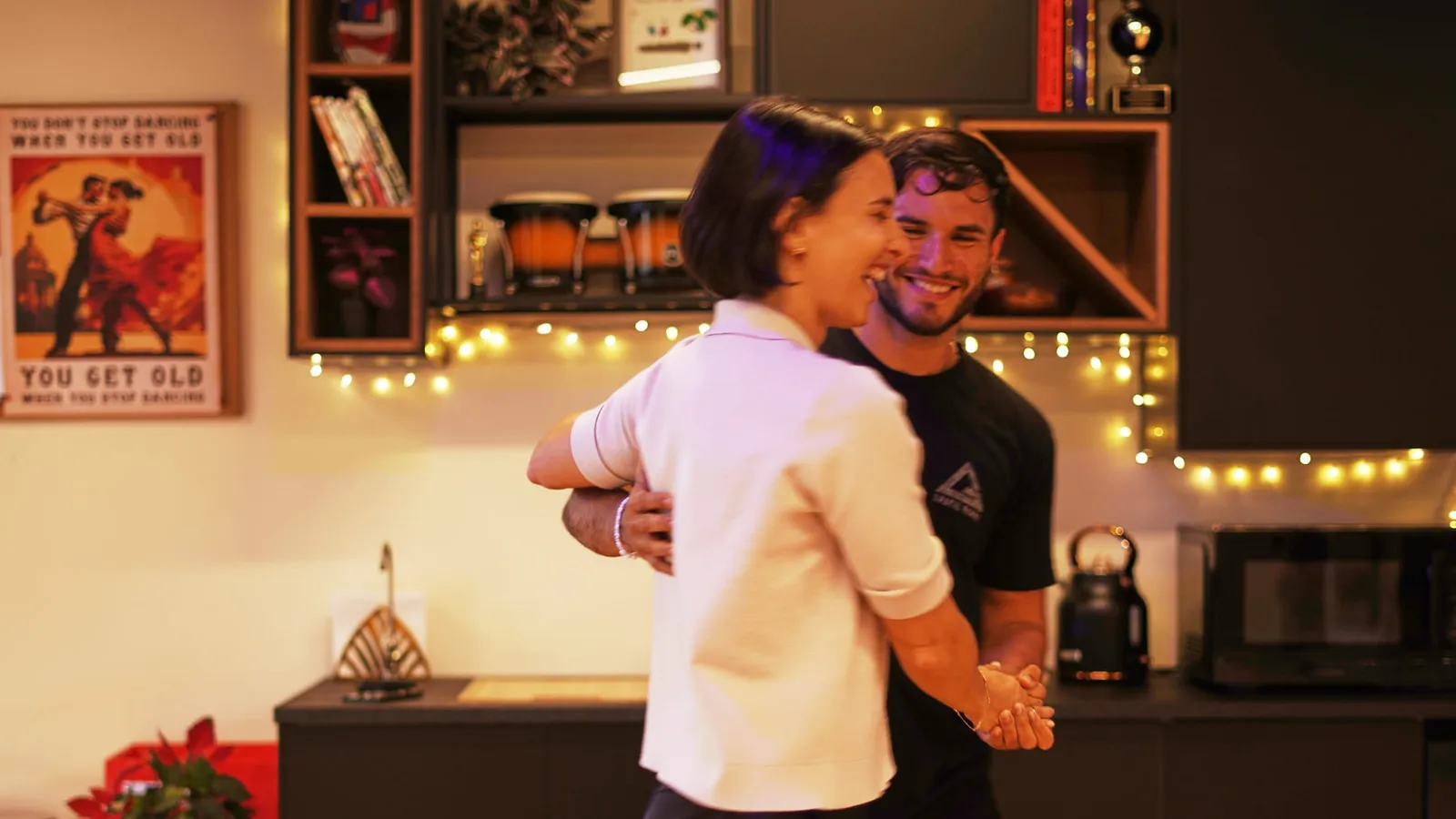
The connection between partners is typically in a closed or semi-open hold, hands light but always present. Rumba has more eye contact than Salsa and less than Tango. Because the tempo is slow, you have time to actually look at the person you’re dancing with — which sounds simple but turns out to be the part most students remember. Other partner dances move too fast for genuine eye contact during the basic step.
Who it suits best
Rumba is the ballroom dance we recommend most often to wedding couples whose first-dance song doesn’t have a clear waltz or swing rhythm. If the song is in 4/4 and on the slower side (most modern ballads, most Spanish-language ballads, most slow rock songs), Rumba will fit. We can build a routine in three or four lessons that handles the song from start to finish.
For couples who already dance Salsa or Bachata, Rumba is the slower cousin that opens up emotional material the faster dances can’t reach. You’ll dance Rumba differently with your partner than you’ll dance Salsa with a stranger at a club.
For anyone over fifty starting to dance for the first time, Rumba is the gentlest entry into Latin dancing. The basic step is simple. The tempo is forgiving. The connection feels intimate without being intense. We’ve taught Rumba to retired couples who decided this was the year, and to people preparing for a 25th anniversary party. It works for both.
Music & where to dance it
For Rumba music, look first to slow Latin ballads. Luis Miguel’s slower work is full of Rumba-tempo tracks. The Buena Vista Social Club catalog has gorgeous traditional Cuban material that works for ballroom Rumba even though it predates the formalized style. Marc Anthony’s ballads slip easily into Rumba territory. Modern songs with a slow Latin feel — Camila’s “Mientes” or Andrés Calamaro’s quieter songs — also work.
You won’t find dedicated Rumba nights in Miami the way you’ll find dedicated Salsa nights. Where Rumba shows up is at wedding receptions, ballroom socials, and the slow-song stretches at restaurants with live Latin bands. Most ballroom studios across South Florida run a Rumba rotation in their monthly social dances. Once you can dance a clean Rumba, you’ll find places to use it almost everywhere you go.
Rumba questions,
answered before you book.
How hard is rumba to learn for a complete beginner?
What is Cuban motion in rumba and why does my hip movement look stiff?
What's the difference between rumba and bolero?
Can I take rumba lessons without a partner?
Is rumba a good choice for our wedding first dance?
How long does it take to learn rumba?
Forty-five quiet minutes, just Rumba and the music.
Thank you!
We’ve got your message and we’ll be in touch shortly —
usually within a few hours.