

The first six lessons, roughly.
- 01
Fast slow-quick-quick rhythm with bounce
- 02
Frame and posture at speed
- 03
Locks, chasses, and runs
- 04
Natural and reverse spin turns
- 05
Floor craft at fast tempos
- 06
Musicality with swing-era jazz
Where you'll actually dance.
- Ballroom showcases
- Swing-themed events across Florida
About Quickstep
Quickstep is what happens when Foxtrot speeds up. In the 1920s the bands started playing faster, and the smooth slow-slow-quick-quick of regular Foxtrot stopped fitting the music. Dancers added hops, runs, kicks, and chassés to keep up, and within a few years Quickstep had broken off as its own ballroom dance. By the 1930s every English ballroom had one, and every American dance card listed it.
The music is 4/4 at around 200 BPM. That is almost twice the speed of slow Foxtrot. On the surface the dance still looks smooth and elegant. Underneath, the feet are doing constant work: skips, lock steps, quarter turns, and the hop patterns the dance is known for. Fred Astaire and Ginger Rogers at full tilt is roughly the right picture.
What it feels like to dance
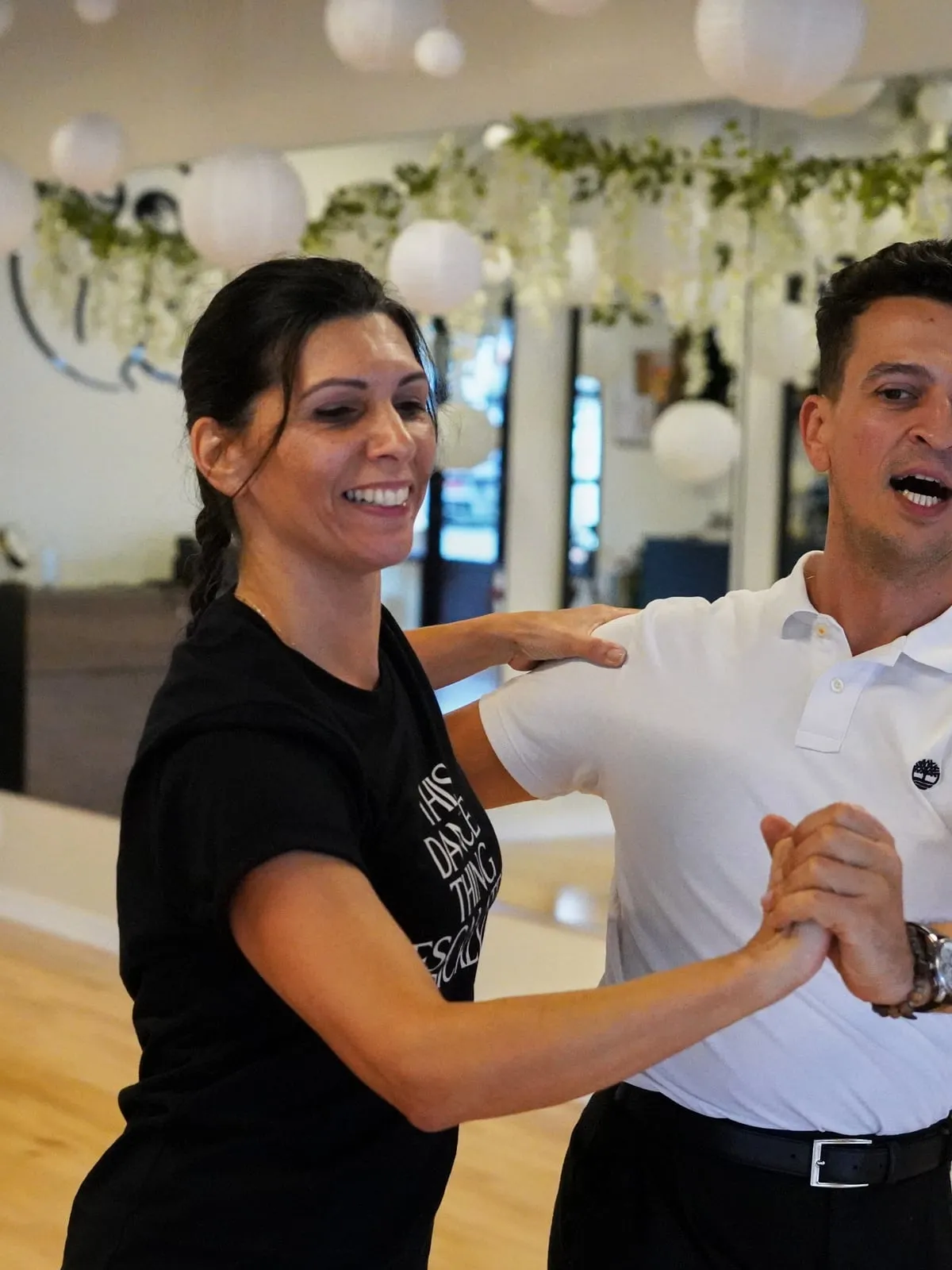
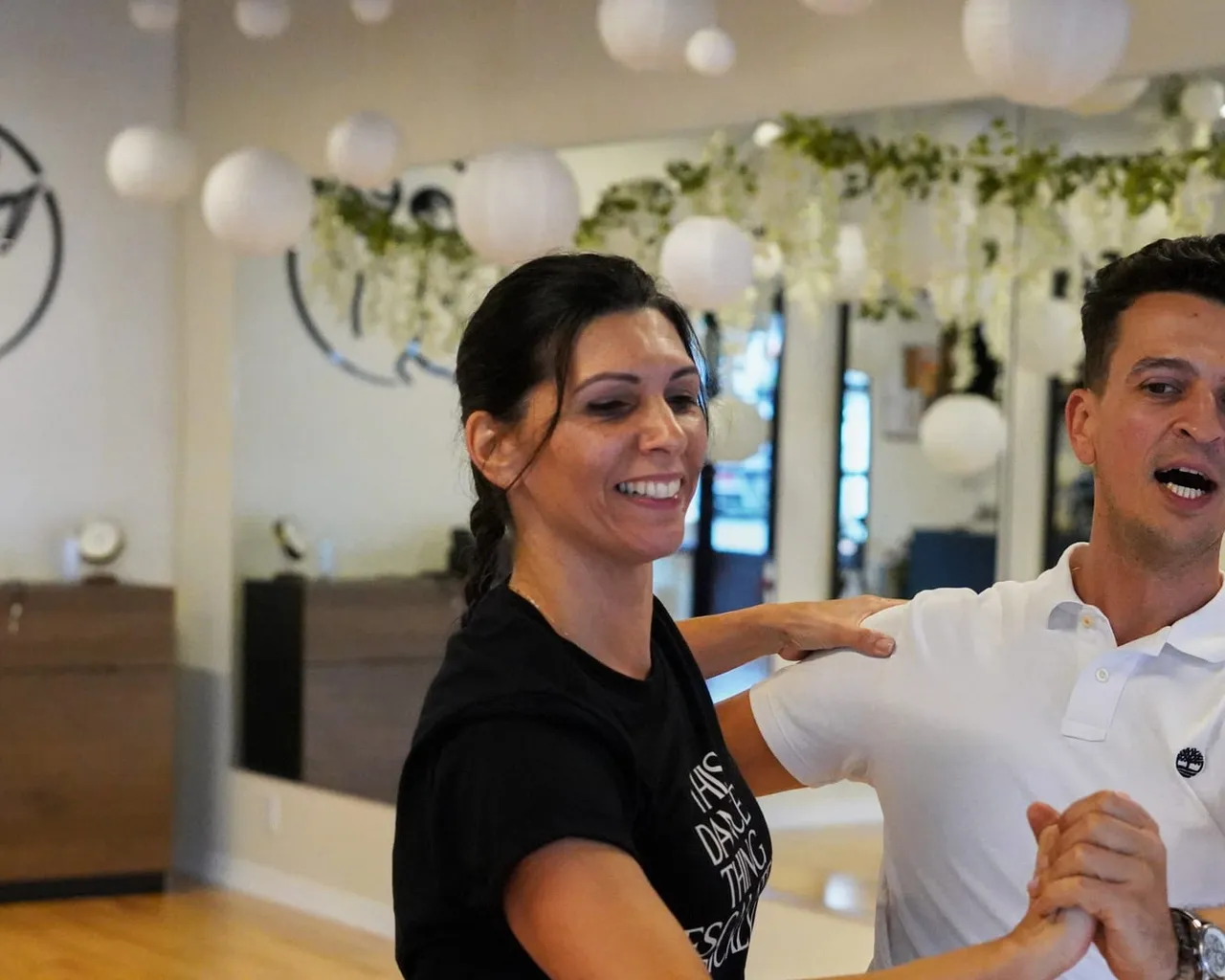
Quickstep is joyful. The tempo is fast enough that thinking about it is a losing strategy. You either feel the rhythm and let the patterns flow, or you fall behind. The hold is the same closed frame as Waltz and Foxtrot, but lighter — knees soft, weight forward, a little bounce on every step.
Where Quickstep gets hard is floor craft. The patterns travel and cover ground, so you have to read the room and steer past other couples without slowing down. That part takes practice. Most students spend the first dozen lessons just getting the basic running step and the chassé reverse turn to feel automatic. The fancier hop patterns come later.
Who it suits best
Quickstep is for couples who already have a comfortable Foxtrot or Waltz and want a faster gear. It is not a beginner dance. The frame and the closed-hold navigation matter more here than in slower dances, because there is less time to recover from anything you get wrong.
For wedding couples, Quickstep occasionally fits. Usually when the first-dance song is upbeat swing-era jazz and the couple wants something more elegant than East Coast Swing but more energetic than Foxtrot. For ballroom regulars, it is the dance most students end up loving once their feet are quick enough to keep up.
Music & where to dance it
The Quickstep songbook is huge because almost any upbeat jazz from the 1930s through 1950s works. Sinatra’s faster tracks, Glenn Miller, Benny Goodman, most Cole Porter in faster arrangements. For modern Quickstep, Postmodern Jukebox and big-band covers of pop songs keep showing up at competitions and showcases.
Locally, Quickstep shows up at any ballroom social in South Florida that includes the full International Standard set, at competitive events, and at wedding receptions with a swing-band playlist. Once you can dance a clean Quickstep, you will start hearing songs you did not know were Quickstep tempo on the radio constantly.
Fast, bouncing, and joyful — the Quickstep is what happens when 1920s jazz collides with ballroom precision.
The first six lessons, roughly.
- 01
Fast slow-quick-quick rhythm with bounce
- 02
Frame and posture at speed
- 03
Locks, chasses, and runs
- 04
Natural and reverse spin turns
- 05
Floor craft at fast tempos
- 06
Musicality with swing-era jazz
Where you'll actually dance.
- Ballroom showcases
- Swing-themed events across Florida
About Quickstep
Quickstep is what happens when Foxtrot speeds up. In the 1920s the bands started playing faster, and the smooth slow-slow-quick-quick of regular Foxtrot stopped fitting the music. Dancers added hops, runs, kicks, and chassés to keep up, and within a few years Quickstep had broken off as its own ballroom dance. By the 1930s every English ballroom had one, and every American dance card listed it.
The music is 4/4 at around 200 BPM. That is almost twice the speed of slow Foxtrot. On the surface the dance still looks smooth and elegant. Underneath, the feet are doing constant work: skips, lock steps, quarter turns, and the hop patterns the dance is known for. Fred Astaire and Ginger Rogers at full tilt is roughly the right picture.
What it feels like to dance
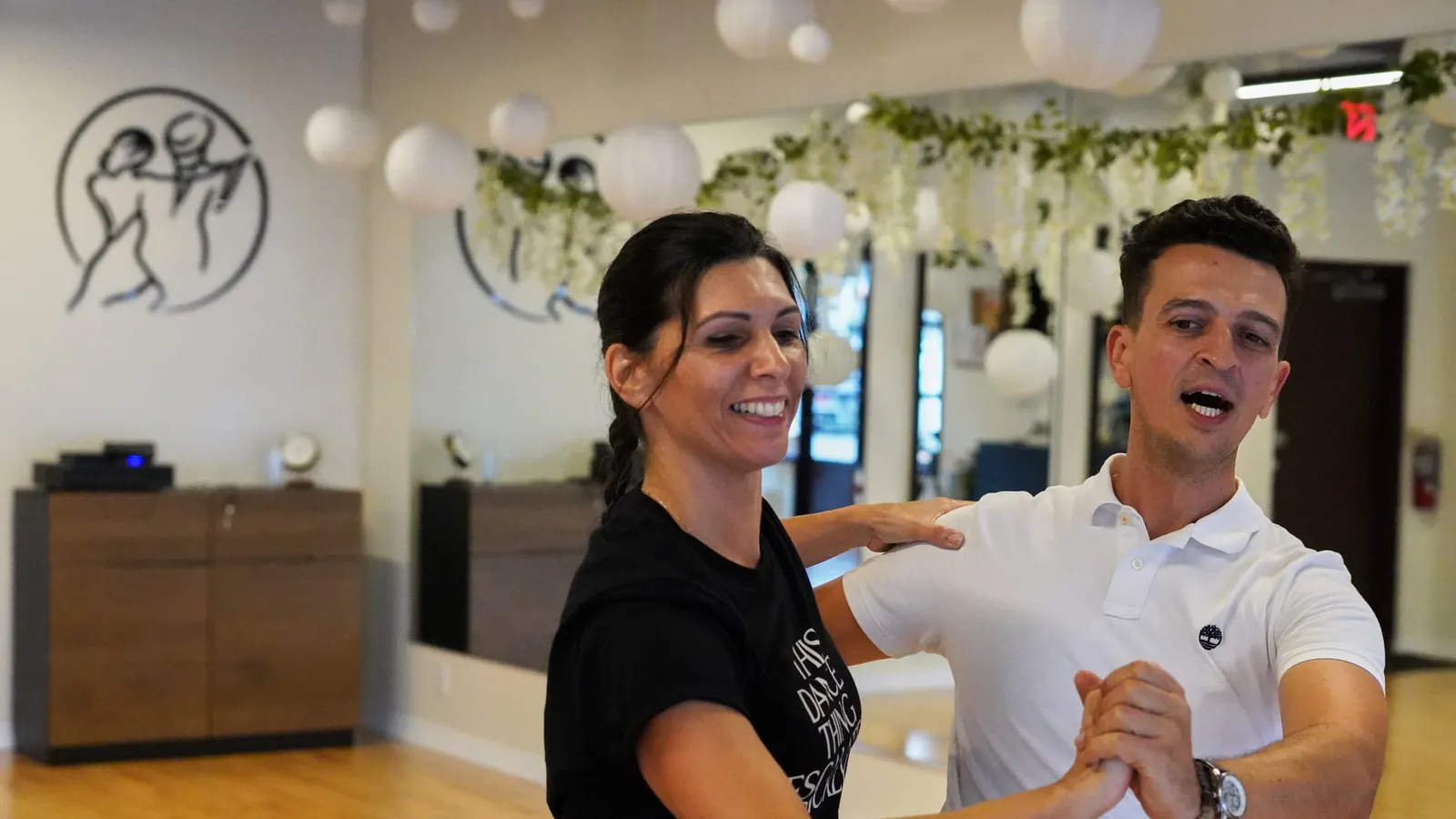
Quickstep is joyful. The tempo is fast enough that thinking about it is a losing strategy. You either feel the rhythm and let the patterns flow, or you fall behind. The hold is the same closed frame as Waltz and Foxtrot, but lighter — knees soft, weight forward, a little bounce on every step.
Where Quickstep gets hard is floor craft. The patterns travel and cover ground, so you have to read the room and steer past other couples without slowing down. That part takes practice. Most students spend the first dozen lessons just getting the basic running step and the chassé reverse turn to feel automatic. The fancier hop patterns come later.
Who it suits best
Quickstep is for couples who already have a comfortable Foxtrot or Waltz and want a faster gear. It is not a beginner dance. The frame and the closed-hold navigation matter more here than in slower dances, because there is less time to recover from anything you get wrong.
For wedding couples, Quickstep occasionally fits. Usually when the first-dance song is upbeat swing-era jazz and the couple wants something more elegant than East Coast Swing but more energetic than Foxtrot. For ballroom regulars, it is the dance most students end up loving once their feet are quick enough to keep up.
Music & where to dance it
The Quickstep songbook is huge because almost any upbeat jazz from the 1930s through 1950s works. Sinatra’s faster tracks, Glenn Miller, Benny Goodman, most Cole Porter in faster arrangements. For modern Quickstep, Postmodern Jukebox and big-band covers of pop songs keep showing up at competitions and showcases.
Locally, Quickstep shows up at any ballroom social in South Florida that includes the full International Standard set, at competitive events, and at wedding receptions with a swing-band playlist. Once you can dance a clean Quickstep, you will start hearing songs you did not know were Quickstep tempo on the radio constantly.
Quickstep questions,
answered before you book.
How hard is the Quickstep to learn?
What's the difference between Quickstep and Foxtrot?
How long does it take to learn the Quickstep?
Do I need a partner to learn the Quickstep?
Is the Quickstep a good choice for our wedding first dance?
What should I expect a Quickstep lesson to feel like?
Forty-five quiet minutes, just Quickstep and the music.
Thank you!
We’ve got your message and we’ll be in touch shortly —
usually within a few hours.