
The first six lessons, roughly.
- 01
Marching basic step with strong Spanish posture
- 02
Promenade and counter-promenade
- 03
Sur place and ecart
- 04
Cape work concept (lead movement)
- 05
Musicality with the famous España Cañí highlights
- 06
Dramatic timing and pose work
Where you'll actually dance.
- Ballroom competitions
- Latin ballroom showcases
About Paso Doble
Paso Doble means “double step” in Spanish. The dance is built around the imagery of a bullfight. The leader plays the matador, the follower plays the cape. Not the bull, despite what people sometimes assume.
It came out of southern France and Spain in the early 1900s. Bullfight music played at the start of every corrida, and dancers started moving to it socially. By the mid-twentieth century the figures had been formalized for the international Latin syllabus. That is the version studios teach now.
The music is in 2/4 time at about 120 BPM, with a strong march feel. Almost every Paso routine you will ever see is danced to “España Cañí.” There are specific musical highlights in that piece that competitive Paso choreography hits in the same places, every time. The march itself is steady. What you do over it is sharp.
What it feels like to dance
Paso is theatrical. The posture is strong on purpose: chest lifted, shoulders pulled down and back, head up, eyes proud. There is no Cuban motion in the hips. Every step lands flat-footed with weight pressed into the floor, which is what makes the basic march look as deliberate as it does.
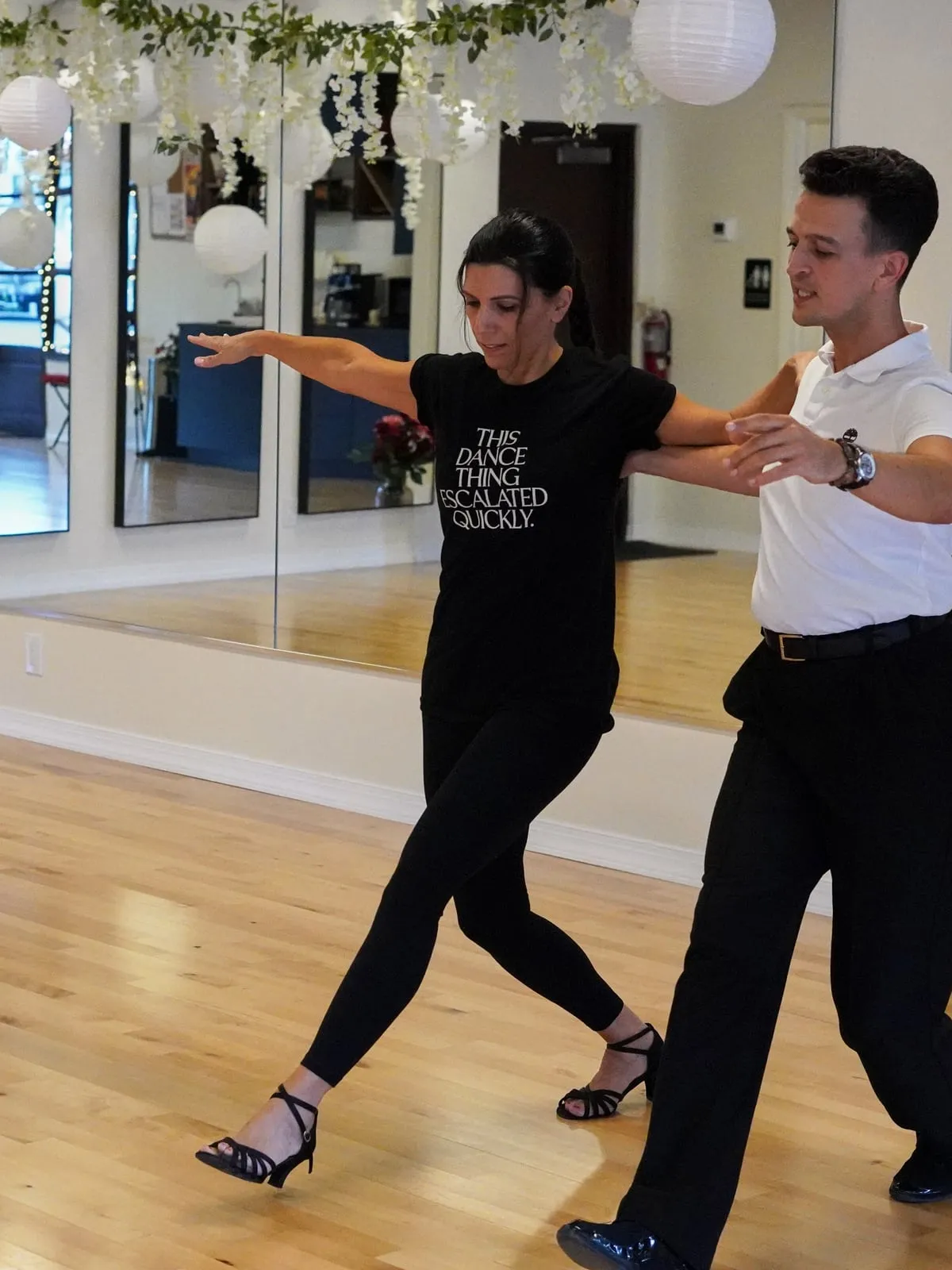
The interesting part is the cape work. The leader’s left arm becomes the cape. Held out, swept across, drawing the follower around. The follower travels around the leader the way a cape travels around a matador, in long fast steps with sudden stops on the music. Done well, Paso looks closer to flamenco than to ballroom.
Who it suits best
Paso is the most niche dance we teach. It is intermediate — you want a comfortable Cha Cha or Rumba before you start adding it. It also does not show up at weddings or general ballroom socials the way Waltz and Foxtrot do, so most students take it because they love the music or want a complete competitive Latin set.
Where Paso pays off is on showcase nights and in choreographed routines. The strong posture and clean lines read from across the room, so even a basic Paso looks more impressive than the technical difficulty would suggest. Couples who have danced together for a few years sometimes add one Paso to their repertoire for that reason. One big dramatic piece for an anniversary or a studio party.
Music & where to dance it
“España Cañí” is the song every Paso routine in the world is built on. Beyond that, Spanish pasodoble marches (mostly instrumental), flamenco-leaning classical pieces, and modern arrangements that keep the 2/4 march will all work.
There are no dedicated Paso nights. The places to dance it are ballroom competitions, studio showcases, and choreographed performances. If you take Paso lessons, plan on dancing it on a stage rather than on a social floor.
Dramatic, theatrical, and rooted in the Spanish bullfight tradition — Paso Doble is ballroom at its most cinematic.
The first six lessons, roughly.
- 01
Marching basic step with strong Spanish posture
- 02
Promenade and counter-promenade
- 03
Sur place and ecart
- 04
Cape work concept (lead movement)
- 05
Musicality with the famous España Cañí highlights
- 06
Dramatic timing and pose work
Where you'll actually dance.
- Ballroom competitions
- Latin ballroom showcases
About Paso Doble
Paso Doble means “double step” in Spanish. The dance is built around the imagery of a bullfight. The leader plays the matador, the follower plays the cape. Not the bull, despite what people sometimes assume.
It came out of southern France and Spain in the early 1900s. Bullfight music played at the start of every corrida, and dancers started moving to it socially. By the mid-twentieth century the figures had been formalized for the international Latin syllabus. That is the version studios teach now.
The music is in 2/4 time at about 120 BPM, with a strong march feel. Almost every Paso routine you will ever see is danced to “España Cañí.” There are specific musical highlights in that piece that competitive Paso choreography hits in the same places, every time. The march itself is steady. What you do over it is sharp.
What it feels like to dance
Paso is theatrical. The posture is strong on purpose: chest lifted, shoulders pulled down and back, head up, eyes proud. There is no Cuban motion in the hips. Every step lands flat-footed with weight pressed into the floor, which is what makes the basic march look as deliberate as it does.
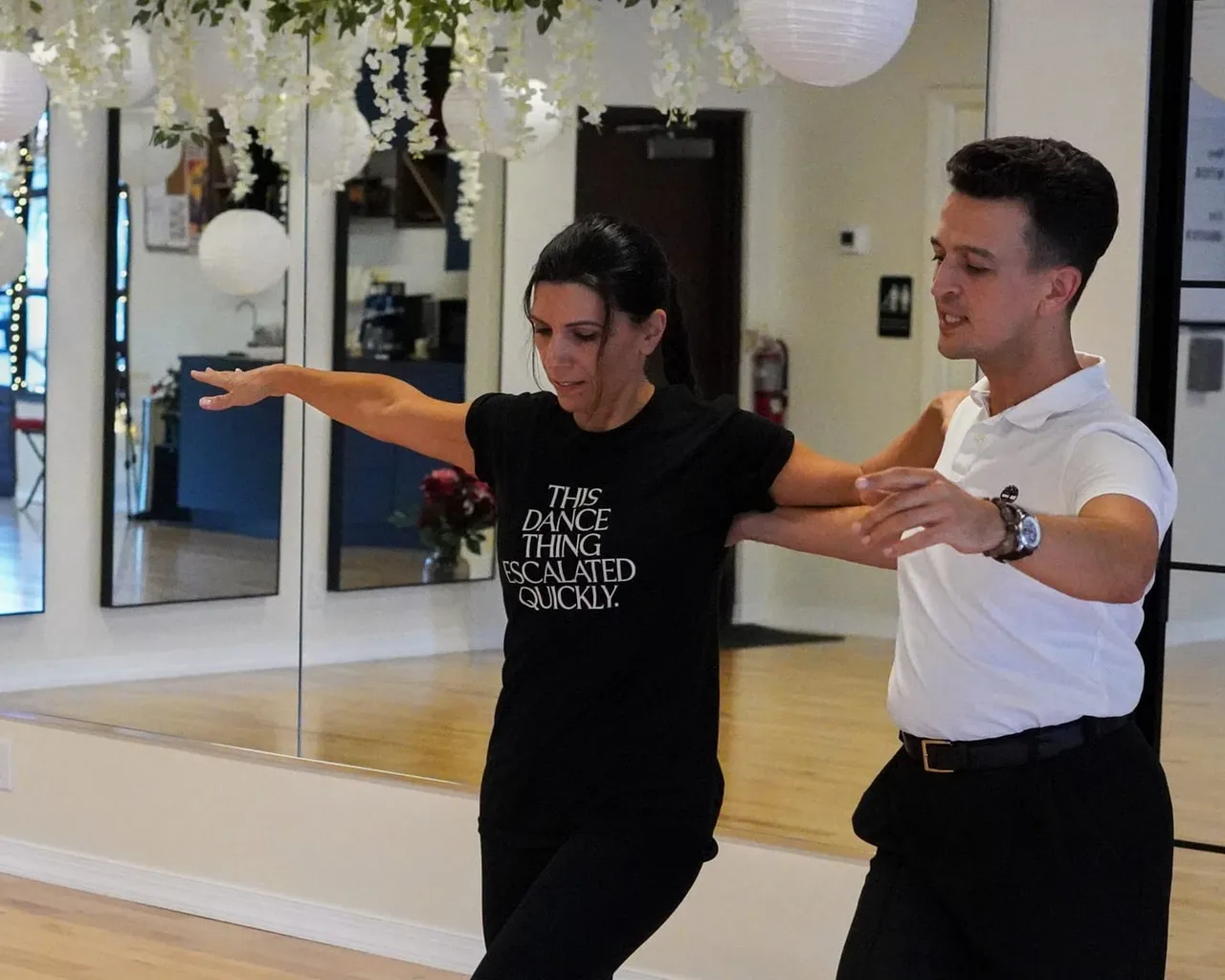
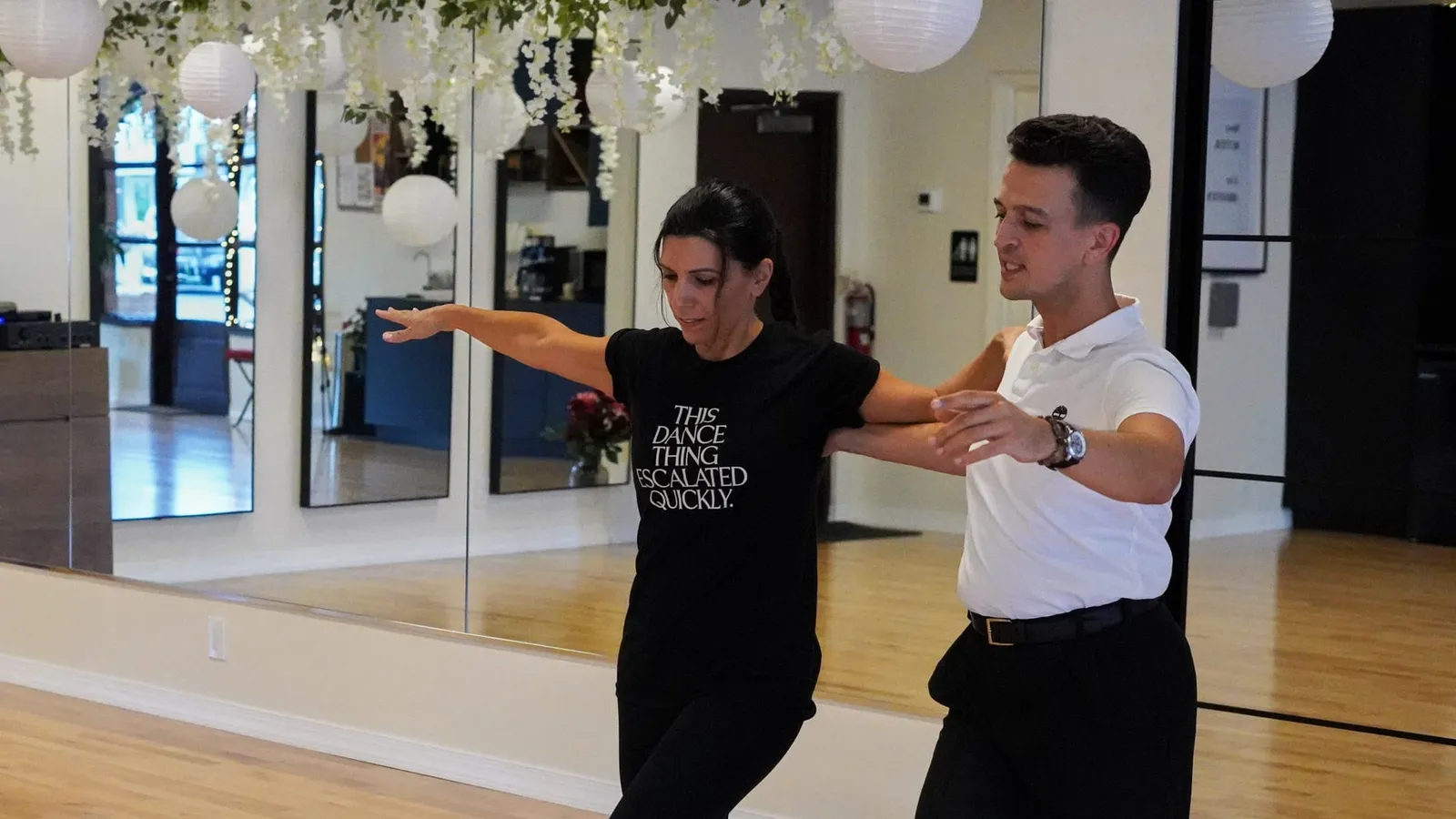
The interesting part is the cape work. The leader’s left arm becomes the cape. Held out, swept across, drawing the follower around. The follower travels around the leader the way a cape travels around a matador, in long fast steps with sudden stops on the music. Done well, Paso looks closer to flamenco than to ballroom.
Who it suits best
Paso is the most niche dance we teach. It is intermediate — you want a comfortable Cha Cha or Rumba before you start adding it. It also does not show up at weddings or general ballroom socials the way Waltz and Foxtrot do, so most students take it because they love the music or want a complete competitive Latin set.
Where Paso pays off is on showcase nights and in choreographed routines. The strong posture and clean lines read from across the room, so even a basic Paso looks more impressive than the technical difficulty would suggest. Couples who have danced together for a few years sometimes add one Paso to their repertoire for that reason. One big dramatic piece for an anniversary or a studio party.
Music & where to dance it
“España Cañí” is the song every Paso routine in the world is built on. Beyond that, Spanish pasodoble marches (mostly instrumental), flamenco-leaning classical pieces, and modern arrangements that keep the 2/4 march will all work.
There are no dedicated Paso nights. The places to dance it are ballroom competitions, studio showcases, and choreographed performances. If you take Paso lessons, plan on dancing it on a stage rather than on a social floor.
Paso Doble questions,
answered before you book.
How hard is Paso Doble to learn?
In Paso Doble, does the follower play the bull?
What's the difference between Paso Doble and Tango?
How long does it take to learn Paso Doble?
Can I learn Paso Doble without a partner?
Is Paso Doble worth learning if I'm not competing?
Forty-five quiet minutes, just Paso Doble and the music.
Thank you!
We’ve got your message and we’ll be in touch shortly —
usually within a few hours.