

The first six lessons, roughly.
- 01
Marching basic step
- 02
Lead and follow in close hold
- 03
Underarm turns and pretzels
- 04
Hip motion that comes from the knees
- 05
Musicality and rhythm
- 06
Transition into other Latin styles
Where you'll actually dance.
- Latin nights across Miami
- Caribbean restaurants and bars
About Merengue
Merengue is the national dance of the Dominican Republic. It came together in the rural Dominican countryside in the 1800s, played by accordion, güira (a metal scraper) and tambora (a two-headed drum), for farmworkers to dance to after long days. The dance follows the music exactly. A steady 2/4 march, no syncopation, no breaks. Two beats over and over with the hips moving on every step.
By the middle of the twentieth century Merengue had become Dominican popular music, and Dominican migration spread it across the Caribbean and into the US. In South Florida it is everywhere: Caribbean restaurants, Latin clubs, wedding receptions, family parties. It is usually the first Latin dance non-Latinos learn, because it is easy to start and almost impossible to mess up.
What it feels like to dance
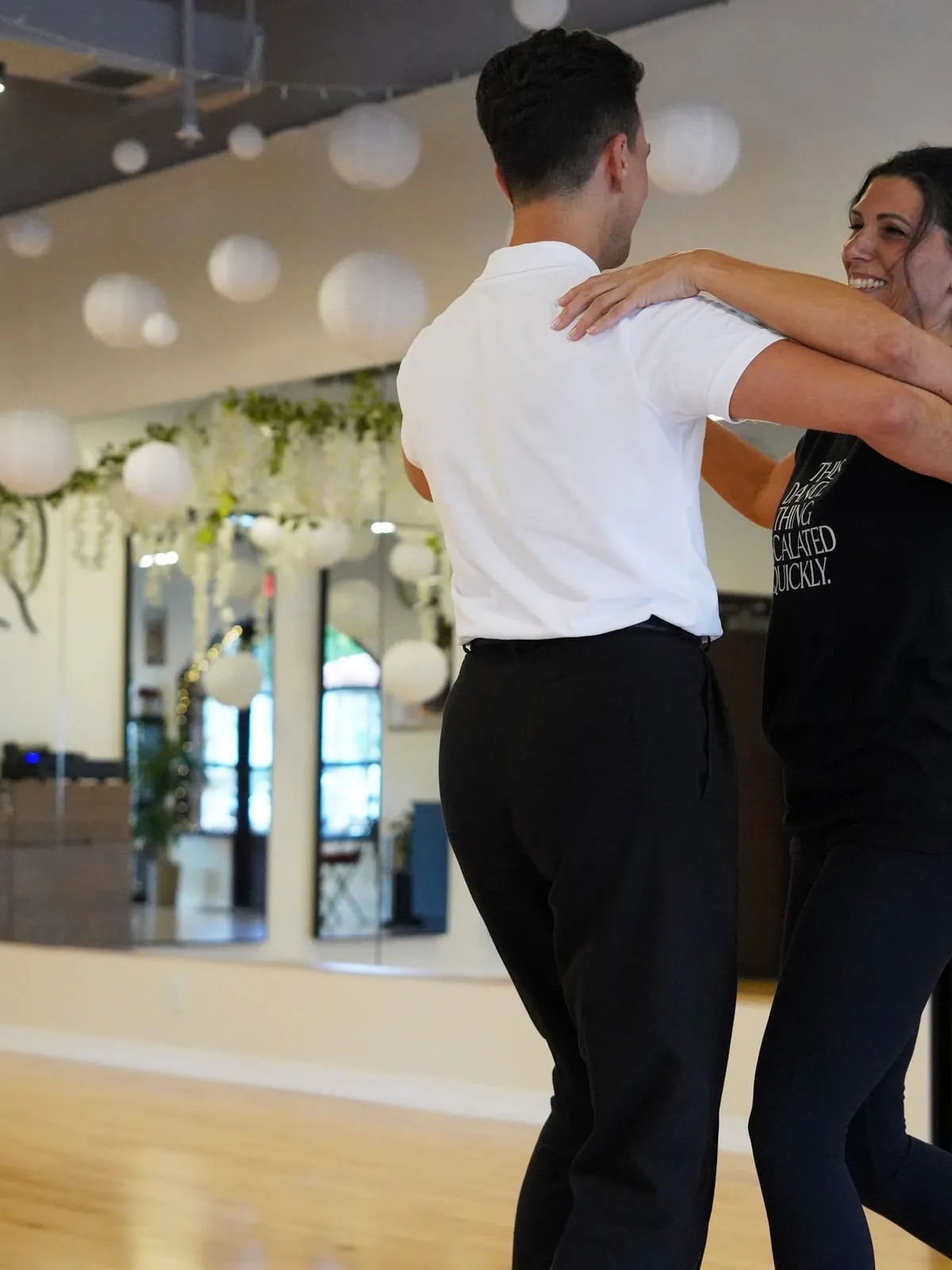
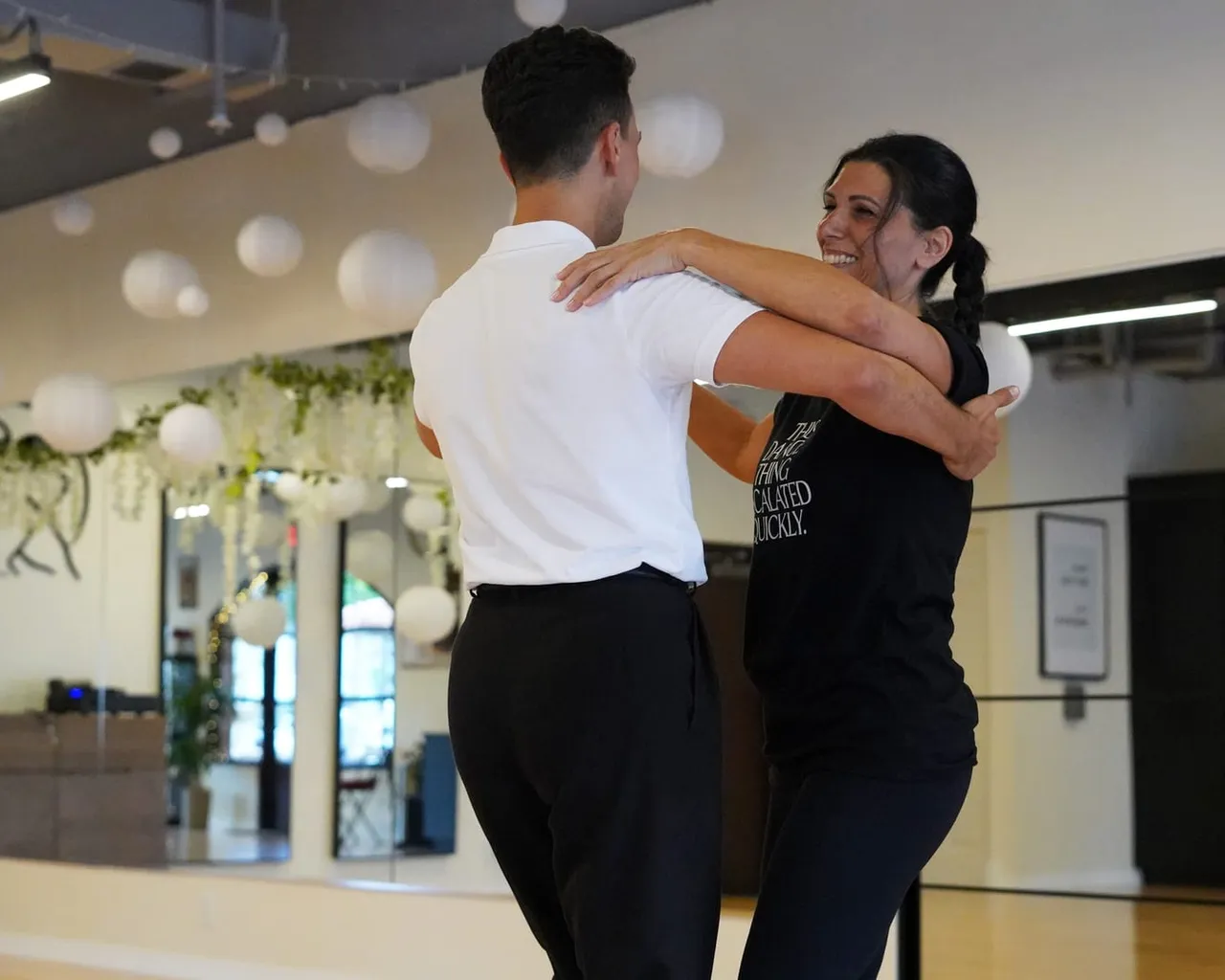
Merengue is the easiest Latin dance to learn. The basic step is a march: left, right, left, right, one step per count. The hips move because the knees bend on each step, not because anyone is forcing them to swing. Beginners pick this up in the first lesson, almost without trying.
The simplicity is also why Merengue is so social. Because the feet are easy, your attention can stay on your partner. Eye contact, conversation, playful turns, the occasional ridiculous spin. You can dance Merengue with someone you just met and have a real time. That is why it shows up at almost every Latin party in South Florida.
Who it suits best
Merengue is the dance we recommend most often when a student wants to be danceable at Latin parties as fast as possible. After two or three lessons you will be comfortable at a wedding, a Caribbean restaurant, or a Latin night. It is also a great gateway into Salsa and Bachata, because the hip work and frame transfer directly.
For couples who want a fun social dance without the complexity of Salsa, Merengue is hard to beat. It works at almost any age and any fitness level. It is also one of the few partner dances where the leader and follower roles feel close to equal. Most of the steps are mirror images, and either partner can suggest a turn without much ceremony.
Music & where to dance it
A few names cover almost all the modern Merengue you will hear. Juan Luis Guerra took Merengue international in the 1990s. “Burbujas de Amor” and “Ojalá Que Llueva Café” are the place to start. Elvis Crespo’s “Suavemente” was the big commercial breakout of that era. Wilfrido Vargas and Sergio Vargas (no relation) carry the older big-band Merengue sound.
In South Florida you will dance Merengue at Caribbean restaurants across Miami and Fort Lauderdale, at Dominican-owned bars, at most Latin wedding receptions, and any time a DJ plays a Latin set. It is one of the most common dances at Hispanic family parties, often danced casually with no formal floor or instructor anywhere in sight.
The simplest Latin dance to learn — and somehow, the most fun. Marching feet, swinging hips, infectious joy.
The first six lessons, roughly.
- 01
Marching basic step
- 02
Lead and follow in close hold
- 03
Underarm turns and pretzels
- 04
Hip motion that comes from the knees
- 05
Musicality and rhythm
- 06
Transition into other Latin styles
Where you'll actually dance.
- Latin nights across Miami
- Caribbean restaurants and bars
About Merengue
Merengue is the national dance of the Dominican Republic. It came together in the rural Dominican countryside in the 1800s, played by accordion, güira (a metal scraper) and tambora (a two-headed drum), for farmworkers to dance to after long days. The dance follows the music exactly. A steady 2/4 march, no syncopation, no breaks. Two beats over and over with the hips moving on every step.
By the middle of the twentieth century Merengue had become Dominican popular music, and Dominican migration spread it across the Caribbean and into the US. In South Florida it is everywhere: Caribbean restaurants, Latin clubs, wedding receptions, family parties. It is usually the first Latin dance non-Latinos learn, because it is easy to start and almost impossible to mess up.
What it feels like to dance
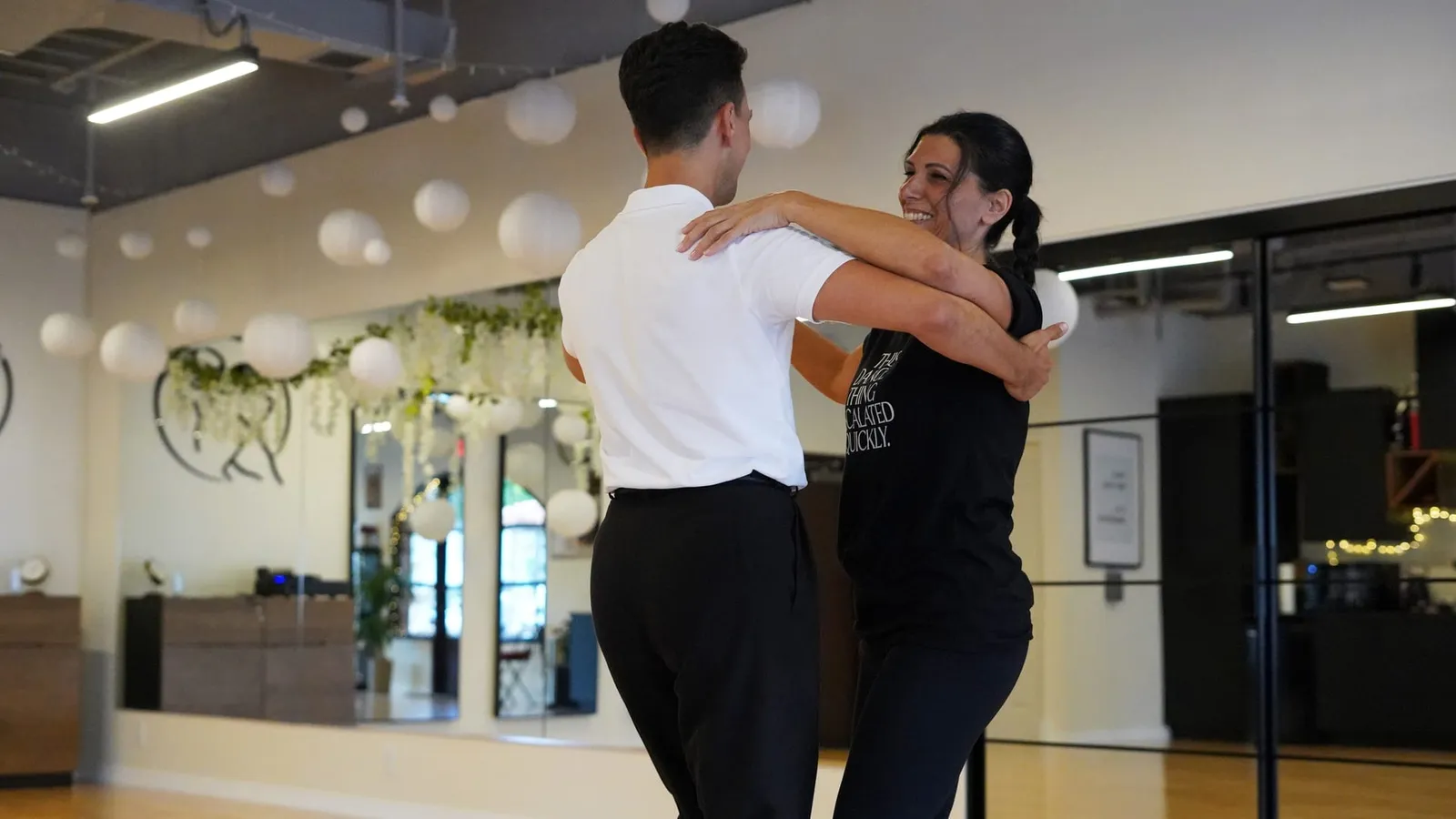
Merengue is the easiest Latin dance to learn. The basic step is a march: left, right, left, right, one step per count. The hips move because the knees bend on each step, not because anyone is forcing them to swing. Beginners pick this up in the first lesson, almost without trying.
The simplicity is also why Merengue is so social. Because the feet are easy, your attention can stay on your partner. Eye contact, conversation, playful turns, the occasional ridiculous spin. You can dance Merengue with someone you just met and have a real time. That is why it shows up at almost every Latin party in South Florida.
Who it suits best
Merengue is the dance we recommend most often when a student wants to be danceable at Latin parties as fast as possible. After two or three lessons you will be comfortable at a wedding, a Caribbean restaurant, or a Latin night. It is also a great gateway into Salsa and Bachata, because the hip work and frame transfer directly.
For couples who want a fun social dance without the complexity of Salsa, Merengue is hard to beat. It works at almost any age and any fitness level. It is also one of the few partner dances where the leader and follower roles feel close to equal. Most of the steps are mirror images, and either partner can suggest a turn without much ceremony.
Music & where to dance it
A few names cover almost all the modern Merengue you will hear. Juan Luis Guerra took Merengue international in the 1990s. “Burbujas de Amor” and “Ojalá Que Llueva Café” are the place to start. Elvis Crespo’s “Suavemente” was the big commercial breakout of that era. Wilfrido Vargas and Sergio Vargas (no relation) carry the older big-band Merengue sound.
In South Florida you will dance Merengue at Caribbean restaurants across Miami and Fort Lauderdale, at Dominican-owned bars, at most Latin wedding receptions, and any time a DJ plays a Latin set. It is one of the most common dances at Hispanic family parties, often danced casually with no formal floor or instructor anywhere in sight.
Merengue questions,
answered before you book.
How hard is merengue to learn compared to other Latin dances?
Where does merengue come from and what makes the music different?
How long does it take to learn merengue well enough to dance at a party?
Should I learn salsa, bachata, or merengue first?
Can I take merengue lessons without a partner?
Is merengue a good dance for a wedding or a cruise?
Forty-five quiet minutes, just Merengue and the music.
Thank you!
We’ve got your message and we’ll be in touch shortly —
usually within a few hours.