
The first six lessons, roughly.
- 01
Mambo basic on the 2 count (versus Salsa on 1)
- 02
Cross-body lead and shadow position
- 03
Musicality with breaks and stops
- 04
Solo footwork and shines
- 05
Connection in fast tempos
- 06
Transition between Mambo and Salsa
Where you'll actually dance.
- La Covacha (Doral)
- Mambo nights across Miami
About Mambo
Mambo came out of Cuba in the early 1940s. The Cuban bandleader Dámaso Pérez Prado started layering syncopated brass and percussion over a son montuno base, and the result was faster, more aggressive, and more punctuated than anything else in Latin music at the time. Within a few years it had taken over New York. The Palladium Ballroom on 53rd Street became the center of the Mambo world through the 1950s, and a distinct New York style grew up there that was different from the Cuban original.
Mambo runs in 4/4 at around 180 BPM. What defines it is the break. The dancer pauses and accents on the 2 count rather than the 1. That timing is what separates Mambo from Salsa technically. Salsa borrowed almost everything else from Mambo, but most modern Salsa is danced “on 1.” Mambo proper is danced “on 2.” If you have ever wondered why some dancers at a Latin night look like they are dancing slightly off-beat compared to everyone else, that is why. They are on 2.
What it feels like to dance
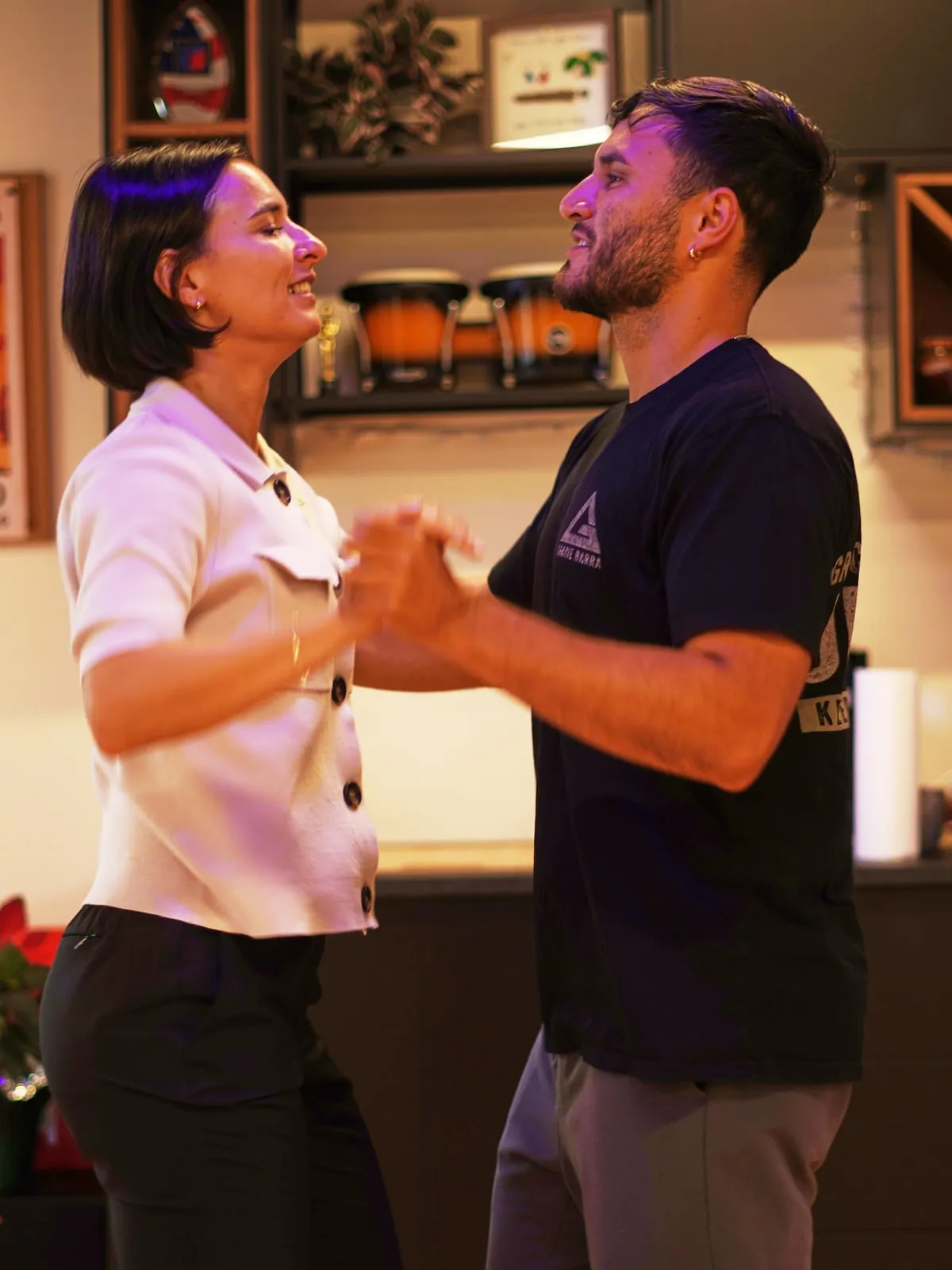
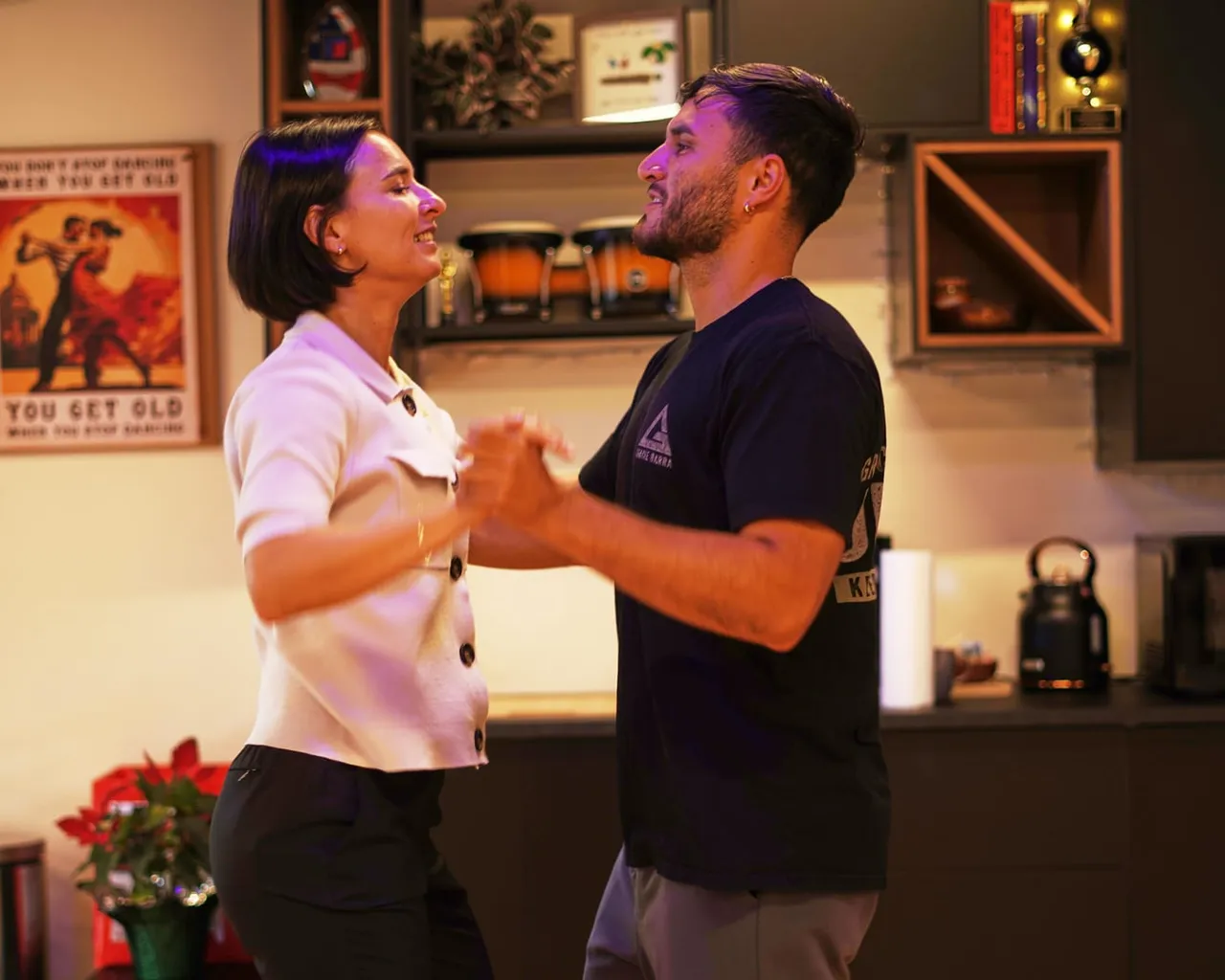
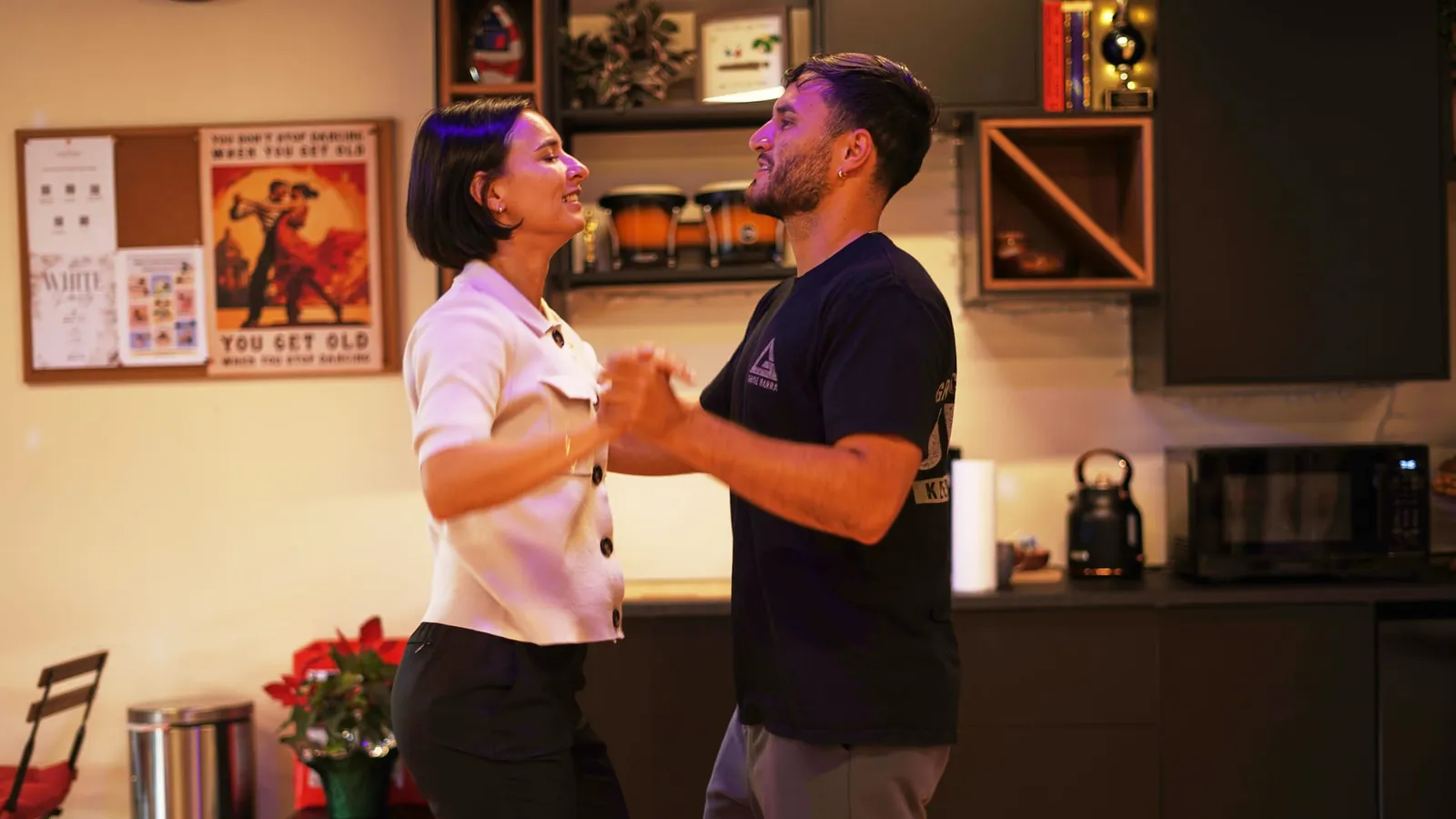
Mambo is sharp. The basic step pattern is the same shape as Salsa (three weight changes across four beats, repeat), but the accents land differently and the upper body carries more tension. The hips still work, but with more control. The feet land cleaner. There is a percussive quality you do not get in Salsa.
What the dance is built around is the break itself. That suspended moment on 2 where everything stops, then the music picks back up and you carry the next phrase forward. Good Mambo dancers play with this constantly. They stretch the pause, accent with a head flick, sometimes drop into a quick shine before resuming. Musicality goes further in Mambo than in any other Latin dance we teach.
Who it suits best
Mambo is intermediate. We do not teach it as a first Latin dance. Most students come to Mambo after they have a comfortable Salsa, because the techniques overlap and the switch from on-1 to on-2 only really makes sense once the basic pattern is automatic.
For dancers who love the New York Salsa scene or the old-school Latin big-band sound, Mambo opens up a huge amount of music that does not quite work on 1. Most Pérez Prado, most Tito Puente, anything from the Palladium era. For showcase couples, Mambo also gives you sharper and more theatrical lines than Salsa typically allows.
Music & where to dance it
Pérez Prado (“Mambo No. 5,” “Mambo No. 8”) is where everyone starts. From there, Tito Puente (anything from his big-band years), Tito Rodríguez, Machito, and Eddie Palmieri. For modern Mambo, Spanish Harlem Orchestra and the current generation of New York Latin jazz players keep recording new material that fits.
In South Florida, dedicated Mambo nights are rare but they exist. La Covacha in Doral runs Latin nights that swing between Salsa and Mambo. A lot of Miami Salsa events include Mambo sets, especially when older Latin jazz musicians play live. You will also hear Mambo at the better Latin restaurants with live bands.
Fast, syncopated, and a direct cousin of Salsa — Mambo is the dance that made New York's Latin scene legendary.
The first six lessons, roughly.
- 01
Mambo basic on the 2 count (versus Salsa on 1)
- 02
Cross-body lead and shadow position
- 03
Musicality with breaks and stops
- 04
Solo footwork and shines
- 05
Connection in fast tempos
- 06
Transition between Mambo and Salsa
Where you'll actually dance.
- La Covacha (Doral)
- Mambo nights across Miami
About Mambo
Mambo came out of Cuba in the early 1940s. The Cuban bandleader Dámaso Pérez Prado started layering syncopated brass and percussion over a son montuno base, and the result was faster, more aggressive, and more punctuated than anything else in Latin music at the time. Within a few years it had taken over New York. The Palladium Ballroom on 53rd Street became the center of the Mambo world through the 1950s, and a distinct New York style grew up there that was different from the Cuban original.
Mambo runs in 4/4 at around 180 BPM. What defines it is the break. The dancer pauses and accents on the 2 count rather than the 1. That timing is what separates Mambo from Salsa technically. Salsa borrowed almost everything else from Mambo, but most modern Salsa is danced “on 1.” Mambo proper is danced “on 2.” If you have ever wondered why some dancers at a Latin night look like they are dancing slightly off-beat compared to everyone else, that is why. They are on 2.
What it feels like to dance
Mambo is sharp. The basic step pattern is the same shape as Salsa (three weight changes across four beats, repeat), but the accents land differently and the upper body carries more tension. The hips still work, but with more control. The feet land cleaner. There is a percussive quality you do not get in Salsa.
What the dance is built around is the break itself. That suspended moment on 2 where everything stops, then the music picks back up and you carry the next phrase forward. Good Mambo dancers play with this constantly. They stretch the pause, accent with a head flick, sometimes drop into a quick shine before resuming. Musicality goes further in Mambo than in any other Latin dance we teach.
Who it suits best
Mambo is intermediate. We do not teach it as a first Latin dance. Most students come to Mambo after they have a comfortable Salsa, because the techniques overlap and the switch from on-1 to on-2 only really makes sense once the basic pattern is automatic.
For dancers who love the New York Salsa scene or the old-school Latin big-band sound, Mambo opens up a huge amount of music that does not quite work on 1. Most Pérez Prado, most Tito Puente, anything from the Palladium era. For showcase couples, Mambo also gives you sharper and more theatrical lines than Salsa typically allows.
Music & where to dance it
Pérez Prado (“Mambo No. 5,” “Mambo No. 8”) is where everyone starts. From there, Tito Puente (anything from his big-band years), Tito Rodríguez, Machito, and Eddie Palmieri. For modern Mambo, Spanish Harlem Orchestra and the current generation of New York Latin jazz players keep recording new material that fits.
In South Florida, dedicated Mambo nights are rare but they exist. La Covacha in Doral runs Latin nights that swing between Salsa and Mambo. A lot of Miami Salsa events include Mambo sets, especially when older Latin jazz musicians play live. You will also hear Mambo at the better Latin restaurants with live bands.
Mambo questions,
answered before you book.
Is mambo hard to learn?
What is the difference between mambo and salsa?
Should I learn salsa before mambo?
Where did mambo come from?
Do I need a partner to learn mambo?
When would I actually use mambo?
Forty-five quiet minutes, just Mambo and the music.
Thank you!
We’ve got your message and we’ll be in touch shortly —
usually within a few hours.