

The first six lessons, roughly.
- 01
Slow box step with rise and fall
- 02
Close-hold connection and frame
- 03
Lead and follow at slow tempos
- 04
Smooth transitions between figures
- 05
Musicality with slow ballads
- 06
How Bolero differs from Rumba
Where you'll actually dance.
- Wedding receptions
- Ballroom dance socials
About Bolero
Bolero started in Santiago de Cuba in the 1880s as a slow song form, then drifted west across the Caribbean and into Mexico. Through the middle of the twentieth century it was the most popular form of romantic music in Latin America. Trio Los Panchos built a whole career on bolero ballads. The dance grew up alongside the music, slower than Rumba, slower than almost anything else in the Latin family, designed for ballads.
The American Bolero we teach today is a blend. The music tradition is Cuban-Mexican, but the dance technique borrows a subtle rise and fall from slow Waltz. It runs in 4/4 time at around 90 BPM, which is about as slow as partner dancing gets. There is Cuban motion in the hips (from Rumba) and a gentle vertical lift on the first beat (from Waltz). When those two things combine, you get the gliding feel that makes Bolero recognizable.
What it feels like to dance
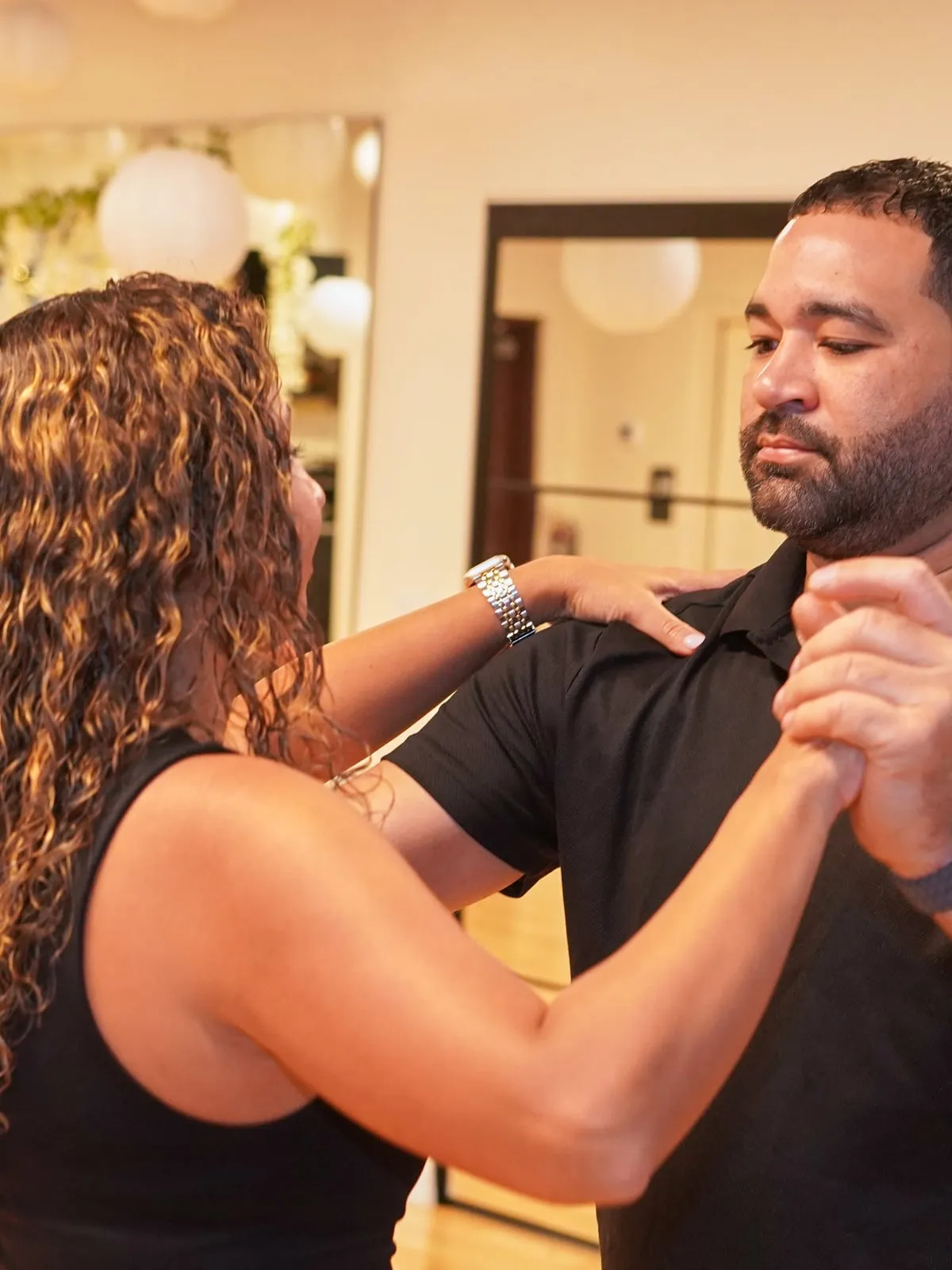
Bolero is the most romantic dance in the Latin family. The tempo is slow enough that there is actually room for things faster dances skip over — eye contact, breathing together, small gestures. The hold can be a closed ballroom frame or a softer Latin embrace, and most couples switch between the two depending on what the song is doing.
The thing that gives Bolero its character is the rise on the first beat. You step out, settle your weight, lift gently, then step again. Combined with the hip motion underneath, it produces a wave-like quality. Couples who try it after months of Salsa or Cha Cha are usually surprised by how much they enjoy slowing down for a while.
Who it suits best
Bolero is one of the dances we recommend most for older couples and for wedding couples whose first-dance song is a slow Spanish-language ballad or a similarly slow English one. The tempo is forgiving. There is time to think between steps, and the dance looks elegant even when the figures are simple.
If you already dance Rumba, Bolero is the obvious next step. The hip work and weight transfers cross over directly, and you get an option for songs that are too slow for Rumba. For wedding couples we usually suggest Bolero when the first-dance song sits in the 80 to 100 BPM range and feels gentle. That covers most modern Spanish ballads, plenty of Sinatra slow numbers, and a surprising number of songs that just sound like Bolero once you have started listening for it.
Music & where to dance it
Start with Trio Los Panchos — “Sin Ti,” “Bésame Mucho,” “Solamente Una Vez.” Then Luis Miguel’s bolero albums from the 1990s, which sold millions of copies for a reason. Andrea Bocelli’s slow Spanish material works at Bolero tempo. A lot of Sinatra’s slower ballads do too.
Bolero shows up at wedding receptions, at ballroom socials with a slow Latin section, and any time a DJ plays a slow Spanish ballad. There is no dedicated Bolero scene — no Bolero nights the way there are Salsa nights — but once you know the dance, the music is everywhere.
Slow, smooth, and deeply romantic. Bolero is the Latin dance you reach for when the music slows down.
The first six lessons, roughly.
- 01
Slow box step with rise and fall
- 02
Close-hold connection and frame
- 03
Lead and follow at slow tempos
- 04
Smooth transitions between figures
- 05
Musicality with slow ballads
- 06
How Bolero differs from Rumba
Where you'll actually dance.
- Wedding receptions
- Ballroom dance socials
About Bolero
Bolero started in Santiago de Cuba in the 1880s as a slow song form, then drifted west across the Caribbean and into Mexico. Through the middle of the twentieth century it was the most popular form of romantic music in Latin America. Trio Los Panchos built a whole career on bolero ballads. The dance grew up alongside the music, slower than Rumba, slower than almost anything else in the Latin family, designed for ballads.
The American Bolero we teach today is a blend. The music tradition is Cuban-Mexican, but the dance technique borrows a subtle rise and fall from slow Waltz. It runs in 4/4 time at around 90 BPM, which is about as slow as partner dancing gets. There is Cuban motion in the hips (from Rumba) and a gentle vertical lift on the first beat (from Waltz). When those two things combine, you get the gliding feel that makes Bolero recognizable.
What it feels like to dance
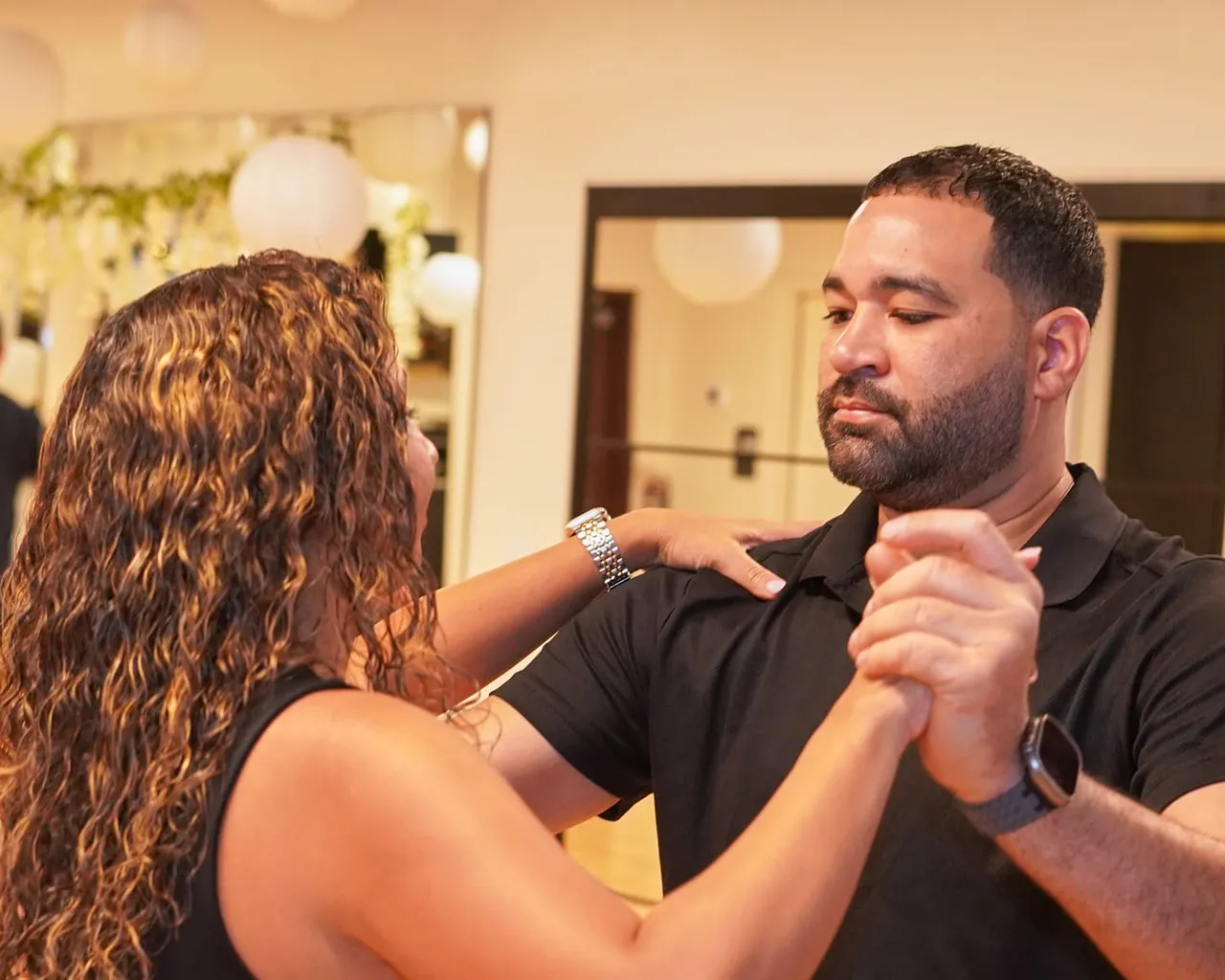
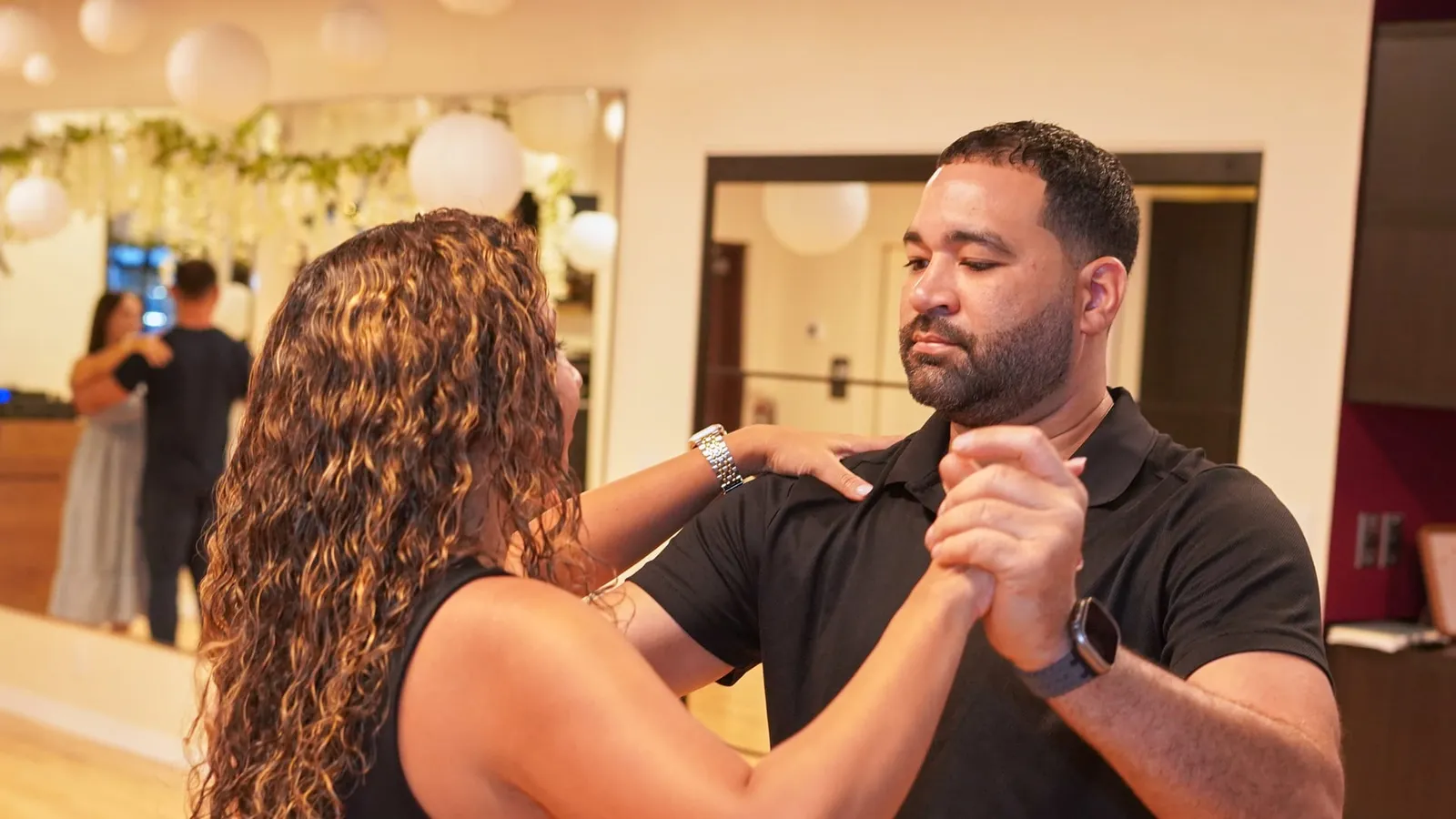
Bolero is the most romantic dance in the Latin family. The tempo is slow enough that there is actually room for things faster dances skip over — eye contact, breathing together, small gestures. The hold can be a closed ballroom frame or a softer Latin embrace, and most couples switch between the two depending on what the song is doing.
The thing that gives Bolero its character is the rise on the first beat. You step out, settle your weight, lift gently, then step again. Combined with the hip motion underneath, it produces a wave-like quality. Couples who try it after months of Salsa or Cha Cha are usually surprised by how much they enjoy slowing down for a while.
Who it suits best
Bolero is one of the dances we recommend most for older couples and for wedding couples whose first-dance song is a slow Spanish-language ballad or a similarly slow English one. The tempo is forgiving. There is time to think between steps, and the dance looks elegant even when the figures are simple.
If you already dance Rumba, Bolero is the obvious next step. The hip work and weight transfers cross over directly, and you get an option for songs that are too slow for Rumba. For wedding couples we usually suggest Bolero when the first-dance song sits in the 80 to 100 BPM range and feels gentle. That covers most modern Spanish ballads, plenty of Sinatra slow numbers, and a surprising number of songs that just sound like Bolero once you have started listening for it.
Music & where to dance it
Start with Trio Los Panchos — “Sin Ti,” “Bésame Mucho,” “Solamente Una Vez.” Then Luis Miguel’s bolero albums from the 1990s, which sold millions of copies for a reason. Andrea Bocelli’s slow Spanish material works at Bolero tempo. A lot of Sinatra’s slower ballads do too.
Bolero shows up at wedding receptions, at ballroom socials with a slow Latin section, and any time a DJ plays a slow Spanish ballad. There is no dedicated Bolero scene — no Bolero nights the way there are Salsa nights — but once you know the dance, the music is everywhere.
Bolero questions,
answered before you book.
Is Bolero hard to learn for a beginner?
What's the difference between Bolero and Rumba?
Can I take Bolero lessons on my own?
Is Bolero a good choice for our wedding first dance?
How long does it take to learn Bolero?
What music do you dance Bolero to, and where would I actually use it?
Forty-five quiet minutes, just Bolero and the music.
Thank you!
We’ve got your message and we’ll be in touch shortly —
usually within a few hours.