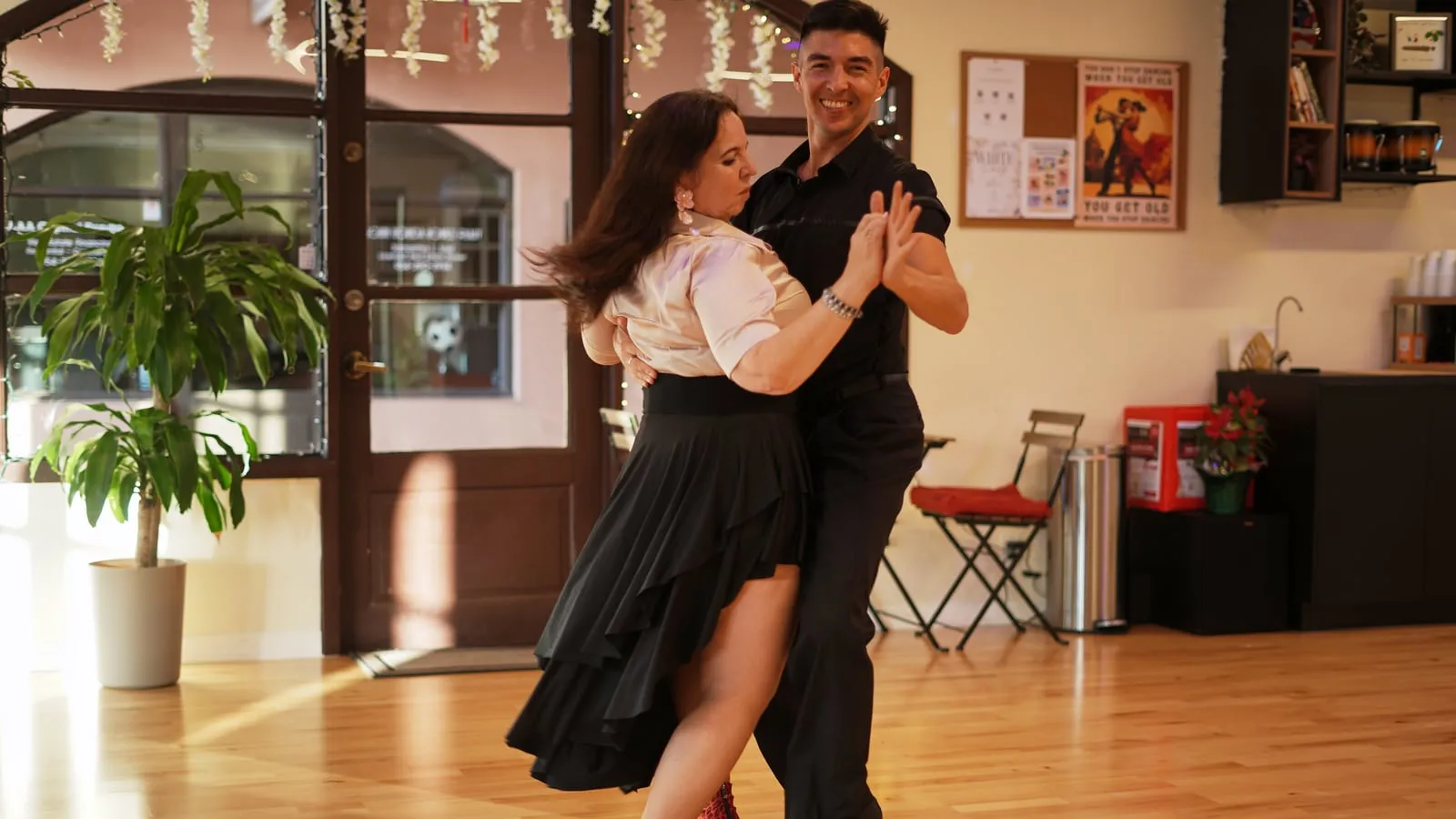
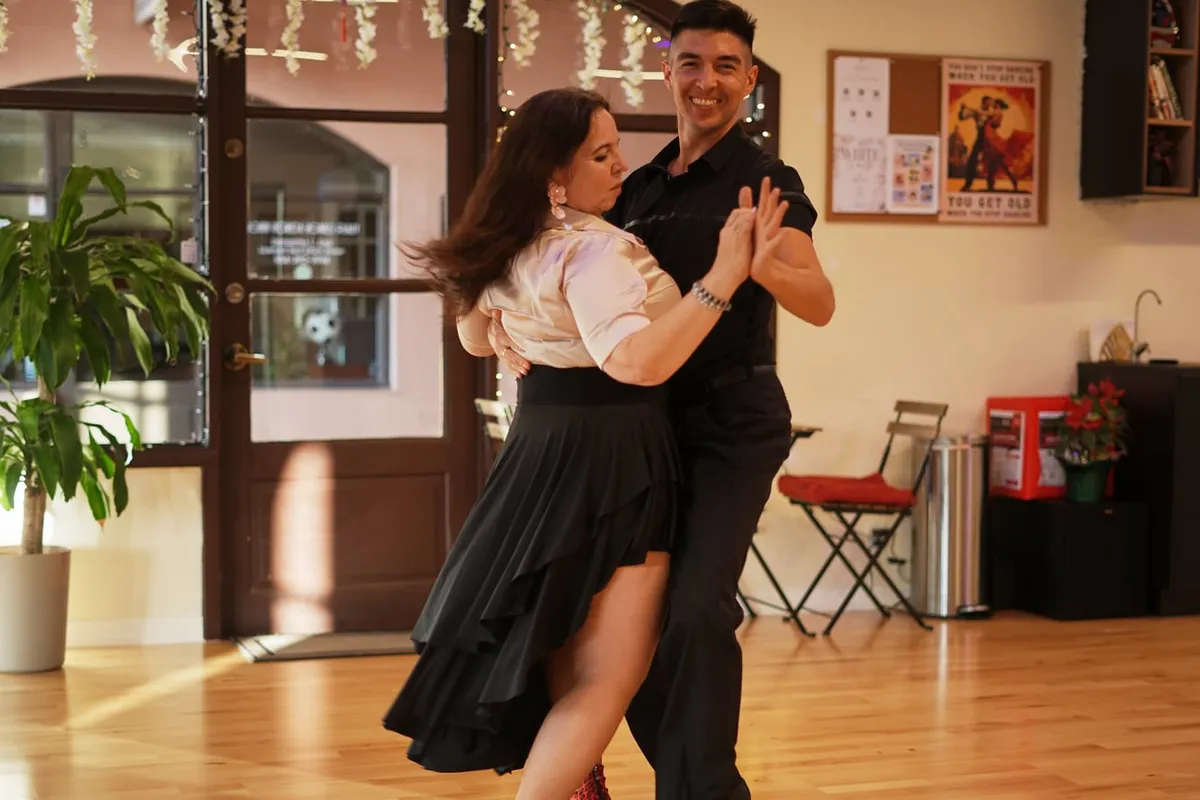

During Parkinson’s Disease Awareness Month, I found myself thinking about one of my students — not her diagnosis, but her determination to move.
You might think dancing isn’t for you if you feel like you’re losing your balance, or you’re not flexible enough. We only see the young, talented dance professionals who post videos online or perform on stage with great artists. But movement creates more movement. When you start dancing, you learn how to take the first steps — and you also open new possibilities for your body and your nervous system. Here’s what I learned from one of my students.
The story of my student B.
B. had been taking ballroom dance lessons for more than ten years in New Jersey when she was diagnosed with Parkinson’s disease. She loved dancing so much that just thinking about losing control of her movements was depressing her, so she decided to quit. She didn’t want to embarrass herself. She has a strong sense of self — and if she can’t do something the way she wants it done, she would rather not do it at all.
But life is funny. Twelve years later, her neurologist told her to take tango lessons. He didn’t know about her dance history. He simply suggested it, as he probably had to other patients, because as a follower in tango you are not controlling your own movements. Instead, you feel and connect with your partner, and you respond to his cues. So rather than using your own brain and nervous system to initiate movement, you listen to your partner and learn to react to his lead. You move around the neurological condition.
At first she was skeptical. But she gave it a try, and she remembered how much she loved dancing. It wasn’t the same as before — but it wasn’t the competitive ballroom dancing she used to do either. So her high standards weren’t bothered by it.
When she moved to Florida, she looked for a tango studio and found the one where I was teaching. We started dancing Argentine tango together, and after a while we did a showcase at a party. I felt the performance motivated her. She remembered how fun it is to dance in front of an audience. It gave her back the confidence that she could still do this, even though she was no longer in full control of her movements like she once had been.
The progress that made her happy
In the year that followed, she started getting back into ballroom dancing too, and we competed together. That gave her a stronger reason to come and practice — even on the toughest days, when she didn’t feel like leaving her house.
What was interesting for me was watching the transformation that could happen during a single dance lesson. Some days she would come in carrying a lot of tension in her body, feeling out of it. The music and the movement would shift something. She would leave the studio happier and more relaxed. And she said it herself many times — dancing made her happy, and it was important for her to keep doing it.
In Parkinson’s, movement can be difficult
…especially when you’re on your own. It takes more effort. It can be frustrating. But when a professional dancer is leading you, the cues come from the partner’s arms into the body, and the body responds differently.
A student of mine who worked with a neurologist later told me something that stayed with me: they would help patients walk by counting steps out loud, creating rhythm — just like in dance.
Keep moving, without any excuse
You hear it many times — that dancing has so many benefits, that it keeps you young and healthy and happy. But with examples like this, I could really feel that I was making a difference. This is why I believe dance is more than steps. It’s communication. It’s connection. And sometimes, it’s a bridge between what the mind struggles to initiate and what the body is still capable of feeling.
This Parkinson’s Awareness Month, maybe the message is simple: keep moving. Whether it’s walking, counting steps, or dancing — movement matters.